


‘The Devil Wears Prada 2’ revisits fashion, power and media decline

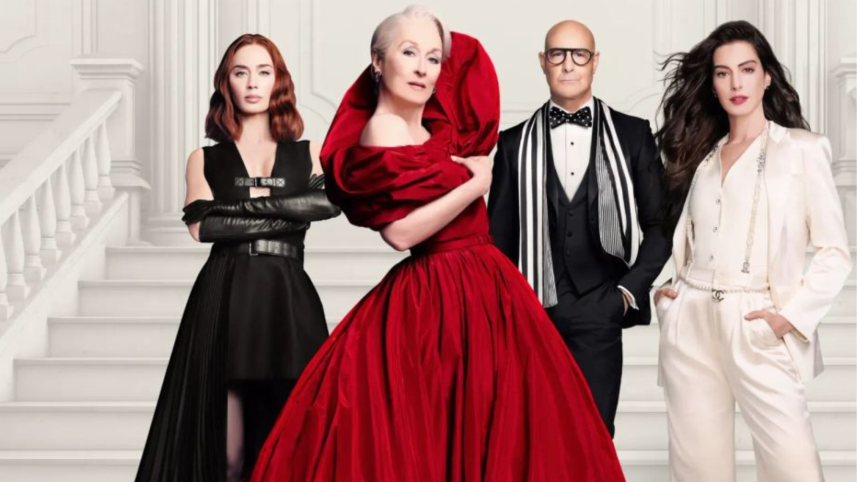
Twenty years is usually enough time for a cultural object to either fade into nostalgia or calcify into cliché. "The Devil Wears Prada" did neither. Instead, it remained unusually sticky, endlessly quoted, memed, and rewatched, its cerulean-blue monologue doing more work in internet culture than most films manage in their entire runtime. So when “The Devil Wears Prada 2” arrives in 2026, it is not simply a sequel to a film. It is a sequel to a cultural afterlife. What makes this return more interesting than the usual legacy continuation is that the world it depicts has not politely waited in place.
The original film was set in an era where magazines still had gravitational pull, where editors like Miranda Priestly could plausibly shape taste from a single office in New York. Back then, magazines told readers what to wear, how to think about style, and, in some ways, who to be. The sequel opens in a very different reality, one where that authority has been dispersed across platforms, algorithms, and personalities, and where even the most prestigious publications are no longer immune to consolidation, layoffs, and quiet irrelevance. 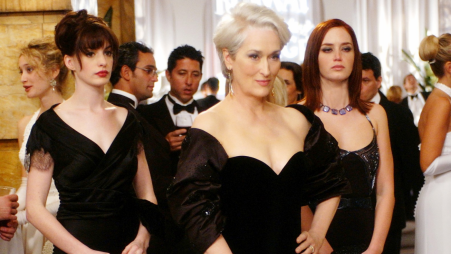
For anyone unfamiliar with the first film, the premise is worth briefly grounding. Andy Sachs, played by Anne Hathaway, enters the world of Runway magazine as an inexperienced journalist hoping to use it as a stepping stone into serious reporting. Instead, she finds herself working under Miranda Priestly, played by Meryl Streep, a figure so exacting and feared that she has become shorthand for corporate tyranny. The film followed Andy’s gradual transformation under this pressure, and her eventual decision to step away from a world that demanded too much and gave back very little. The sequel picks up after those choices have already been made and partially undone. Andy is no longer an outsider looking in, but a recognised journalist whose career has already been shaped by both ambition and institutional instability. When she loses her job amid yet another round of media restructuring, she is pulled back into Runway, now a diminished but still symbolically powerful publication struggling to remain relevant in a landscape dominated by content, metrics, and attention cycles that reward speed over substance. 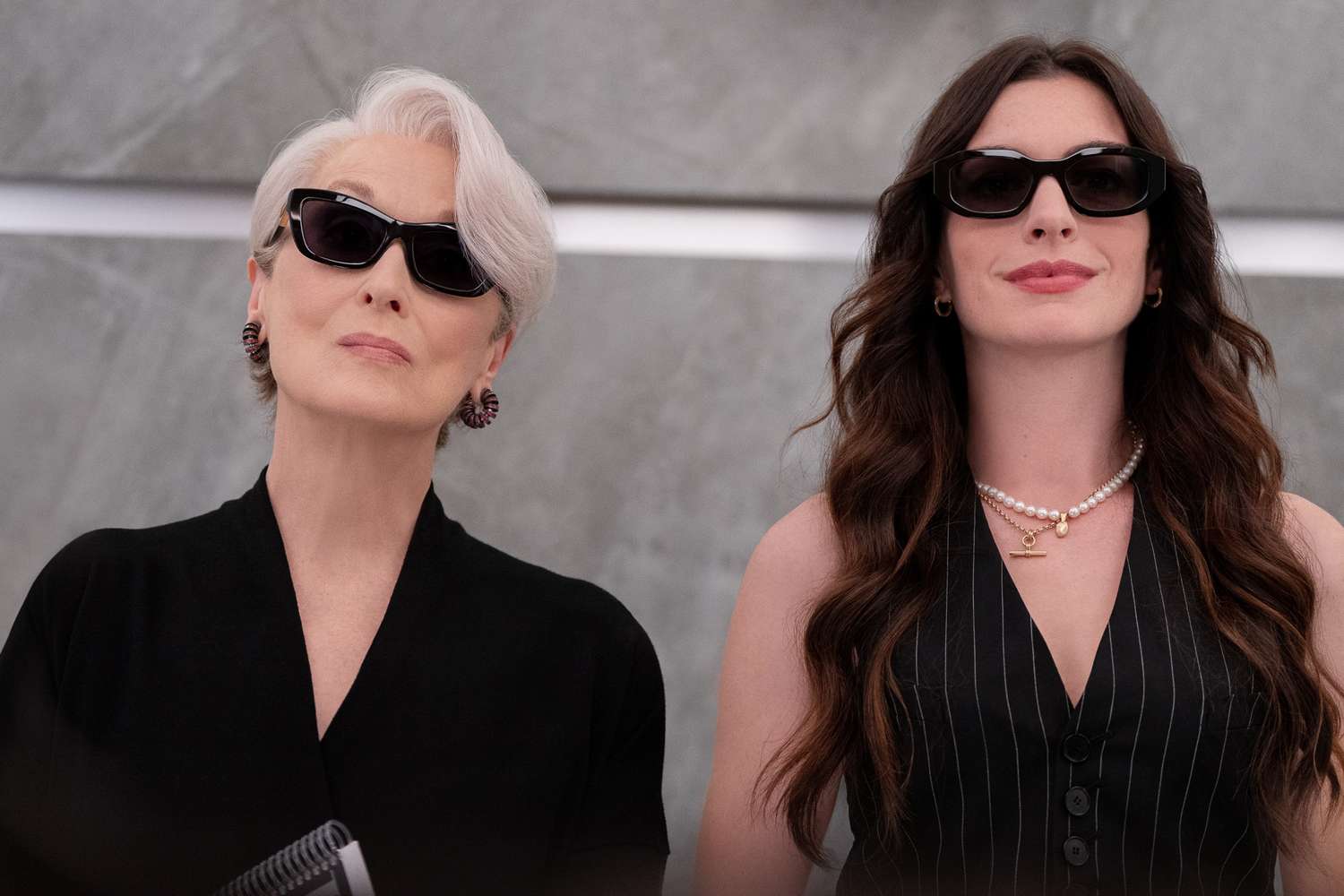
As someone who works within the broader ecosystem of media, that shift feels less like fiction and more like recognition. There is a particular discomfort in watching characters navigate layoffs, corporate takeovers, and the quiet dismantling of institutions that once felt stable. The film captures something that is often difficult to articulate, the sense that even the most established spaces can disappear with little warning, and that talent alone is no longer a guarantee of continuity. This is where the film becomes more than just a reunion. Runway itself is no longer the cultural gatekeeper it once was. It is instead a publication negotiating its own survival, attempting to reconcile its legacy of taste-making with a present that no longer guarantees audience loyalty. The humour of Miranda being forced to engage with corporate language she clearly despises is still present, but it is now layered with something closer to exhaustion. Power has not disappeared, but it has become procedural, constrained, and less theatrical than before. Miranda remains the film’s most compelling presence, precisely because she is no longer operating in a system designed to fully accommodate her authority.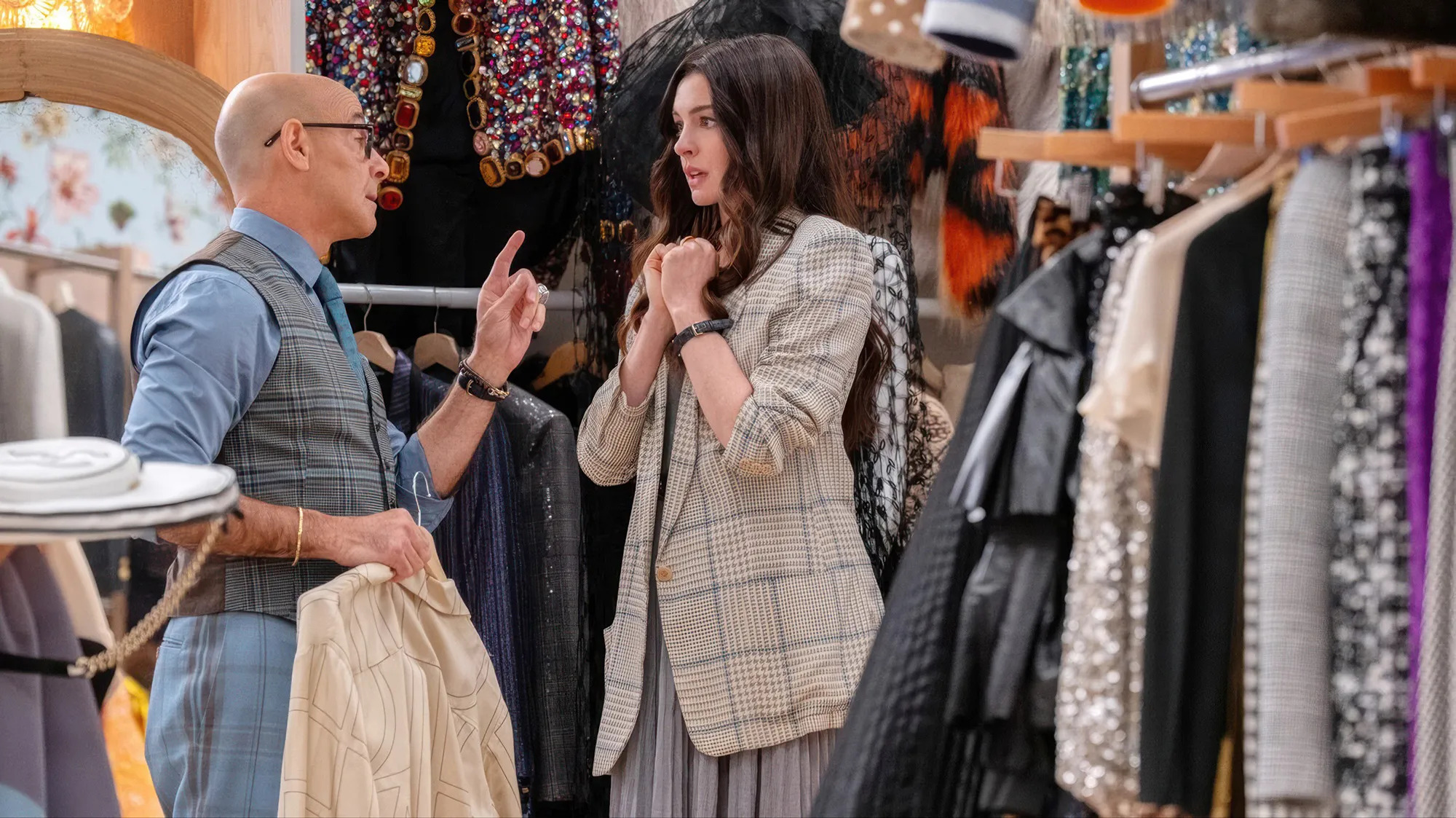
Meryl Streep plays her with the same controlled precision, but the edges are slightly altered by circumstance. She is still feared, still exacting, but now she is also managing decline, even if she would never describe it in those terms. The film is at its most interesting when it allows her to confront a version of leadership that requires negotiation rather than command. The small indignities she experiences, from moderated language to reduced privileges, are played with humour. Miranda is still Miranda, but she is also someone who understands, perhaps more clearly than anyone else, that the system she mastered is no longer secure.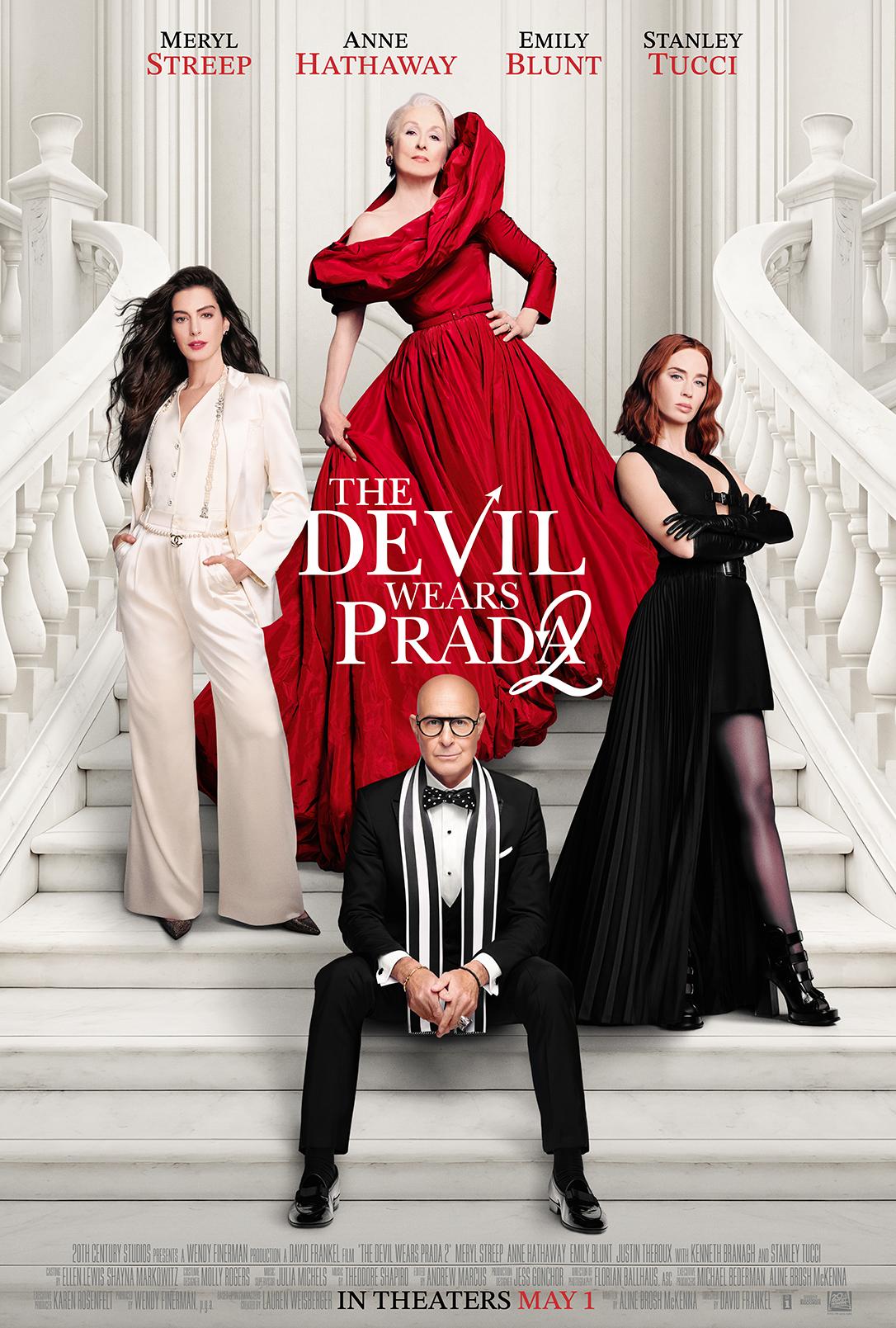
Andy’s trajectory reflects a different kind of uncertainty. Anne Hathaway plays her with a quiet steadiness, but the writing places her in a position that feels both familiar and unresolved. She has achieved what she once set out to do, only to discover that achievement offers little protection against structural change. There is something deliberately unglamorous about this portrayal. The film resists the temptation to present her success as a neat arc, instead situating it within a landscape where progress is fragile and often reversible. Emily Blunt’s Emily Charlton, now operating within the upper tiers of luxury fashion, provides a useful contrast to Andy’s uncertainty. Her evolution suggests a different kind of success story, one that has adapted more efficiently to the new economy of influence. Stanley Tucci, as Nigel, remains one of the film’s most consistent presences, grounding its more uncertain elements with a sense of familiarity. Their interactions with Miranda echo the dynamics of the original film, but they are now layered with a shared awareness of what has been lost.
If there is a weakness, it lies in the film’s reluctance to fully commit to its own introspection. It gestures towards complexity, particularly in its depiction of media decline and corporate influence, but occasionally retreats into safer, more conventional narrative choices. The romantic subplots, for instance, feel underdeveloped and, at times, unnecessary, diverting attention from the film’s more compelling ideas. Similarly, certain resolutions arrive too easily, softening the impact of the challenges the film initially sets out to explore. There are also moments where the film seems unsure of how to balance homage with progression. References to the original are woven throughout, sometimes effectively, sometimes less so. They serve as reminders of what made the first film resonate, but they also highlight the difficulty of recreating that resonance in a different cultural moment.
And yet, despite these inconsistencies, there is a sincerity to the film that is difficult to dismiss. It does not attempt to argue that things were better before, nor does it fully embrace the present. Instead, it occupies a space in between, acknowledging both the allure of the past and the inevitability of change. That tension gives the film a reflective quality, even when its execution falters. What lingers most is not a particular line or scene, but a question. What does it mean to care about institutions that are slowly losing their relevance? For those of us who still believe in the value of considered storytelling, of curated narratives, of work that demands attention rather than simply capturing it, the answer is not straightforward. The film does not offer a clear resolution, and perhaps that is its most honest choice.
In all honesty, "The Devil Wears Prada 2" does not replicate the sharpness of its predecessor, nor does it fully transcend it. What it does instead is attempt to situate that earlier story within a present that is more complicated, less certain, and, in many ways, more difficult to romanticise. It is not as immediately satisfying, but it is more aware of the world it inhabits. And in that awareness, uneven though it may be, there is something worth paying attention to.

 For all latest news, follow The Daily Star's Google News channel.
Comments