When Shakespeare met the rise of Bollywood

History is often imagined as a succession of revolutions.
Yet it is equally composed of quieter departures -- the lowering of a theatre curtain, the packing of weathered trunks, the silence that follows applause once audiences cease to arrive.

The true measure of an epoch is seldom the spectacle of its beginning. More often, it resides in the educing of its ending.
Released six decades ago, Shakespeare Wallah is a cinematic elegy to those quiet tragedies that accompany historical transition.

The second collaboration between producer Ismail Merchant, director James Ivory and screenwriter Ruth Prawer Jhabvala, the film appears deceptively modest -- following a travelling troupe of Shakespearean actors wandering across post-independence India in search of audiences increasingly captivated by the incandescent glamour of Hindi cinema.
While ostensibly about theatre, in essence it is about inheritance. It is about what becomes of those who arrive too late for empire and too early for globalisation. It asks what survives when an entire moral and cultural edifice quietly dissolves.
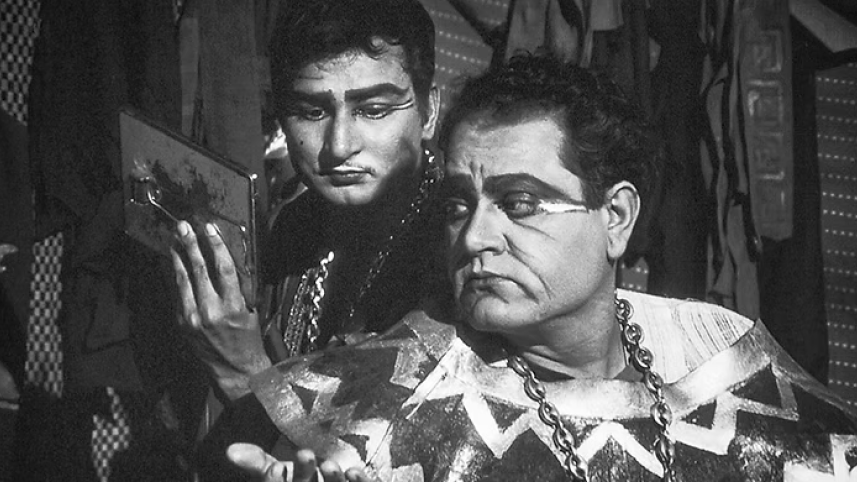
Shakespeare Wallah refuses to romanticise either the departing or the arriving era.
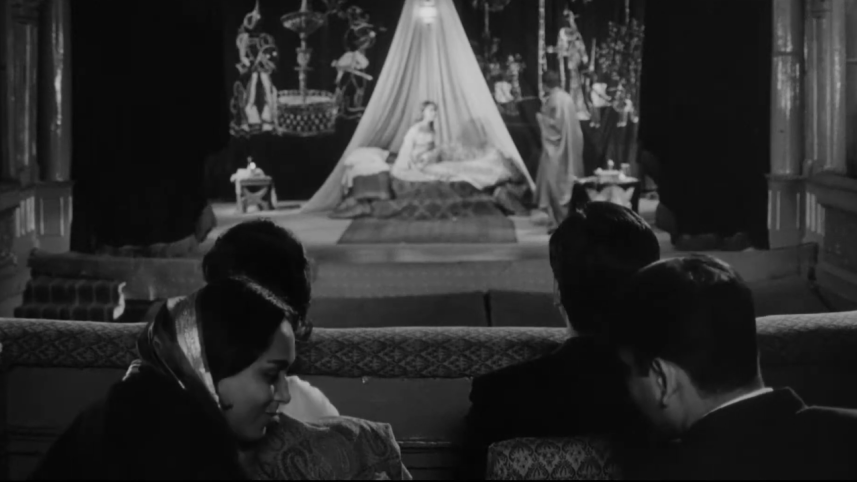
The Buckingham family, inspired by the real-life Kendal family, traverse the Indian countryside, staging plays before ever-diminishing audiences. Once cherished by princely states and colonial elites, they now find themselves spectators to their own irrelevance.
Independent India is discovering new aspirations, new entertainments and new heroes. Shakespeare has not suddenly become inferior; he has simply ceased to occupy the centre of public imagination.
The film never suggests that modern India is wrong to embrace its own cinematic renaissance. Nor does it sentimentalise the passing of colonial cultural institutions. Instead, it captures the universal melancholy accompanying every historical transition -- every new beginning quietly consigns an ending as well.
Nations, like generations, develop new appetites. A newly independent India understandably seeks its own myths, its own stars, its own voices.
Already a charismatic presence in Hindi cinema, the film introduces Shashi Kapoor to international audiences.
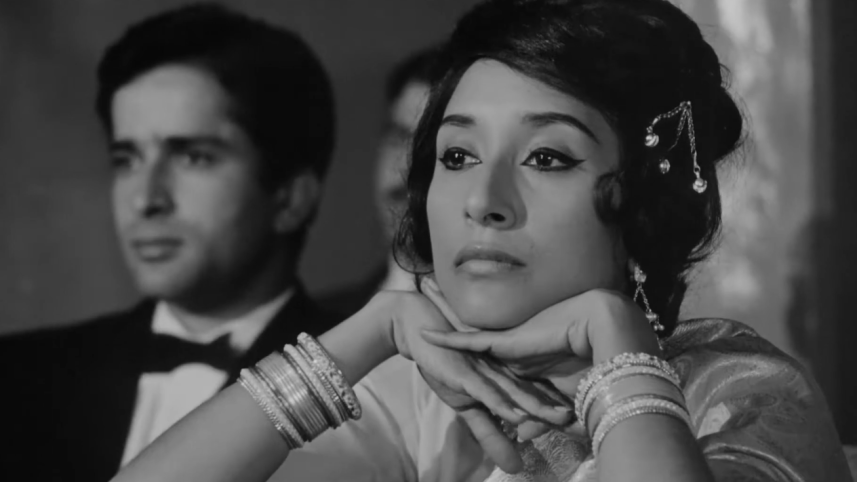
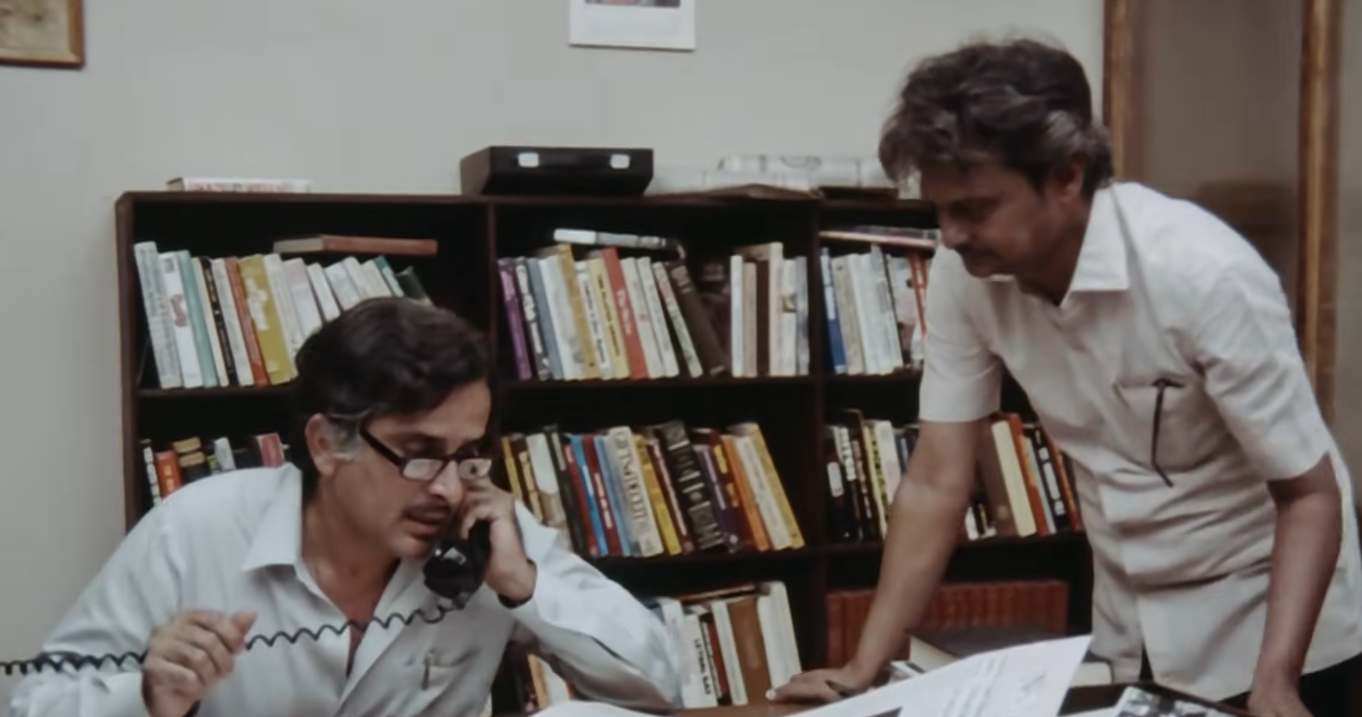
Kapoor plays Sanju, the affluent Indian playboy torn between different emotional and cultural worlds. He embodies post-colonial India itself. His performance remains striking because it refuses simplistic symbolism. He embodies a society discovering the confidence to define cultural aspiration on its own terms.
The character is caught between affection for Felicity Kendal’s Lizzie Buckingham and fascination with the glamorous Hindi film star Manjula, played with unforgettable vivacity by Madhur Jaffrey.
Luminous cinematography of Subrata Mitra frames the newly independent India as a living landscape of contradictions.
There are frames in Shakespeare Wallah that possess the compositional serenity of miniature paintings while simultaneously conveying the impermanence of everything they depict.
Satyajit Ray's music in the film behaves like an invisible companion, gently amplifying longing, uncertainty and fleeting joy. It never dictates emotion; it merely accompanies it with exquisite discretion. The score understands what the film itself understands -- genuine melancholy rarely announces itself loudly.
Bollywood itself occupies an intriguing symbolic position within the film. Frequently dismissed by colonial sensibilities as popular entertainment lacking Shakespeare's literary prestige, Hindi cinema emerges instead as an authentic expression of democratic cultural appetite.
 For all latest news, follow The Daily Star's Google News channel.
 No civilisation possesses perpetual centrality. Cultures ascend, intermingle, transform and recede. The British theatrical tradition that once symbolised prestige now competes with song-and-dance spectacles radiating colour, sensuality and optimism.
One aesthetic does not conquer another. It merely inherits the audience. Therein lies the film's remarkable generosity. It never sneers at popular cinema.
The film also offers an unexpectedly subtle meditation on soft power. Empire once exported Shakespeare as an emblem of British civilisation. Yet decades after political authority evaporates, Shakespeare himself survives independently of imperial legitimacy.
Ironically, it is not empire that proves immortal. It is art.
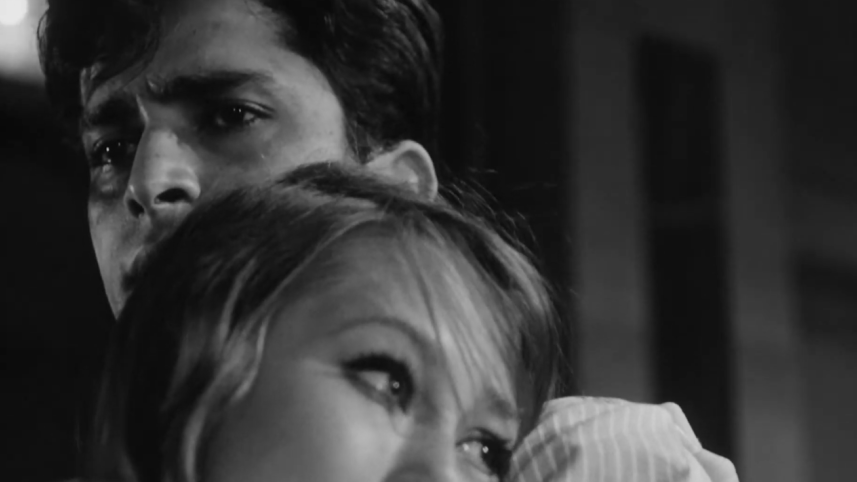
The film quietly reminds us that genuine culture cannot be sustained through conquest. It survives only through affection. This distinction has acquired renewed relevance amid contemporary debates surrounding decolonisation. Too often such discussions flatten history into binaries of victim and oppressor, inheritance and rejection.
Shakespeare Wallah proposes something more intellectually demanding. There is something profoundly moving about such fidelity to vocation.
Art need not dominate the marketplace to justify its existence. Integrity itself possesses value.

That lesson feels almost radical today.
Decades before "global citizenship" entered fashionable vocabulary, the film anticipated existential condition.
A "wallah" in South Asian parlance denotes someone associated with a particular trade or vocation. The Shakespeare Wallah is not merely a performer but a custodian of memory --carrying culture from place to place, preserving traditions that risk extinction.
Every generation possesses its own Shakespeare Wallahs.
It can be something formal in this increasing casual era, musicians performing before shrinking audiences or journalists defending careful reportage in an age of relentless misinformation.
They are not resisting progress so much as safeguarding continuity.
History requires both innovators and custodians. Without the former, civilisation stagnates. Without the latter, civilisation forgets itself.
Perhaps that is why the film's closing moments continue to linger long after the credits have rolled. They leave behind neither triumph nor despair but something considerably rarer -- acceptance.
Life proceeds. Audiences change. Art evolves. Yet dignity resides in continuing the performance even when applause becomes uncertain.

‘Roid’, ‘Mastul’ among six films to be screened free at Shilpakala Academy festival

Kazi Jesin appointed BTV director general

Why ‘Musafir Cafe’ feels so personal to millennials and Gen Z

Ilias Kanchan’s brief homecoming: Reuniting with old friends and family

Jaya Ahsan shines as ‘Aajo Ardhangini’ continues acclaimed run in Indian cinemas

Netflix confirms season 2 of 'Musafir Cafe'

TV channels to observe Tagore’s death anniversary with special programmes

‘Babita Day’ celebrated in Dallas, actress rendered emotional

‘Pothohara Mon’ wins viewers’ praise with over 10,000 YouTube comments