


Christopher Nolan’s 'Odyssey' and the story men have told for 3,000 years to justify war

Around 3,000 years ago, Homer gave the world the famous version: a war fought over the most beautiful woman in the world. In 2026, Christopher Nolan’s retelling leaves room for a more unsettling possibility.
Troy was wealthy and controlled a strategically important trade route. Agamemnon, king of Mycenae, rallied the rulers of several Greek kingdoms to wage war on the city for access to that power.

Perhaps Helen was never the cause of the war. Perhaps she was simply the story men told to make an invasion sound righteous. Sounds strangely familiar in 2026.
After the war, Menelaus looks at Helen’s badly scarred face and sarcastically says, “The face that launched a thousand ships. Or perhaps only five hundred.”
So, what really happened to Helen? Was she fleeing a violent marriage?
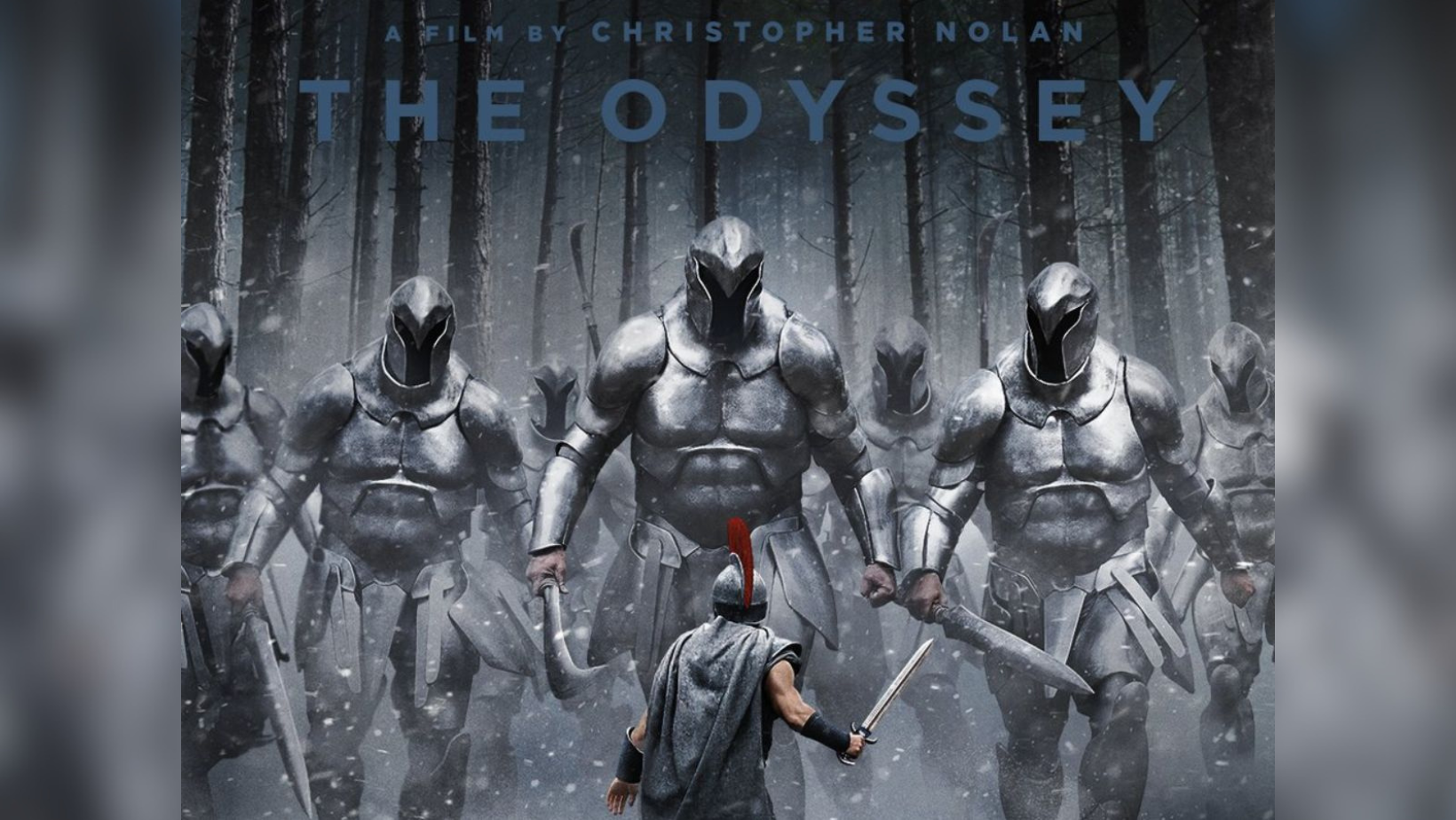
Nolan’s The Odyssey takes one of the oldest stories in Western civilisation and asks one of the most contemporary questions: who benefits from the official version?
Wars have always required stories. Land, trade routes, resources and power sound terribly unromantic when announced plainly. Nobody wants to hear that thousands must die because one king would like access to somebody else’s wealth. So, the machinery of conquest requires poetry. A beautiful woman is abducted. Honour is wounded. Civilisation is threatened. Something precious must be rescued. The ships are then launched.
Nolan does not drag Homer into the present by giving Odysseus a smartphone or making Agamemnon hold a press conference beside a suspiciously informative PowerPoint presentation. He reveals how little the language of power has changed. The names are ancient; the sales pitch is evergreen.
The Odyssey was shot entirely with IMAX film cameras, across real landscapes and open water. Nolan placed his cast aboard an operational ship in the Mediterranean, while a 35-foot Trojan Horse was constructed and battered by waves on a Moroccan beach. The production did not merely generate an ancient world; hundreds of people had to build, drag, sail, lift and endure it.
On Odysseus’s boat, we are not spectators floating safely above the action. The POV is squeezed between men, oars, rope and sail. Even Ludwig Göransson’s music feels handmade rather than manufactured. Ancient Greek instruments mingle with synthesisers, bronze gongs, voices and pieces of scrap metal.
At times, the effect is less like watching a Hollywood epic than sitting inside an intimate Greek theatre. The sea becomes the stage. The music becomes the chorus. The actors appear not as untouchable figures carved into marble, but as frightened, exhausted people standing uncomfortably close.
Nolan’s actors are also very much on-brand with the film’s ancient Greek theatre energy. Gestures are large and the voices carry. Homer gave us kings and sorceresses; Nolan gives them politics.
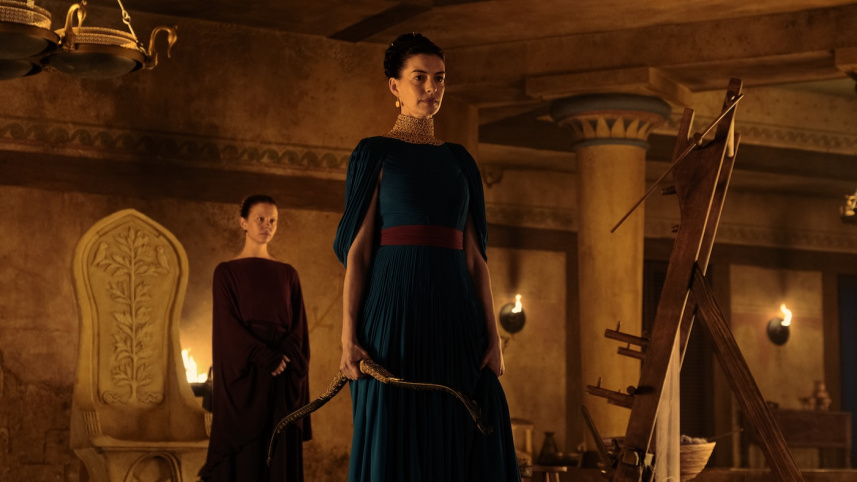
Anne Hathaway finds the woman buried beneath Penelope’s famous patience. For 20 years, she has governed Ithaca while everyone around her speaks of an “empty throne”, apparently unable to see a woman sitting on it. When her son, Telemachus, begins testing his newly acquired masculinity on her, she finally erupts:
“Empty throne? I’ve been sitting on that empty throne for 20 years! My knowledge, my years of experience? That’s all nothing compared with the bristles on your chin!”
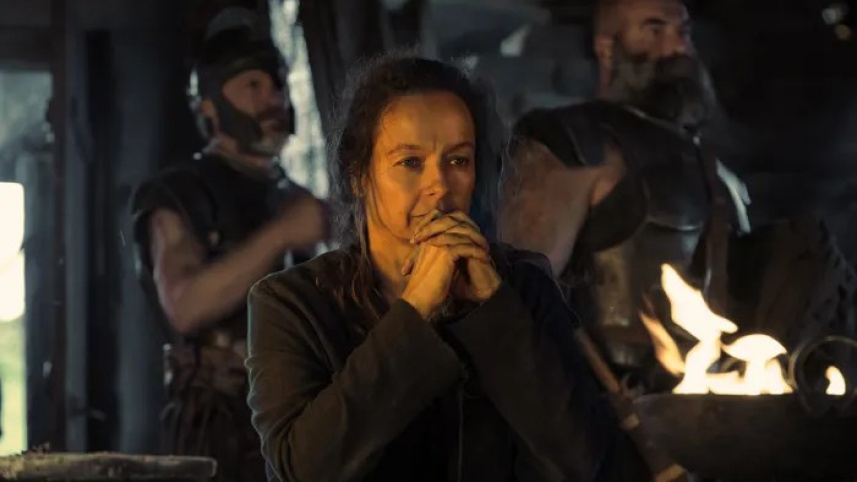
Samantha Morton as Circe drops a masterclass in illusion. The transformation of Odysseus’s crew into pigs could easily have become a glossy CGI showcase.
Instead, Nolan uses animatronic heads, camera angles and Morton’s hands. She appears to pull jaws apart and mould human flesh into snouts before our eyes. Nothing digital is doing the acting for her.
These armed strangers enter her home, consume what she offers and assume access to her space. Circe merely reveals the pigs already present.
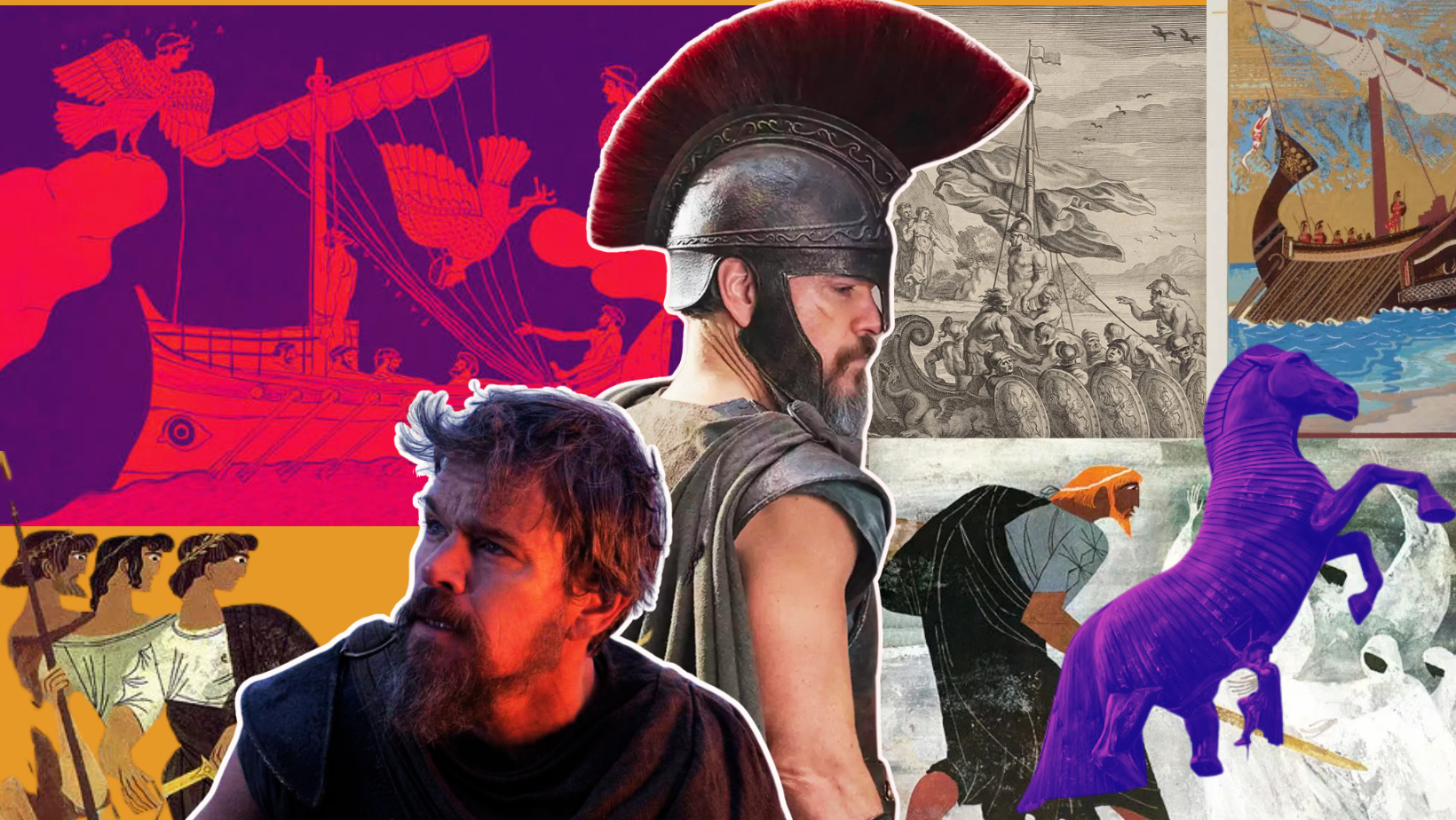
Matt Damon’s Odysseus does not go to war in search of glory; he goes because refusing Agamemnon would bring punishment of its own. By the time Troy falls, he has seen enough to understand that victory was the catastrophe. Damon plays him as both hero and defendant.
 For all latest news, follow The Daily Star's Google News channel.
 That conscience wears Zendaya’s face. During the sacking of Troy, a priestess of Athena’s temple is beheaded by Greek soldiers. Odysseus later sees the same face as Athena. Did the goddess choose the murdered woman’s likeness to haunt him?
Benny Safdie’s Agamemnon is a walking fortress, armoured not only against blades but against consequence itself. He is a warmonger who never has to wade through the blood he orders spilled, commanding other men to fight, kill and die while he remains safely removed from the human cost of his greed.
It is all gloriously high theatre.
Only “dad” breaks character. For that moment alone, Tom Holland’s Telemachus pulled me out of ancient Greece.

The Difficult Bride wins Bisato d’Oro at Venice Film Festival

Lady Gaga welcomes first child with fiancé Michael Polansky

James and Rupam Islam set to share stage in Sydney

‘The stage means everything to me’: Tamalika Karmaker on her return to theatre

Mymensingh’s Zainul Udyan comes alive with Shah Abdul Karim’s music

Revisiting ten memorable songs from Kanak Chapa’s film career

‘Support comes from unexpected places’: Badhan reflects on Venice ordeal

Hania Aamir makes music debut with a message for her critics

‘One Piece’, ‘Dragon Ball’ voice actor Mike McFarland dies at 56
