


South Asian approaches to refugee protection

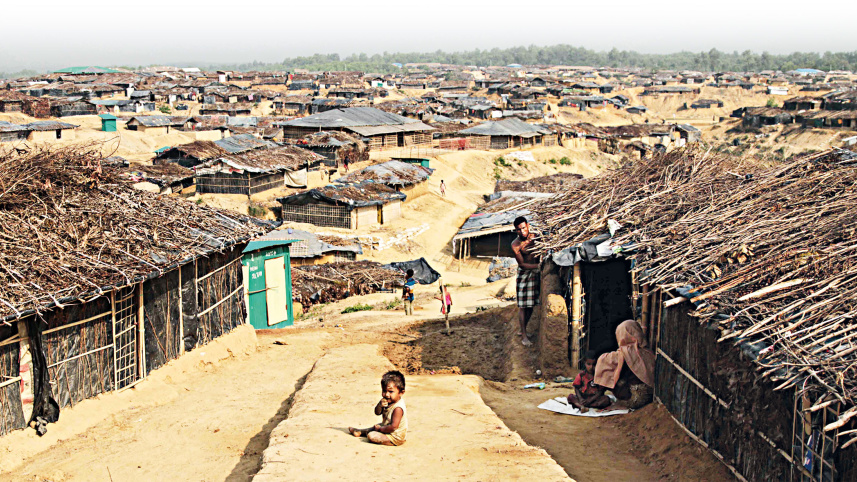
The South Asian region continues to be an epicentre of the displacement crisis and refugee movement. Most of the crises experienced by South Asia have somehow become protracted due to the arbitrary administrative practices, executive discretion and the absence of an adequate refugee regulation framework. As all the South Asian countries except Afghanistan never acceded to the 1951 Refugee Convention, these countries follow a mercy-based approach instead of a rights-based transparent legal protection mechanism.
For example, Bangladesh is hosting 1.2 million Rohingya refugees after the 2017 influx with ‘Forcibly Displaced Myanmar Nationals (FDMN)’ status. It is thought that this different title is given to them to avoid responsibility under international refugee law. Scholars around the world have sometimes called it a ‘hosting without rights’ practice, where the refugees are being warehoused in camps following a containment-oriented protection approach. Bangladesh has had a similar experience with the Bihari refugees following the 1971 War and the Rohingya refugees after 1991.

In contrast, India took a ‘differentiated and exclusionary’ approach with refugees from different countries receiving different treatment based on various factors. For instance, it warmly welcomed the refugees from Tibet and Sri Lanka, allowing them to continue educational and religious activities in the country quite graciously. On the contrary, the same did not happen with refugees from Afghanistan or Myanmar.
Here, Pakistan has once again followed a similar path by giving protection to Afghan refugees but not quite reaching the international standards. Avoiding the formal approaches, the country attempted to create a National Database and Registration Authority for giving Proof of Registration card (a temporary documentation) to the Afghan refugees following a genealogical verification procedure. For instant protection, it may sound ideal, but in the long run, it resulted in underfunded humanitarian assistance, leaving the vulnerable population to administrative and social harassment.
Next, Nepal gave protection to the Nepali-speaking Bhutanese Lhotsampa refugees through strict encampment from the 1980s to the 1990s. With repatriation resisted by Bhutan and local integration foreclosed by Nepal, the Lhotsampas existed in a legal limbo, reflecting the failures or vacuum of the regional protection mechanism.
All of these examples show us the impact of the absence of a regional framework in South Asia for the protection of refugees. This has resulted in a state-centric, interest-driven policy by South Asian states. South Asian countries could have taken lessons from regional frameworks like the OAU Refugee Convention 1969 by the African Union, Cartagena Declaration 1985 by Latin America and Temporary Protection Directive 2001 by the European Union. All of these protection frameworks introduced their own humanitarian approaches of refugee protection to deal with mass influx, burden-sharing and cultural sensitivities.
As a result, South Asian countries were not successful in adopting the Asian-African Legal Consultative Organisation’s broad refugee definition and South Asian Declaration on Refugees and Migratory Movements 2004. SAARC Eminent Person Group in coordination with United Nations High Commissioner for Refugees endeavored to create refugee governance via model national law in South Asia through Colombo Consultation (1995), Delhi Consultation (1996) and Dhaka Consultation (1997), but it gradually failed to materialise into a concrete regional protection mechanism. This transformed the missed South Asian protection regime into a muddled mechanism.
To make this dysfunctional and muddled mechanism work, South Asia requires a multi-layered strategy that incorporates normative framework with institutional enforcement. From a practical point of view considering SAARC’s failure, immediate and substantive action through its channel will neither be feasible nor fruitful. Hence, The Bay of Bengal Initiative for Multi-Sectoral Technical and Economic Cooperation (BIMSTEC) might play a significant role. A South Asian Refugee Commission might be established under the BIMSTEC framework in the spirit of stability and peace enshrined in article 1(7) of the new charter. This commission may draw inspiration from the African instance, especially the institutional setting of introducing Commission on the Problem of Refugees in Africa before adopting a protection framework. The above-mentioned commission worked as an advisory and technical body for incorporating OAU Refugee Convention 1969.
The South Asian Refugee Commission may also function in a similar order in formulating policy, establishing regional coordination and progressively guiding the development of a regional framework. This commission will be formed with the representation of refugee dealing forums of different states, Bangladesh’s Refugee Relief and Repatriation Commissioner Officials or other equivalent bodies of other South Asian countries alongside the delegation of ministry of foreign affairs.
A refugee protection charter may be formulated coinciding with AALCO’s Bangkok Principles’ broad definition of refugees including climate induced refugees. This charter shall be supplemented by model national laws of the respective South Asian countries. In this regard, a comparative model notably the ‘Turkish Law on Foreigner and International Protection’ may be followed. After Syrian refugee crisis, Turkey being a non-signatory of the 1951 Refugee Convention has set a benchmark by enacting a national law for refugee protection to handle mass influx of refugees. South Asian countries resemble the non-signatory nature of Turkey and hence a national law may be adopted considering the similarity in challenges. Moreover, the region has administrative capacity to eliminate the culture of adhocism; it needs the political will to handle the refugees not as a burden but as a shared responsibility. Lastly by institutionalising a technical and ministerial RRRC-informed commission under the BIMSTEC and domesticating of protection standards following the Turkish Model, South Asia may finally replace its practice of selective altruism towards refugee protection.
The writers are Assistant Professor and Lecturer, respectively, at the Department of Law, University of Information Technology and Sciences (UITS).
 For all latest news, follow The Daily Star's Google News channel.
Comments