


Farmers of the haors are dying of despair

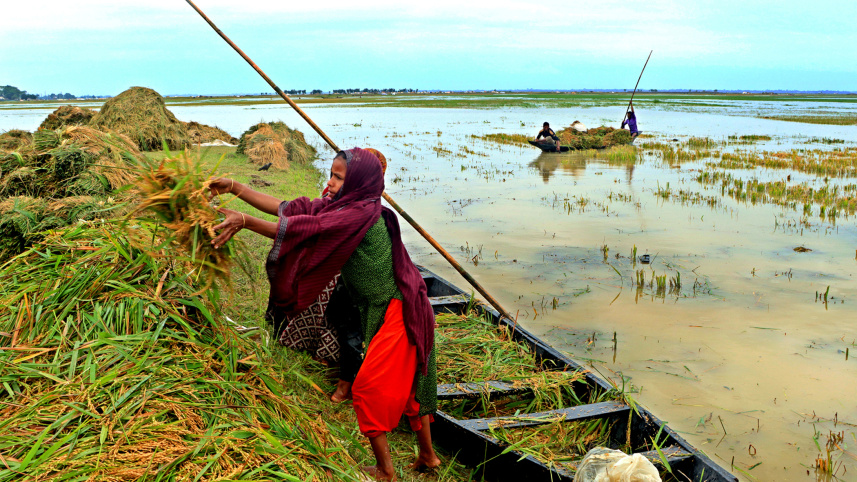
A plateful of rice may be considered an unhealthy overindulgence for those of us with sedentary lifestyles. Yet the Bangalee spirit cannot be satisfied in any other way. Despite health warnings, we savour each morsel of that white, fluffy carbohydrate, a staple for most of the population. Rarely do we, however, think of the hands behind it all—the endless hours spent planting, cultivating, threshing, and drying before the grain finally makes its way to our kitchens. Most of us urbanites remain distanced, physically and emotionally, from the farmers who break their backs to grow food, not just rice, for the nation.
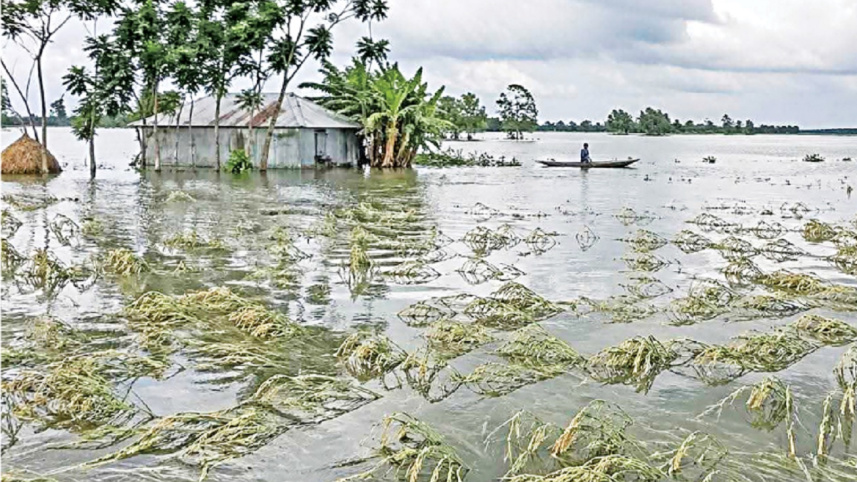
How many of us know, for example, that acres upon acres of Boro paddy in the haor region have been submerged in water after torrential rains even before the monsoon? It is just as unlikely that we know about the farmers who, after helplessly watching their precious crops ruined, have collapsed and died of heartbreak. Fifty-five-year-old Ahad Mia of Nasirnagar upazila in Brahmanbaria is one of them, who could not bear the sight of his ready-to-harvest paddy submerged in sudden rain. On Saturday, he lost consciousness on the spot and died soon after, his final thoughts perhaps of his family, how they would survive, or how they would repay the loan he had taken to cultivate the land.

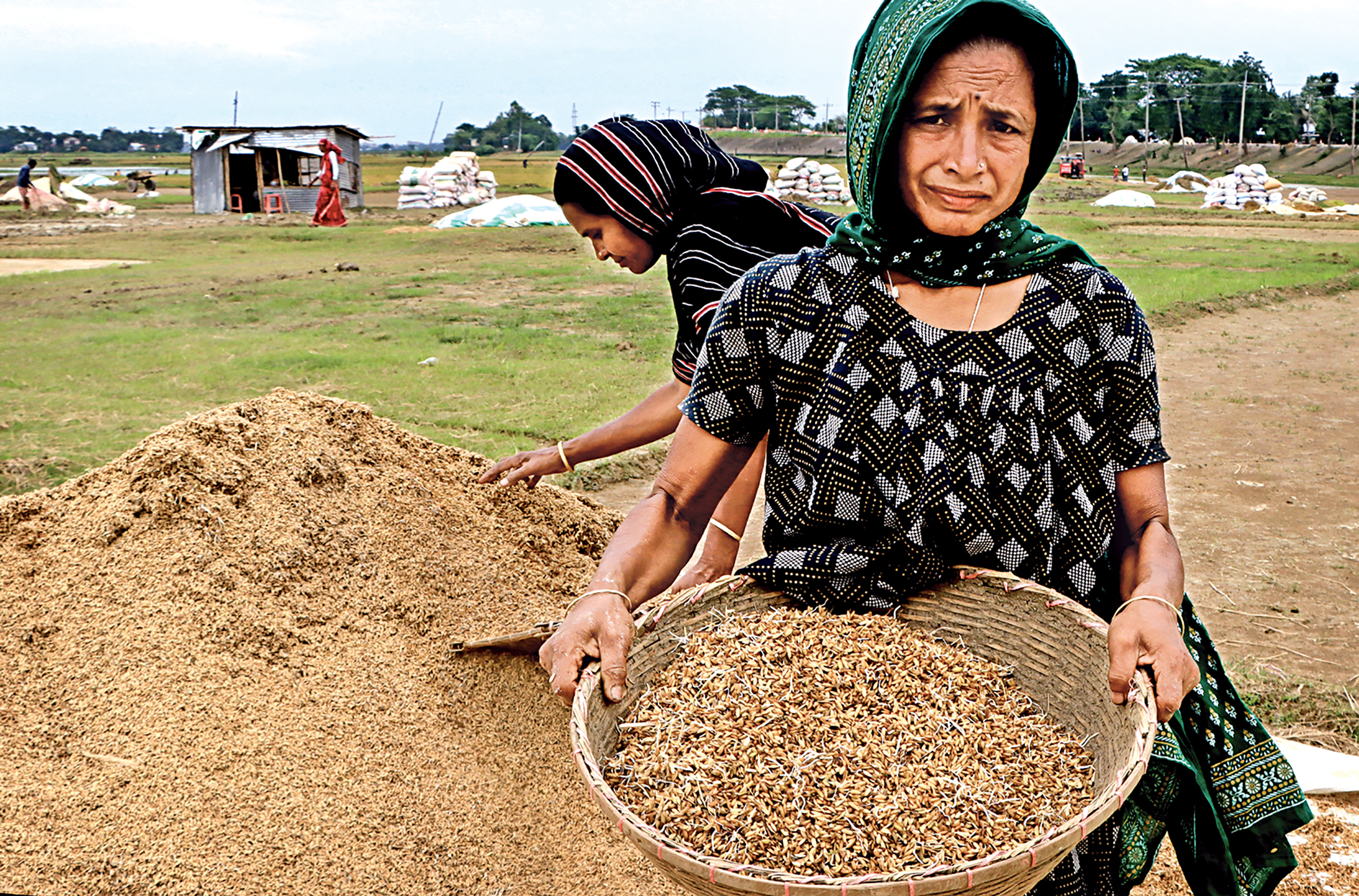
Several other farmers in the area have also fallen ill after experiencing similar losses. Meanwhile, in Kishoreganj, Akhter Hossain, a 60-year-old farmer, also collapsed and died upon seeing his submerged paddy field in Austagram haor.
Farmers in the haor districts are clearly in a desperate situation. Heavy pre-monsoon rainfall over the past week or so has been threatening to destroy their painstakingly grown paddy just before harvest. Breached embankments and an acute shortage of harvesters and labourers have made saving the crops all the more challenging.
The haor region contributes about 20 percent of the country’s Boro rice production, highlighting the importance of this harvest for our food security. This year, in seven haor districts, Boro has been cultivated on 4.55 lakh hectares of land, while harvesting has been completed on 3.24 lakh hectares so far, according to sources at the Department of Agricultural Extension’s (DAE) Field Services Wing. However, heavy rainfall between April 26 and May 2 has submerged 46,730 hectares—or 10.27 percent of the total haor land—which underscores the gravity of the situation.
This aligns with a decade-long trend where, as per a report by this daily, early pre-monsoon rainfall has been excessive in the northeastern haor basin, triggering flash floods that destroy crops faster than farmers can harvest them. In 2017 and 2022, floods destroyed almost all their Boro harvest. The recent heavy rainfall and subsequent effects are a painful reminder of those bleak days.
Farmers are reportedly facing multiple hurdles at once. While they have managed to harvest a large part of the Boro paddy in haor districts, they are struggling with the rest. Harvester machines do not function in water, and farmers are finding it difficult to secure labourers willing to work in watery fields. Labour has, moreover, become too costly—around Tk 2,000 to harvest paddy from one katha—leaving many farmers with virtually nothing. Even when the paddy is harvested, it is often wet and difficult to sell in the market except at heavily discounted prices, which again means little to no return for farmers.
The situation is worse for those who have taken out loans before cultivation. How will they repay their debts? How will they feed their families? These questions are pushing many into utter despair. Early rains and flash floods are not new phenomena. Yet every year, around this time, vast amounts of Boro paddy are destroyed. Why have we not been able to take preemptive measures to minimise the damage?
The answer lies mostly in the inefficiency and lack of foresight of successive governments and relevant departments in preparing farmers ahead of the rains. There also seems to be an urban-centric bias that continues to ignore the plight of one of the most important sections of our economy, one that quite literally feeds the nation.
The vulnerable embankments, a cause of recurring distress for the formers, could have been repaired or fortified long ago. This would have significantly reduced water accumulation in the fields and saved much of the crop. Breaches have already appeared in some areas; continuous rainfall threatens to weaken or damage others. Authorities are now on alert to protect newly constructed dykes through regular monitoring, but could this not have been done before the rains began?
According to a DAE official, measures were taken from April, including the appointment of 11 civil service officials in Sunamganj and three more in Netrokona, Habiganj, and Kishoreganj to bring in labourers from other districts and mobilise local support for harvesting. Given that the current government has only been in office for over two months, these are encouraging signs. However, the government must learn from this experience and ensure that these and other protective measures are implemented well in advance of rainy seasons in the future.
Time, however, is running out fast for the haor farmers. Rivers continue to swell, and weather forecasts predict more rain, leaving the remaining unharvested rice crops at risk. Making matters worse, there has been an unusual frequency of lightning of late, claiming 38 lives across the country in April—more than half of them farmers and labourers working in paddy fields. This is naturally discouraging the latter from working in such dangerous conditions.
The prime minister has recently announced that the government will support affected farmers for three months. Already, dryer machines for wet grain are being mobilised, according to the DAE. These emergency measures may provide some relief, but farmers’ hardships have been persistent and deeply structural. With rising fertiliser and fuel costs, driven mostly by the war in Middle East, farmers are already grappling with high production expenses. Now, with the catastrophe caused by early rains, many are being forced to sell their crops at low prices, incurring further losses. The government must ensure that farmers receive fair prices for their produce.
The coming months will be difficult, especially for those who have already lost so much. So, government support must be sustained year-round and substantial enough to provide farmers with a basic sense of security. Safeguarding those who feed the nation is something that we cannot afford to fail at.
Aasha Mehreen Amin is joint editor at The Daily Star.
Views expressed in this article are the author's own.
Follow The Daily Star Opinion on Facebook for the latest opinions, commentaries, and analyses by experts and professionals. To contribute your article or letter to The Daily Star Opinion, see our guidelines for submission.
 For all latest news, follow The Daily Star's Google News channel.
Comments