


Shakyamuni’s Biju Mela brings the hills to Dhaka
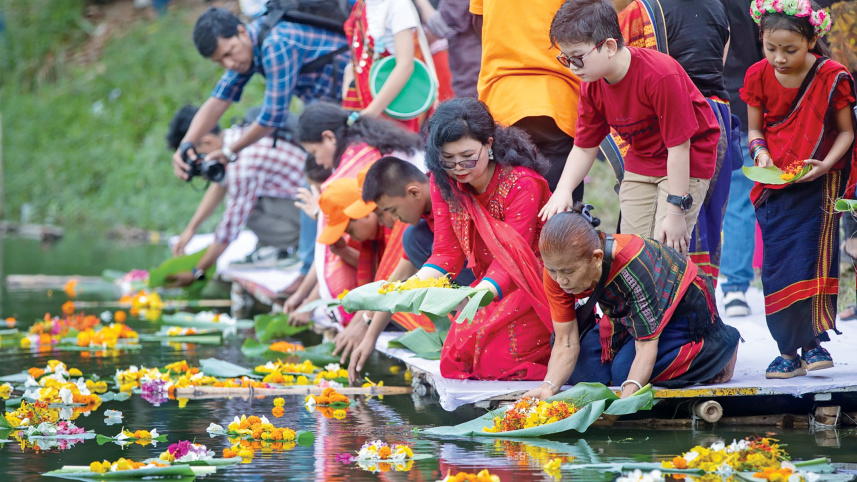
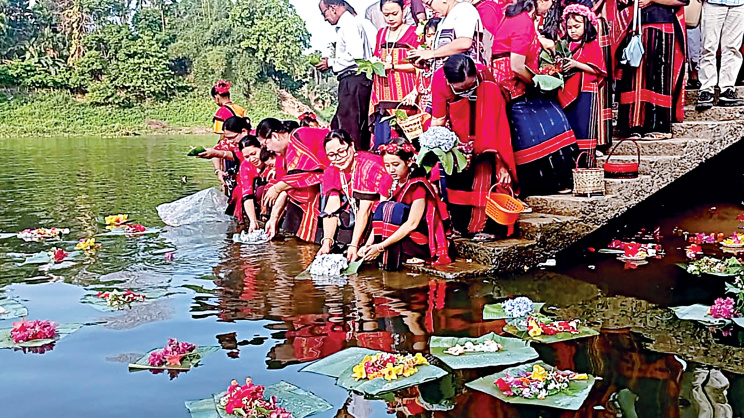
Biju, Boisu, Sangrai, Bihu, Shangkran, and Bishu are different versions of a festival celebrating the New Year and the arrival of spring in the Chittagong Hill Tracts (CHT). Each indigenous community has its own name for it in their dialect, and together they are often grouped under the umbrella term Boisabi.
We often say the grass is greener on the other side, but in truth, it is far more lush in our hills. So, in a “if the mountain won’t come to…” kind of situation, when you cannot be in the CHT, you must find another way to bring the colours and sounds of the hills to Dhaka.

Last weekend, wandering through an indigenous Biju Mela at the Shakyamuni Buddhist Temple in Mirpur, I was mesmerised by the music, dance, flavours, and vibrant colours of the hills that had found their way to us, Dhakaites.
Stepping into the mela, I did not expect to discover rare edibles like the humble shimul flower. I had always associated it with cotton pillows and childhood memories, never imagining it could be eaten. At one stall, baskets of dried shimul flowers were neatly packed, waiting to be sold. The vendors explained how they are softened in warm water, stir-fried, or mixed into spicy salads with fermented fish paste. My surprise quickly turned into fascination: something I had thought of only as ornamental was, in fact, a delicacy deeply rooted in indigenous cuisine.

The Chittagong Hill Tracts are full of such wonders. Rare delicacies like Rokto Gota, or Blood Fruit, found in the wild forests, are cherished for their deep-red colour and tangy flavour. I first heard of it from a celebrated Chakma chef and had always wanted to forage for it. Finding it in Dhaka was a treat.
Then there is Rangamati’s turmeric, famed for its rich colour and earthy aroma. In Dhaka, people often seek it out at fairs and specialty shops, believing it to be purer and more potent than the turmeric sold in city markets.
Another treasure is the wild, native ginger of the CHT. The hilly climate is ideal for growing it through traditional jhum (slash-and-burn) agriculture in Rangamati, Bandarban, and Khagrachhari. In Dhaka, we mostly find commercial hybrid ginger, bland and watery in taste, whereas the native variety is pungent, sharp, and aromatic -- often described as earthy and peppery.
Binni chal, our sticky rice, and jhum pumpkins, known for their starchy texture and sweet, nutty flavour, are already familiar to Dhaka residents. But the region’s unique climate also makes it a hub for high-value fruits like bananas, pineapples, and papayas, grown with organic fertilizers that enhance their taste.
These foods carry the essence of the hills into our urban kitchens, acting as a bridge between the forest and the capital. They are cuisines are cultural markers tied to festivals, rituals, and the rhythm of seasons.
Walking through the mela, surrounded by traditional dances and songs, I realised that food here is more than sustenance. It is memory, identity, and celebration. Each rare item -- whether a dried flower, a crimson fruit, or a golden spice -- tells a story of resilience and belonging, connecting the hills to the city through the shared joy of discovery.
Tasting them feels like stepping into a living archive -- where every bite carries the wisdom of grandmothers, the resilience of indigenous communities, and the beauty of a land that still holds secrets in its trees and flowers, speaking of a cuisine rooted in the forest and river.
 For all latest news, follow The Daily Star's Google News channel.
Comments