


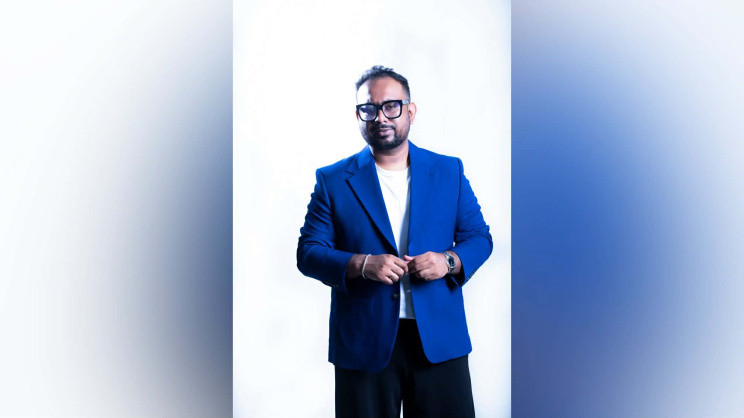
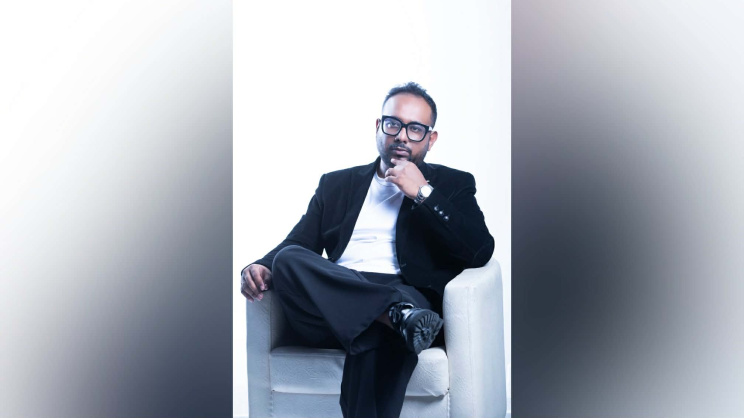
A film isn’t a race, you don’t have to be ‘first’: Raihan Rafi


The ‘whistle’ seems to be blowing loud for Raihan Rafi as he gears up to present what could be one of the most experimental films of his career, with “Pressure Cooker”.
Since the trailer dropped, audiences have been raving about its striking colour-grading, breathtaking cinematography, and bold storytelling. For Rafi, the film is also a personal milestone — it marks the first time he has stepped in as a co-producer, adding a new layer to his creative journey.

After delivering a hat-trick of commercially successful films, the director is now exploring new territory. With “Pressure Cooker”, he has set out to create a story that doesn’t fit neatly into either the art-house or mainstream commercial category.
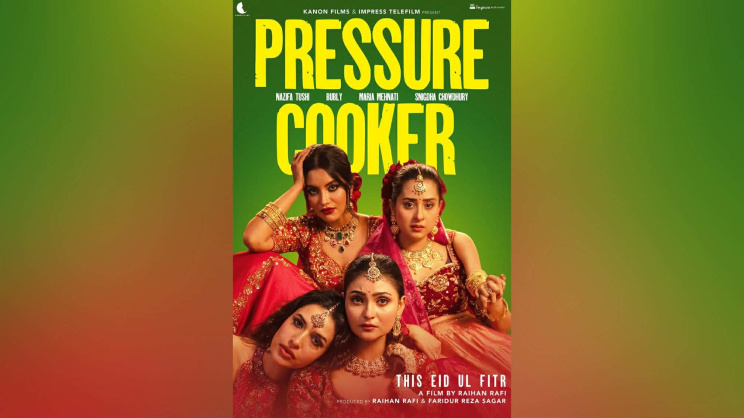
The trailer immediately caught attention with its unusual title: ‘Whistle’. For Rafi, the name is deeply symbolic. “The name connects both to a pressure cooker and to sound,” he said. The first whistle heard in the trailer was created entirely through sound editing, reflecting the chaotic rhythm of the city at the heart of the story.
“When you think of Dhaka, the first thing that comes to mind is sound—the streets, the traffic, the constant buzz. We tried to symbolically portray the city through that idea.”
The conversation turned to the film’s female-led cast. While some might describe it as a “women-centric” film, Rafi is careful with the term. “I don’t like calling it that. When you say a film is women-centric, it feels like you’re diminishing the women. Do we call films about men ‘men-centric’?”
“Pressure Cooker” follows a hyperlink narrative, weaving together multiple interconnected storylines. It also presents familiar actors in completely new avatars. Viewers will see different sides of Bubly and Nazifa Tushi, alongside new talents like Snigdha Chowdhury and Mariya Hossain Mehnati.
Preparing the cast took months of rehearsal and planning. Tushi, for instance, underwent extensive training to authentically portray a worker at a message parlour. “This isn’t something you can just act out,” Rafi said. “She trained with professional beauticians to truly understand the work and environment.”
The production itself was ambitious. To create a realistic setting, the team built a full-scale parlour, so convincing that anyone entering it felt like they were stepping into a real establishment. “Anyone who entered the set felt like they were actually in a real parlour,” Rafi said.
Rafi continued. “’Pressure Cooker’ is a film where I’ve mixed art and commercial elements. You can’t call it an art film, nor purely a commercial film—you can just call it a good film. That’s what we should call it. You’ll see Dhaka in this film; you’ll recognize our city. Many filmmakers follow Tamil or Western cinema, but I want to make films for my own people, my own audience.”
Visual storytelling was particularly important for him. “If I had shot this in America, every frame would naturally look beautiful. But in Bangladesh, creating strong, beautiful cinematography is a challenge. The first shot is of our country’s mustard fields, and I tried to layer a lot of story and depth into it—a child watching women in burqas, leading into the hidden, darker side of Dhaka inside a message parlour.”
Rafi described the trailer as a roller-coaster ride. “Through the spa center and the sounds within it, the trailer tries to show the full feel of the film. The ride ends, and so does the trailer.”
He also reflected on the state of local cinema today. “People have grown bored seeing the same things over and over—the same fights, the same conflicts. That’s what’s trending now: violence, violence, violence. Meanwhile, our original films are losing their place. Some people are already saying they’re not interested after watching the trailer, but many others realize that this will actually be something different.”
“Even if the film gets termed ‘experimental’ on its budget, it can still recover. But if people like it, it will be a blockbuster. I believe the audience will enjoy it. A film isn’t a race—you don’t have to be first or second. A film is a director’s philosophy, the hunger of his mind. I want to give my audience something new. If they like it, they’ll say it’s good; if not, they’ll say it’s bad. That’s what cinema is.”
 For all latest news, follow The Daily Star's Google News channel.
Comments