


Will India hand over Hasina?

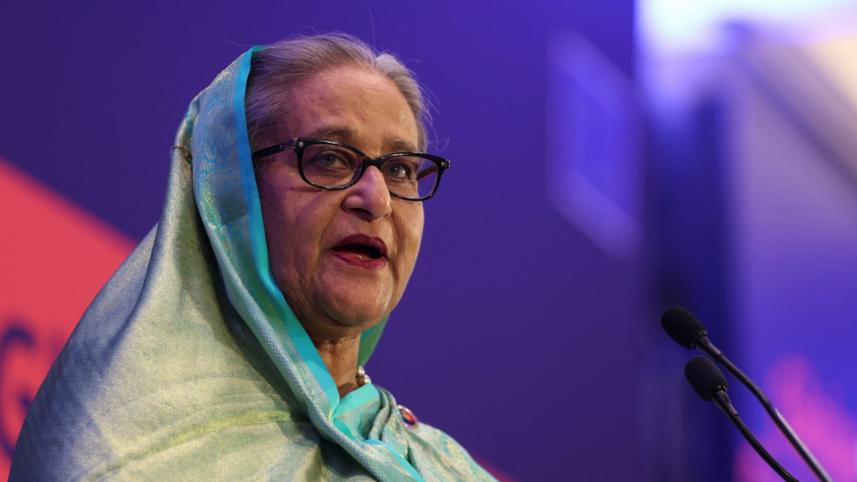
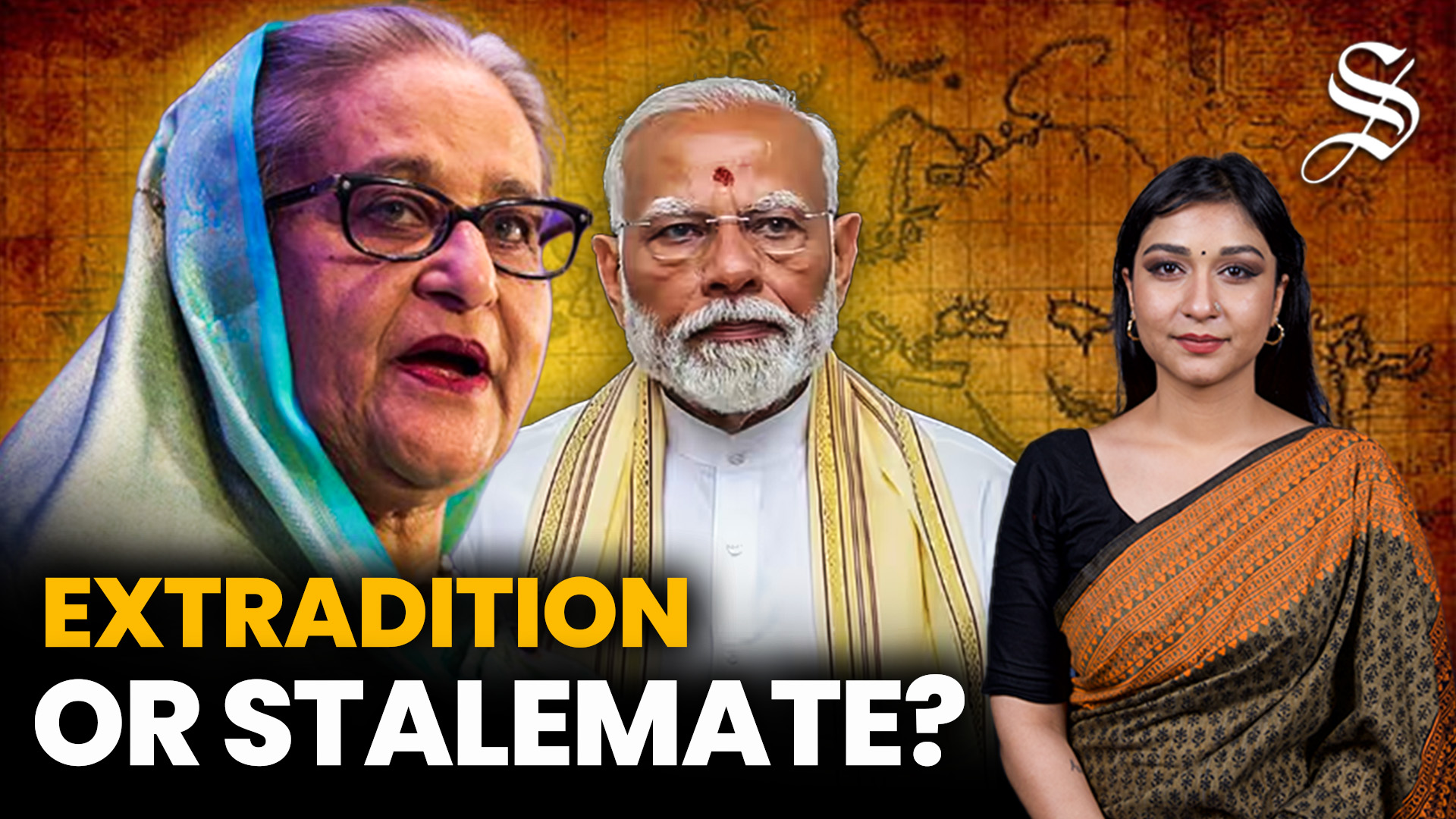
New Delhi’s latest remarks about former premier Sheikh Hasina’s extradition being under review led to some speculation whether its stance has changed.
Although still non-committal, the Indian foreign ministry spokesperson, Randhir Jaiswal, said on April 17, the request was being “examined as part of ongoing judicial and internal legal processes”.

Bangladesh had previously raised the issue at several bilateral meetings and requested for Hasina’s extradition. Foreign Minister Khalilur Rahman reportedly discussed it with his Indian counterpart S Jaishankar during a visit to Delhi. Given the sensitivity of the matter, it is widely held that the extradition will be more a matter for political settlement than a legal debate.
Prima facie case
While there is an extradition treaty between Bangladesh and India, the legal process that Jaiswal mentioned also relates to India’s Extradition Act of 1962. “The legal steps would have to adhere to this law,” says Ujjaini Chatterji, an independent lawyer noted for her work in human rights and constitutional law.
She explains that upon receiving an extradition request, India would appoint a magistrate to examine whether the case against Hasina holds water.
But before that, the magistrate is expected to issue a warrant of arrest for the “fugitive criminal”, as the law puts it. That may not be necessary in this case since Hasina is living under the protection of the Indian government.
The law stipulates that once she appears before the court, “the magistrate shall inquire into the case in the same manner and shall have the same jurisdiction and powers” as if it were a case being tried in India.
The magistrate would essentially see if there is a prima facie case based on the evidence, that is, whether the evidence stands up to the allegations on the face of it, if the case were being tried in India. If so, the magistrate may send Hasina to jail in India to await further orders and “report the result of his inquiry to the Central Government, and shall forward together with such report, and written statement which the fugitive criminal may desire to submit for the consideration of the Central Government”.
Exceptions and exemptions
While the extradition treaty exempts the requesting party from providing proof of guilt stipulating that a warrant of arrest and a proof of identity would suffice, Chatterji says that this particular case is more nuanced. “One should provide documents to establish that the allegations and evidence make for a viable on the face of it.”
There are two caveats that could become potential hurdles. Chatterji explains that the law (as well as the treaty) provides for an exception if the allegations are of a political nature, or if the accused person, in this case Hasina, proves that she will not get fair trial in Bangladesh. “In these cases, India may refuse to extradite her.”
Both the law and the treaty, however, stipulate that murder, abduction and enforced disappearance do not count as offence of political nature.
The lawyer also points out that Hasina has been accused, tried and convicted for crimes against humanity under the International Crimes (Tribunal) Act of Bangladesh. “Such crimes, have a far higher threshold for evidence than a plain murder case.”
Although, India does not have such a law, similar crimes could still be prosecuted in India as its domestic laws do provide protection from crimes like mass murder, incitement to murder, abduction, and so forth, she says. “So, in that respect, you still get protection from those crimes.”
She says the main consideration, however, would be if the request is being made in good faith and whether Hasina would receive a fair trial.

“Despite the exceptions, I feel what shall mainly be under legal scrutiny is the context, motive and whether the prosecution is a pretext of retribution,” says Chatterji adding that examination of Hasina’s extradition case shall primarily be on these lines. “So, the authorities ought to look at fairness and due process, which shall be the deciding factor.”
She further points out that whether the request is being made in good faith and whether Hasina will receive fair trial will be determined by the Indian government, not the magistrate.
 For all latest news, follow The Daily Star's Google News channel.
 Hasina's status
India has not yet clarified Hasina’s status and whether she has been provided with asylum or whether she is a refugee in New Delhi. India has only gone so far as to say that Bangladesh’s ousted premier is living under special arrangement.
The laws regarding refugee protection bar repatriation to a country where their life, liberty, body, dignity, etc. may be under threat. Although India is not a signatory to the Refugee Convention, its own regulations, and practices do provide for refugee protection which it is known to have applied selectively.
When asked whether there are legal obligations for India to protect individuals it has given asylum to, Chatterji says there has not been any such commitment from India’s part, in writing, at least in the public domain. “But even if there were, that commitment could be revoked to send someone back to their home country in the interest of justice.”
Previously documented cases of Indian nationals being extradited to UK and US have taken up to five years before the entire legal process was exhausted.
Comments