Dhaka's metro rail: Mass transit solution or missed opportunity?
Dhaka, the megacity and the capital of Bangladesh, now home to more than 18 million people, has long been notorious for its traffic. Sitting idly in traffic is a common issue for commuters that reduces their productivity and quality of life. So, when the Dhaka Metro Rail (MRT Line 6) began operations in 2022, it was huge news. People who used to spend hours on the road to get to work now need only half an hour on a comfortable elevated rail that runs between Uttara in the north and Motijheel in the city centre.
But is it a panacea for Dhaka's traffic problems? Not really! While it speeds things up on its specific route, it's only a tiny part of all the trips (1%) made in Dhaka every day (about 400,000 out of 4 million generated in the city). Most commuters still get around by other modes of transportation.
The strategic transport plan for Dhaka
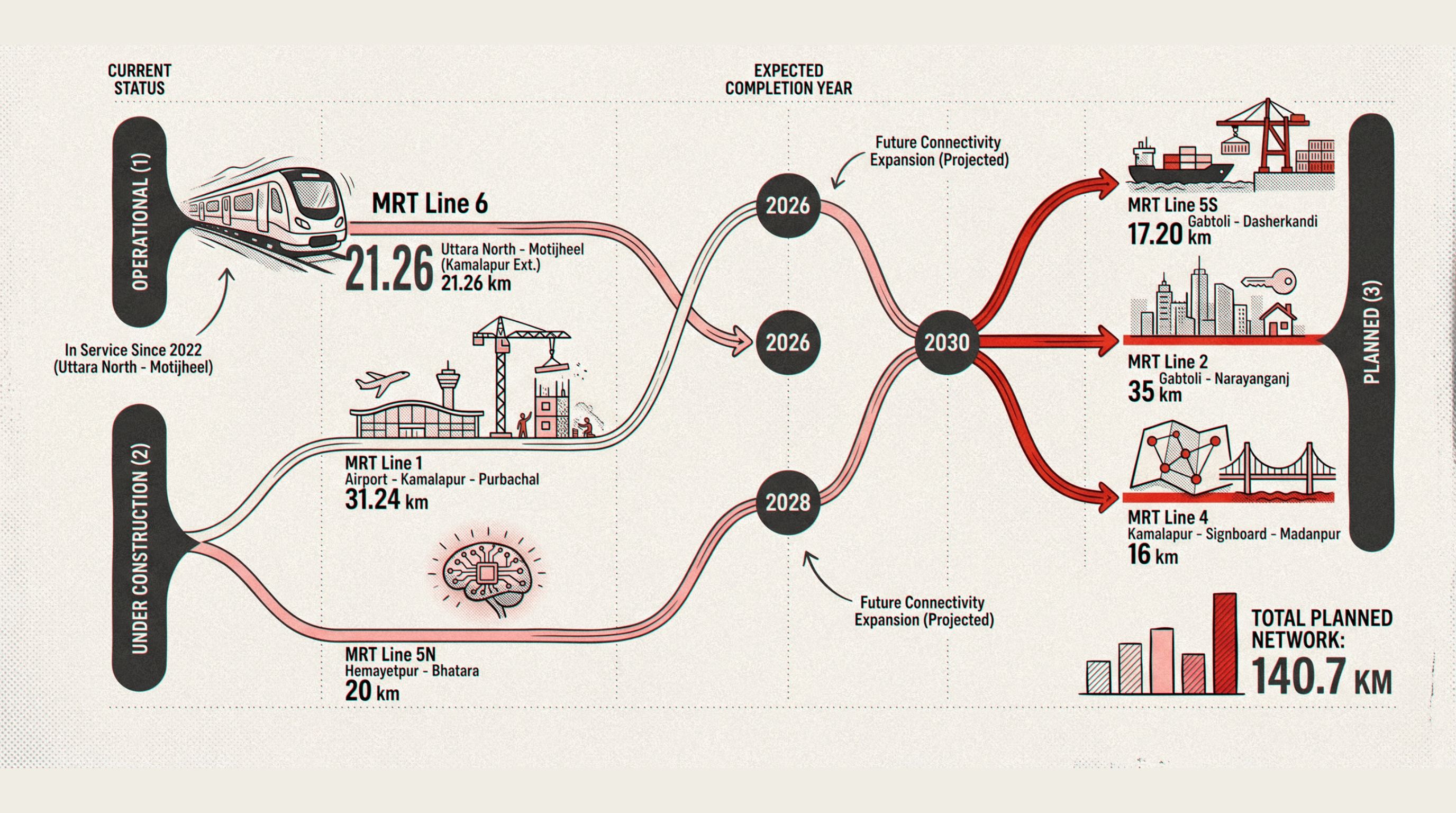
The idea for Dhaka's metro rail was initiated in 2004 with the Strategic Transport Plan (STP) by the Dhaka Transport Coordination Authority (DTCA), which recommended three metro lines. This plan was updated in 2015 (the Revised Strategic Transport Plan, or RSTP) to be much larger, aiming to have six metro lines by 2035. The main targets are to reduce traffic, improve connectivity and accessibility, provide safer, cleaner transport, and boost the economy. It's an immense commitment to modernising Dhaka's city transport.
The previous government, led by the Awami League, really pushed this metro rail-based plan forward without much scrutiny. Tackling Dhaka's traffic has always been a big election promise, and the metro rail is a key way they show they're delivering on it. Big projects like this also showcase national development and technological progress, both at home and globally, making the country or city look modern. The metro was aligned with the then government's long-term development goals, such as "Vision 2041" (aiming to make Bangladesh a developed nation), regardless of its financial viability. The launch of MRT Line 6 has been celebrated as a major national achievement, often called "another feather in the cap" for the government's efforts. This strong political drive highlights how important the metro is seen as for solving a critical urban problem, politically rather than technically.
The money side of things
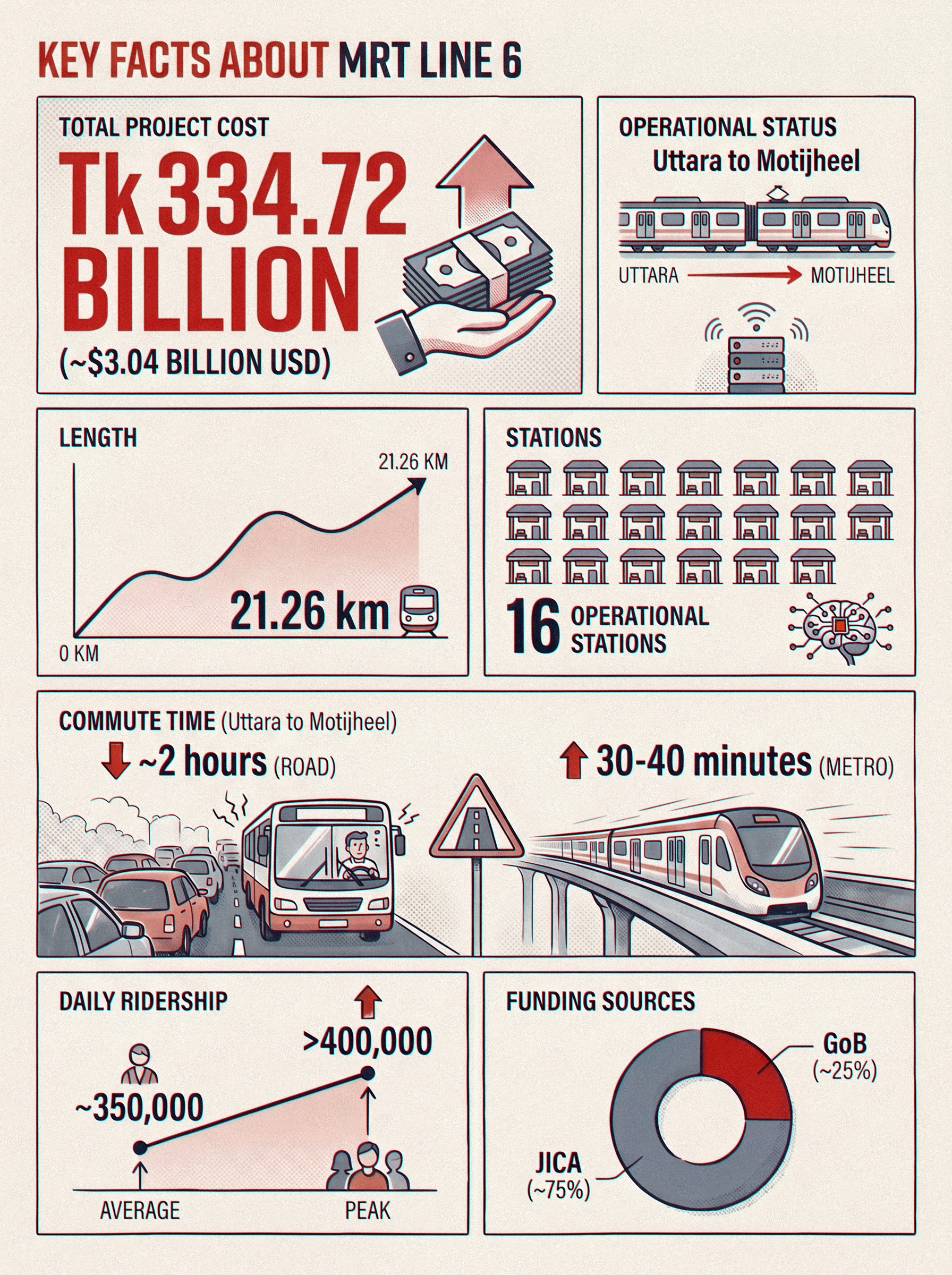
Building the Dhaka metro rail, especially MRT Line 6, is incredibly expensive for a nation like us. Line 6 alone costs about Tk 334.72 billion (about $3.04 billion USD), far higher than the original estimate. This trend has since been continued in other lines too. It is worth noting that most of the money (about 75%) comes from loans from developing partners. For MRT Line 6, it was the Japan International Cooperation Agency (JICA), with the rest from the Bangladesh government.
The cost per kilometre for MRT Line 6 is reportedly among the highest in Asia. This makes people wonder if the money is being spent as efficiently as it could be compared to similar projects elsewhere. Audits have been done on the company managing the project (DMTCL). These audits show that ticket sales revenue is recorded as deferred revenue due to ongoing paperwork. They also note that significant early spending is counted as assets. And there's a noticeable gap between the company's paid-up capital and the amount required by its founding documents.
While these audits provide insights into financial management, the available information doesn't explicitly show any direct corruption related to the construction or procurement processes for MRT Line 6. However, given the huge investment and the high per-kilometre costs, it's super important to have strong oversight to ensure public money is used ethically and efficiently for this and future metro projects. People have also raised concerns about the high costs of other planned metro lines, underscoring the importance of transparency about funding in these mega projects.
Consequently, the present government has initiated re-evaluation of this MRT-centric vision. There is a growing push to pivot away from high-capital MRT lines toward more cost-effective alternatives, such as Light Rail Transit (LRT) or monorails, which may offer similar connectivity while carrying a lower debt burden.
How it's changing lives
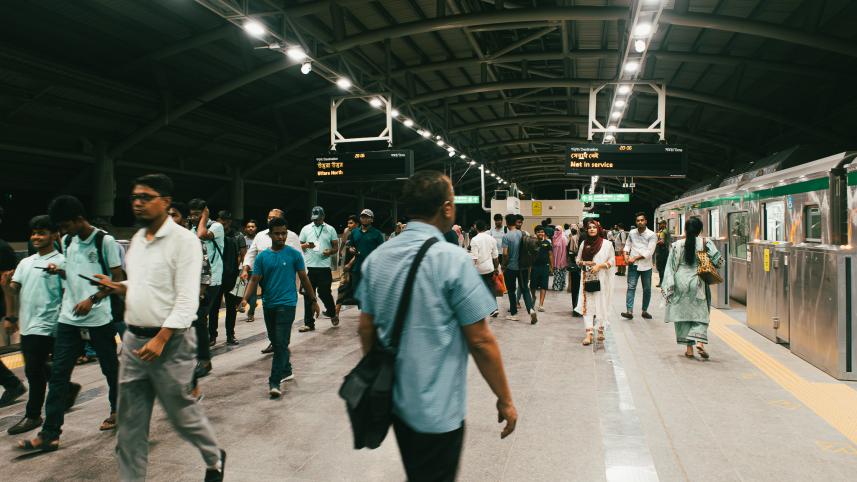
Despite the huge cost, MRT Line 6 has made a real difference for some Dhaka residents. It's popular, with about 350,000 to 400,000 riders daily. This popularity stems from how much it reduces commute times on that really busy Uttara-Motijheel route. Travel time has dropped from about two hours by road to just 30-40 minutes on the metro, saving commuters a lot of time and making their journeys more reliable. Once all stations are open, including the extension to Kamalapur, along with an increase in the number of coaches and a reduced headway, daily ridership for Line 6 is expected to reach around 500,000, with long-term capacity of up to 60,000 passengers per hour in each direction.
A recent JICA study shows that metro users in Dhaka are generally happy, especially with the service's safety and reliability. Separate compartments for women also had a positive effect. The metro is also expected to benefit the environment by encouraging a shift from private cars to mass transit, reducing traffic and pollution. Interestingly, vehicle speeds on the metro corridor have increased, possibly because of the improved roads built as part of the metro construction, rather than the metro itself reducing traffic.
However, who really benefits most from the metro? It seems it’s mostly the middle and upper-middle classes. Not many people have switched from traditional public transport, such as buses, to the metro, especially those on lower incomes. Buses are still much cheaper (a minimum fare of Tk. 10 compared to the metro's Tk. 20). And for short trips (under 2 km), rickshaws are still preferred because of their door-to-door services. This suggests the metro mainly serves people who previously used ride-sharing apps (like Uber) or their own private cars. So, it's successful in getting a challenging group onto public transport, but it's not yet a "mass transit" solution for everyone, especially lower-income groups.
One clear, perhaps unintended, winner of the metro project is the real estate market. Along the metro route, land and apartment prices have reportedly doubled or even more, mostly making property owners in these areas richer. This indicates a significant transfer of wealth, suggesting that the metro's economic benefits might not be evenly distributed across society.
What's next and the hidden downsides
Dhaka's metro network is planned for aggressive expansion. Works are already underway to extend Line 6 further south to Kamalapur Railway Station, a major transport hub. Plans are in motion to extend the network northward towards Tongi and westward towards Savar. Work is ongoing for MRT Line 1 (airport to Kamalapur and Purbachal) and MRT Line 5 (Hemayetpur to Bhatara).
The success of the metro ultimately depends on its ability to serve as a comprehensive mass transit solution for all residents of this vibrant megacity.
But achieving this lofty vision has its hurdles. Project implementation can be painfully slow, with delays in obtaining necessary approvals, especially for projects that rely on foreign loans. For the metro system to last and run well, Bangladesh also needs to train its own skilled workforce to operate and maintain it, reducing the need for expensive foreign experts.
The metro network's true impact depends on how well it integrates with other transport modes and with facilities for walking and biking. Passengers currently face difficulties getting to and from metro stations due to poor integration and the lack of basic pedestrian amenities. These have made the metro less effective and barely accessible. There's an urgent need for a comprehensive "feeder" transport system and plan for a pedestrian network that complements the metro.
Another important aspect is the introduction of the Transit-Oriented Development (TOD) concept in Dhaka. TOD refers to the development of areas near metro stations with residential, commercial, and public spaces to facilitate convenient access for individuals to live, work, and shop near transit hubs. This has been completely ignored in the planning stages of the metro rail network. At present, there are some TOD initiatives at some stations in Uttara (which is now barren land). Still, the existing Central Business Districts (CBDs), such as Karwanbazar, Motijheel, and Mirpur, are not being considered. Also, there is no concrete plan for a multimodal integration among the Kamalapur Rail Station, MRT Line-6 and the nearby BRTC Bus Depot. Moreover, property prices and real estate values around the stations have increased by 2 to 3 times. Still, this phenomenon also benefited the urban upper-middle and upper classes, as higher residential plot values made them even richer. The land value increment has not been captured by either the government or private investors, which should have been a common norm. As a result, precious land and property remain underdeveloped in a city like Dhaka, where land is scarce.
Lastly, even though the metro exemplifies progress and modernisation, its substantial cost and limited accessibility for lower-income groups remain major concerns. Ensuring that future metro lines and urban development initiatives genuinely serve all sectors of Dhaka's population, rather than solely the affluent, will represent a significant challenge for policymakers as the network advances. The success of the metro ultimately depends on its ability to serve as a comprehensive mass transit solution for all residents of this vibrant megacity.
Dhrubo Alam is Deputy Transport Planner at the Dhaka Transport Coordination Authority (DTCA).
Send your articles for Slow Reads to slowreads@thedailystar.net. Check out our submission guidelines for details.
Can Bangladesh make its plastic waste policy work?
Dhaka accidentally built the city planners now want. Can we make it liveable?
Can Bangladesh produce its own knowledge?
How we are killing Dhaka
Can Bangladesh afford not to invest in Bhola’s gas?
Bangladesh’s renewable policy: Still too little but not too late
Prabhat Patnaik speaks / Why the Global South must rethink export-led growth
Bhotekoshi flood: Another warning from the Himalayas. Are we listening?
Renewing the Ganges Water Sharing Treaty: What should Bangladesh do?