


The way world is reacting
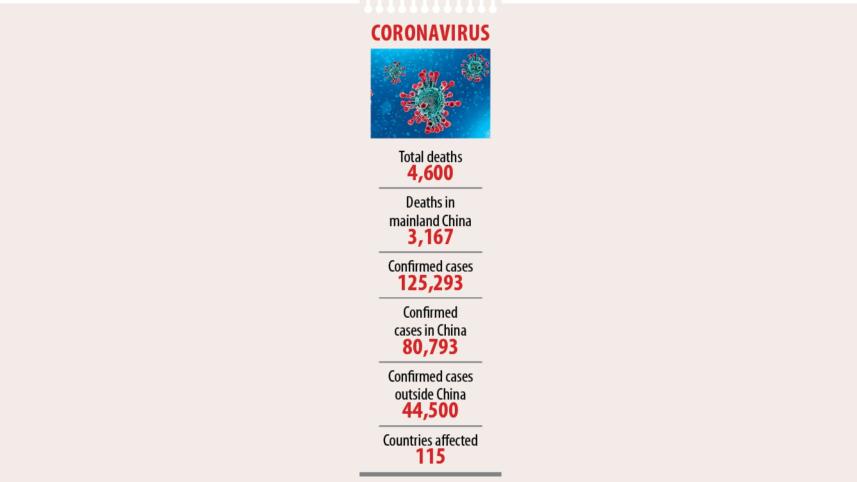
The coronavirus has spread to 116 countries and territories, with each implementing its own measures to contain the disease. The goal is to prevent the Covid-19 from becoming endemic in their populations. But it is a race against time and there is no one-size-fits-all solution. Here's a look at some of the measures that the affected countries and regions have taken so far.
China: China-- excluding the territories of Hong Kong and Macau -- has had 80,793 cases and 3,169 deaths since the coronavirus emerged in the city of Wuhan, Hubei province in December. People in Wuhan and elsewhere in Hubei province have been largely confined to their homes for almost 50 days — a policy that is controlling the movements of tens of millions of people. The lockdown began in Wuhan on January 23. Within weeks, policies became stricter. Authorities began enforcing round-the-clock "closed management" of all residential complexes, banning the private use of cars, forbidding residents from leaving their apartments without permission. The severe restrictions, which have been relaxed on Tuesday, in Hubei are being credited for a decline in new cases there. There have been 15 new infections and 11 deaths in China since 1700 GMT Wednesday, while 62,793 people have recovered from the virus. There have been no cases reported outside Hubei province since March 8. But such measures might be difficult to enforce in democratic societies.
 For all latest news, follow The Daily Star's Google News channel.
 Italy: Italy has 15,113 cases and 1,016 deaths related to the virus, mostly in the north. The number of cases there has jumped significantly in recent days. On Monday, the Italian government announced extraordinary measures to contain the virus that first spread there in late February. Prime Minister Giuseppe Conte declared all of Italy a "red zone" — meaning people should stay home except for work and other emergencies. Public gatherings have been banned and freedom of movement sharply curtailed. All domestic sporting events, museums, cinemas and theaters in the country have been suspended until April 3. Schools and universities are closed too. Yesterday, Conte announced that Italy would shut all stores except for pharmacies and food shops to curb the disease.
Iran: Iran has reported 10,075 cases and 429 deaths from COVID-19. Public gatherings, including Friday prayers in Tehran and other major cities, have been canceled. Schools have been closed and crews of cleaners have been dispatched to disinfect trains, buses and gathering places in all cities. Around 70,000 prisoners have been given leave from jail and hospitals are only admitting patients requiring urgent treatment and those suspected of having Covid-19. About 300,000 medical teams, joined by the elite Revolutionary Guards, have started checking on every household across the country. Medical teams and police are stationed on roads and have the power to stop people who have fever and quarantine them for 14 days.
Spain: Spain has reported 2,968 cases and 84 deaths. Authorities in regions with the most cases — Madrid, Basque Country and La Rioja — have ordered closure of all schools, universities, museums and daycare centers for two weeks. Authorities have ordered disinfecting public transport daily. Flights between Spain and Italy have been suspended and large gatherings canceled in the three regions. Soccer matches for Spain's La Liga has been suspended. Spanish Health Minister Salvador Illa encouraged companies to reduce working hours and travel and to support remote work.
South Korea: South Korea has seen 7,869 cases and 66 deaths. People in cities across the county have been encouraged to stay home, some offices have closed, and many events are postponed. The nation's schools are closed until March 22. The country's largest outbreak is in country's fourth-largest city of Daegu, which accounts for more than 90 percent of cases. South Korea, where the number of new cases has been on the decline, has been a model of coronavirus testing. The country has 50 drive-through screening clinics where people can get a medical exam and have a sample taken in just 10 minutes. Health workers are processing up to 15,000 tests every day.
France: France has reported 2,281 cases and at least 48 deaths so far. The country announced a nationwide ban on gatherings of more than 1,000 people. The government has placed additional restrictions on four zones with clusters of coronavirus cases: Morbihan in Brittany, Haute-Savoie in eastern France near the Swiss border and the départements of Oise and Haut-Rhin in north east France. In these places there is a ban on all public gatherings including markets, community groups and church services. President Emmanuel Macron has advised citizens nationwide against visiting older people, to avoid spreading the disease to those most vulnerable. France has not taken a blanket approach to closing schools. It has requisitioned all of the country's surgical masks for distribution to those who need them. The government also has capped the price of hand sanitizer.
United States: The United States has recorded 1,101 infections and 28 deaths since it announced its first case in January. Cases have been found in more than 37 states and the District of Columbia. President Trump announced on Wednesday night that he was taking action to stem the spread of the coronavirus by suspending travel from Europe to the United States for 30 days, beginning on Friday. The restrictions do not apply to Britain. The limits take effect Friday at midnight and will exempt American citizens and permanent legal residents and their families. Later on Wednesday night, the State Department issued an advisory telling Americans to "reconsider travel" to all countries because of the global effects of the coronavirus. It is the department's second-strongest advisory, behind "do not travel." Before the announcements, restrictions or containment measures have mostly come from state and local authorities. A growing number of colleges and universities across the US have canceled in-person classes.
Japan: Japan has reported nearly 600 cases and 19 deaths in mainland. Japan has put into place tougher border control measures that essentially ban travelers from China and South Korea until the end of March. Visas for people who haven't yet arrived in Japan are invalidated; people who have already arrived from those countries, whether they are Japanese or foreign nationals, are asked to undergo a 14-day quarantine. But the situation in Japan might be worsening. Health authorities are warning local governments to prepare for a surge in cases. The health minister says the epidemic in Japan is entering a new phase, which suggests that the country will need to take tougher measures.
Germany: Germany has recorded 2,078 cases of the coronavirus and reported four deaths. Chancellor Angela Merkel on Wednesday warned that up to 70 percent of Germans could be infected by the virus. The country's health minister encouraged cancelling events that draw more than 1,000 people. The city of Berlin has called off performances at all opera houses, state theaters and concert halls. Germany's soccer top league, the Bundesliga, announced that for the first time ever, a number of its matches will take place with no fans in attendance.
India: The country has reported 73 cases so far with one death. India has suspended all tourist visas until April 15 and said it would quarantine travellers arriving from China, Italy, Iran, Republic of Korea, France, Spain and Germany. India's visa suspension begins March 13 at 1200 GMT. Diplomatic visas and visas for international organizations, employment and projects are exempted from the ban. The government has also "strongly advised" Indians against non-essential foreign travel. The state government in Delhi yesterday declared coronavirus an epidemic and shut all cinemas, schools and colleges.
Gulf countries: Gulf countries have responded to the coronavirus outbreak by introducing travel bans, stepping up screening measures at important entry points and rescheduling - and in some cases cancelling - significant sports and cultural events. The six-member bloc is made up of Saudi Arabia, the United Arab Emirates, Bahrain, Kuwait, Oman and Qatar and all members have reported infections. Most of the countries have closed schools and universities, in a series of measures to contain the fast-spreading coronavirus.
Latin America: The continent still has only around 150 registered cases and two deaths. However, the countries in the region have stepped up measures to slow the advance of the coronavirus, announcing a slew of restrictions on travelers from the worst-affected countries and shutting down major sports events. Argentina, Colombia and Peru announced that travelers from China, Italy, Spain and France would be isolated on arrival. El Salvador banned entry to all foreigners for a period of 21 days.
Comments