


Leprosy in Bangladesh’s tea gardens -- the highest in the world
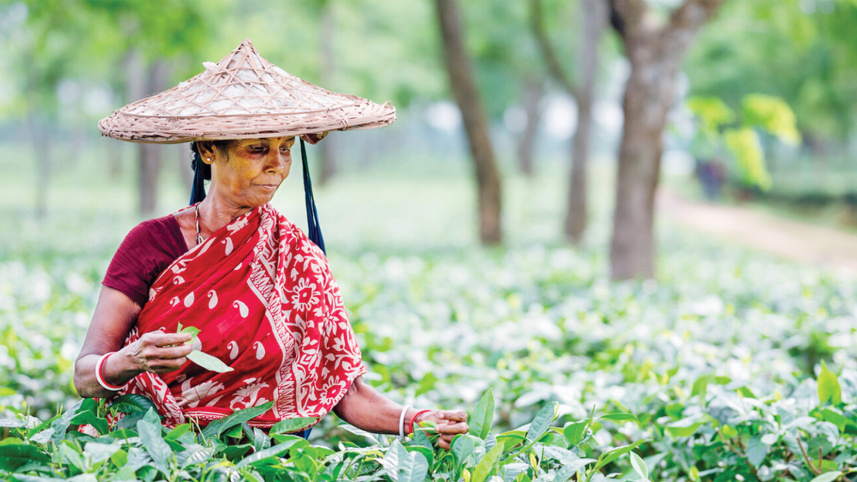
Rupan Bhumij (54), a tea-leaf plucker at Patrokhola Tea Garden in Kamalganj upazila of Moulvibazar district, was diagnosed with leprosy around 2020. Her symptoms began with white patches and small bumps on her face, which she assumed were boils or insect bites from working in the tea garden. The areas were neither itchy nor painful, so she did not initially suspect a serious illness. After about a week, she sought help from HEED Bangladesh, an organisation working on leprosy control in the Sylhet region. Medical tests confirmed leprosy, and with HEED’s assistance she was admitted to Sylhet Leprosy Hospital, where she received inpatient treatment for over a month before continuing medication at home. Rupan’s case was severe. Painful sores developed on her feet and soles, requiring special footwear. Even after treatment, she continues to suffer complications in both feet and her right hand. Loss of sensation means she cannot feel injuries to her feet, even when pierced by thorns, and winter worsens her condition. Persistent pain in her hand has forced her to stop plucking tea leaves altogether.
Another patient, Purnima Almik (13), daughter of a tea plantation worker at the same garden, noticed a small patch on her face nearly two years ago. Her family believed it was a birthmark. The patch slowly grew larger with no pain or itching. She was later diagnosed with leprosy at HEED Bangladesh.

Experts identify several factors behind the unusually high prevalence of leprosy in tea gardens: lack of awareness, delayed diagnosis, poor adherence to long-term medication, and deep-rooted poverty. Even after diagnosis, many patients fail to complete treatment.
Rupan still needs to continue medication for another year, but financial hardship prevents her from collecting free medicine from Sylhet Leprosy Hospital. She cannot travel alone and would need someone to accompany her. A round trip to Sylhet for two people costs at least 2,000 taka—far beyond her means. Purnima Almik’s case illustrates this problem. After HEED identified her as a leprosy suspect, she was prescribed medication. When the facial patch began fading after a month, her family discouraged her from continuing treatment. Once she stopped, the disease progressed and the patch widened, forcing her to return for care.
Leprosy is not hereditary. It is caused by the bacterium Mycobacterium leprae, which primarily affects peripheral nerves. While it rarely causes death, delayed treatment can lead to lifelong disability. Early symptoms usually appear on the skin, making it easy to mistake leprosy for a harmless skin condition. Doctors note that leprosy and tuberculosis belong to the same bacterial family and spread through droplets from coughing or sneezing. Unlike tuberculosis, however, leprosy may take years to manifest symptoms.
Philip Gain, researcher and director of the Society for Environment and Human Development (SEHD), emphasises that tea workers are among the most economically deprived communities in Bangladesh. Low wages, overcrowded housing, malnutrition, lack of quality healthcare, and limited awareness allow leprosy bacteria to spread undetected. He stresses that improving livelihoods—through fair wages, nutrition, medical services, and decent housing—is essential to controlling the disease in tea gardens.
The writer is a researcher at the Society for Environment and Human Development (SEHD).
 For all latest news, follow The Daily Star's Google News channel.
Comments