


The chef, the GenZ, the dreamer

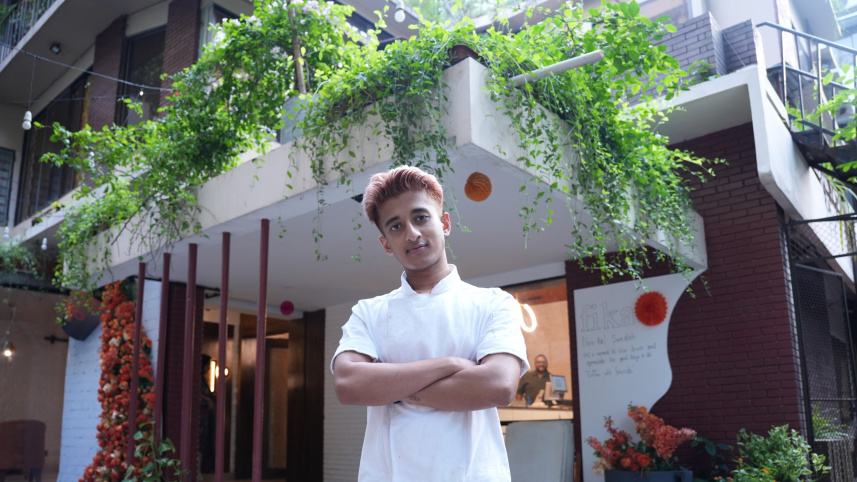
The smell of freshly ground coffee gave some solace to my not-so-fresh mood in the morning. As I sat in a corner of the café, the servers and the staff were operating at their highest level, without a thought or a delay in their movement in the limited space. Which led me to ponder, what makes an individual an expert?
Is it training from a young age, countless hours of consistent hard work, decades of experience, or does it have anything to do with being talented or being a prodigy? These were the cobwebs I had to clear before I started asking the serious questions to the 25-year-old chef named Abdullah.

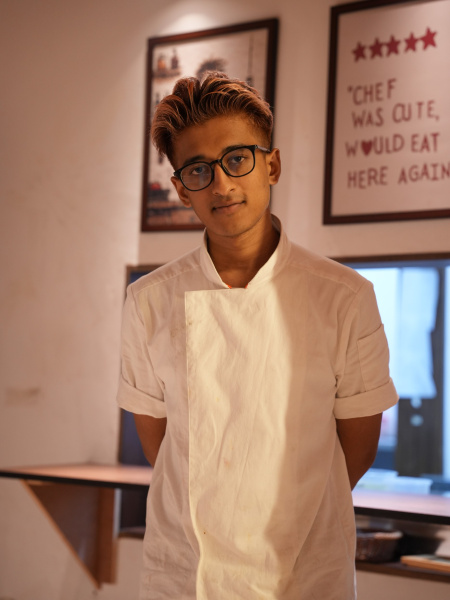
After an iced lemonocano and granola parfait, the cobwebs started to clear and the answer started to manifest. And like clockwork, the Gen Z chef appeared with his sleep-deprived face. After the mandatory hi and hello, we started the interview with a simple question; what led him into his line of work.
“Honestly, as a kid, cooking was always at the back of my mind,” Abdullah said. He grew up watching MasterChef Australia, like many others who romanticised kitchens from a distance. But the funny thing is, he did not actually cook until he moved to university.
And when he did, it was not exactly cinematic.
“My food was horrendous,” he admitted. “For the first two years, I cooked like a proper student and still failed at cooking daal and bhaat.” That failure pushed him towards a Sri Lankan takeaway restaurant, his first official job. There, between the heat, speed, and chaos, something clicked. “That’s where I fell in love with the rush of being on my feet, moving fast, falling behind, catching up, and dealing with that never-ending work train.”
Most people run away from pressure. Abdullah leaned into it by applying to a Michelin-starred restaurant in London right after COVID, when kitchens were reopening and positions were coming back. Somehow, as he put it, he landed a role as a demi chef de partie.
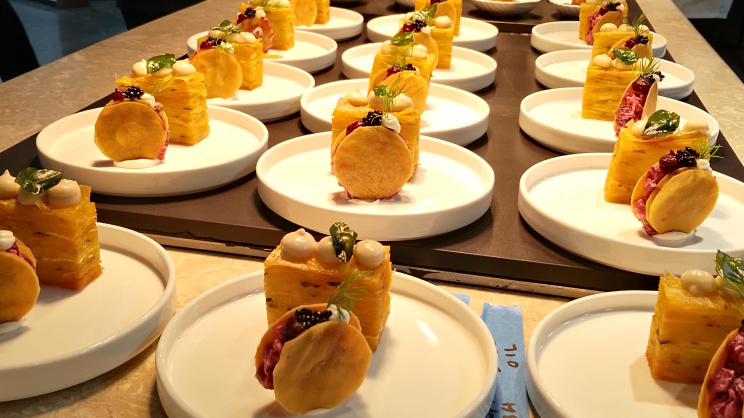
It was not a slow climb. It was a jump. “I skipped way too many steps,” he said, almost laughing at himself. Before food became his calling, Abdullah was a computer science graduate. His parents had put him through university, and he is still grateful for that. But office life, cubicles, and the idea of spending eight hours a day behind a desk felt like a future he could not make peace with.
“I knew I did not want to sit in a cubicle for eight hours a day and regret it when I was older,” he said. “I do not mind doing boring things when I am older, but I mind doing boring things when I am young.” That, he says, was his rebellion. The young chef did what many young brown men struggles to do, rebel against their parents’ wishes. Just stubborn enough to be honest.
His time in Michelin kitchens taught him perfection, but also the danger of worshipping it too much. For Abdullah, the biggest lesson was not to chase every opinion. “Ninety out of hundred people can say a dish is perfect, and ten people can still dislike it. You cannot take that too personally,” he said. “I accept criticism, but I am not going to change a dish based on every criticism.”
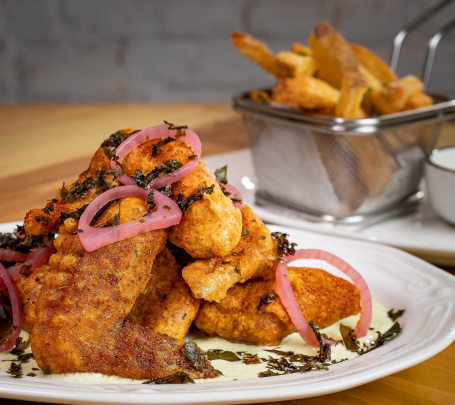
When I brought up The Bear, the now almost mandatory reference point for kitchen trauma, he did not dismiss it. He simply corrected the scale. “It is not 100 per cent like The Bear,” he said. “But old-school French kitchens still run with that kind of philosophy. It is an ‘iron sharpens iron’ type of environment.”
That obsession with seconds still follows him. In his own kitchen now, time is the big bad boss in the hardest level. Ten seconds may not matter to someone else, but to Abdullah, it can change a table’s entire mood. “The earlier and more on time I can send the food, the better,” he said.
Noticing his obsession with time, I could not help but ask the burning question, “What is harder; being judged by the elite culinary system or being responsible for running a kitchen that carries your own name?”
The young culinary whiz orates, “I genuinely believe working in that kitchen was a trial by fire. I experienced heartbreak, disappointment, and the need of my head chefs to be proud of me. However, I always felt a step behind my colleagues when it came to standard or speed. They were always a bit better.” But now, being responsible for 12 to 15 staff, his perspective shifted. “Maintaining the morale of his staff, while running a tight shift is harder to maintain. Now, my own reputation is on the line,” expressed Abdullah.
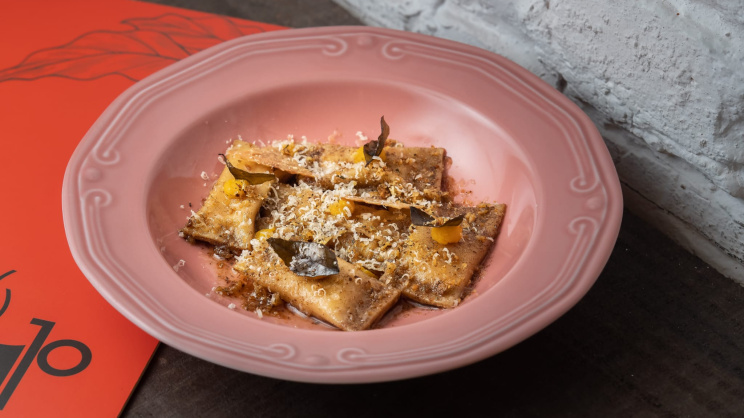
For him personally, however, the hardest battle is ingredients. Dhaka does not always offer the consistency he once took for granted in Europe. One week, the oyster mushrooms are perfect. The next week, they are spotted and unpredictable. “That always puts me in a tight spot, I am still trying to figure it out,” he continues to say, “I will have to travel more, especially to Chattogram and other places. I have heard they have better producers there.”
What he does have, though, is sauce. His love for sauces did not start in a European kitchen. It started at home. “My mum always used me as a taster,” he said. “She took my opinion on taste very seriously.” Back then, his vocabulary was limited to curries and masala mixes, but he could still tell when something was missing.
That early training stayed. Now, when he builds a sauce, he thinks first of the person eating it. “I usually try to hit nostalgia,” he said. “But I also like adding something a little different. I love when people taste something and think, ‘What is that little thing there?’”
 For all latest news, follow The Daily Star's Google News channel.
 In five years, Abdullah will be 30. Still young, as he reminded me. Still strong. Still cooking. His ambition is not wrapped in grand declarations.
“I hope I leave a small, cute little footprint,” he said. And perhaps that is where expertise begins. Not in age, applause or even in talent. But in showing up, again and again, tired face and all, and still trying to make the next plate better than the last.
Photo: Masum Ahmed Ethan
Location: Fika, Dhaka
Comments