


Did you know spraying perfume on your neck is actually risky?

Perfume is often treated as a harmless finishing touch — a few sprays before stepping out, a familiar scent that signals confidence or comfort. However, recent research is prompting us to examine more closely where and how we apply it, particularly in the neck area.
Researchers at the University of California, Berkeley, have analysed commonly used perfumes and cosmetics and found that many contain chemicals such as phthalates. These compounds are widely used to make fragrances last longer, but they are also known as endocrine disruptors. That means they can interfere with the body’s hormone system by mimicking or blocking natural hormones.

Hormones work through delicate signalling pathways. Even small disruptions can have cascading effects over time. Separate research cited by medical organisations like the Endocrine Society has shown that endocrine-disrupting chemicals may interfere with hormone regulation, including pathways related to thyroid function.
The thyroid plays a central role in metabolism, energy levels, mood, and temperature regulation. When its signalling is stressed repeatedly, the effects may not be immediate — but they can be cumulative.
This is where the neck becomes relevant. The skin on the neck is thinner than in many other areas of the body and is highly vascular, meaning it has a rich blood supply. Substances applied there are more readily absorbed into the bloodstream. Applying perfume directly over the thyroid area, especially daily, may increase the body’s exposure to these chemicals in a way we rarely think about.
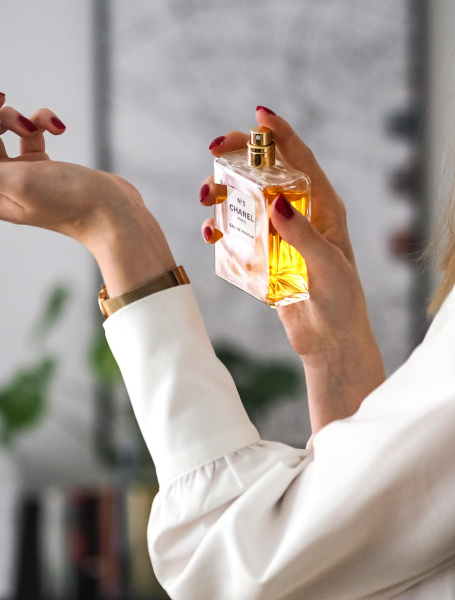
To be clear, researchers are not saying that occasional perfume use is dangerous or that fragrance should be avoided altogether. The concern is not a single spritz before a special occasion. It is repeated, long-term exposure in the same sensitive area. Over time, that exposure may add unnecessary hormonal stress, particularly for people already dealing with thyroid issues, hormonal imbalances, or heightened sensitivity to endocrine disruptors.
This issue also highlights a broader problem in personal care products: regulation often focuses on immediate toxicity, not long-term hormonal effects. Many fragrance formulas are protected as trade secrets, meaning consumers rarely know exactly what chemicals they are being exposed to.
What feels benign because it smells pleasant may still carry biological consequences that are invisible in the short term.
Small changes can reduce risk without sacrificing personal preference. Applying perfume to clothing instead of skin, or choosing areas with thicker skin, such as the wrists, may lower absorption. Opting for fragrance-free or transparently labelled products can also reduce cumulative exposure. These are not dramatic lifestyle overhauls, but practical adjustments based on what science is beginning to reveal.
The takeaway is not fear, but awareness. Our daily routines shape our health in quiet ways. Perfume will likely remain part of many people’s lives, but understanding how the body interacts with what we apply to it allows us to make more informed choices. Sometimes, protecting hormonal health starts with simply changing where we spray.
 For all latest news, follow The Daily Star's Google News channel.
Comments