


Anupom Singha Khokon repairs cameras others cannot fix
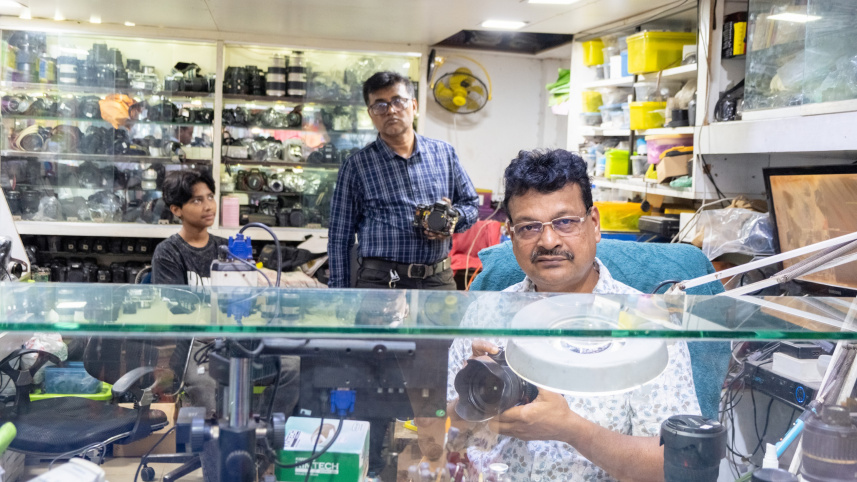
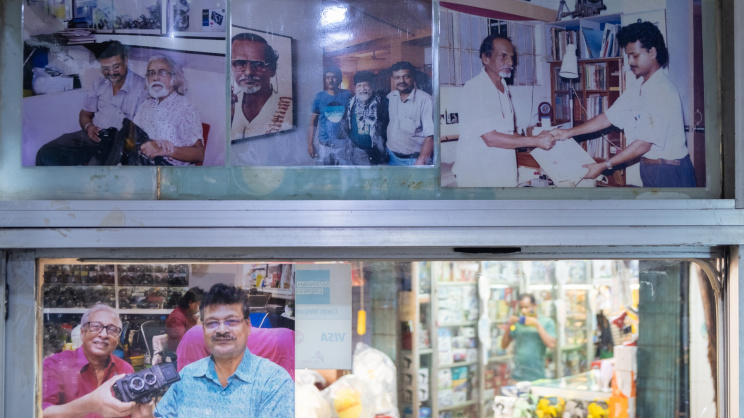
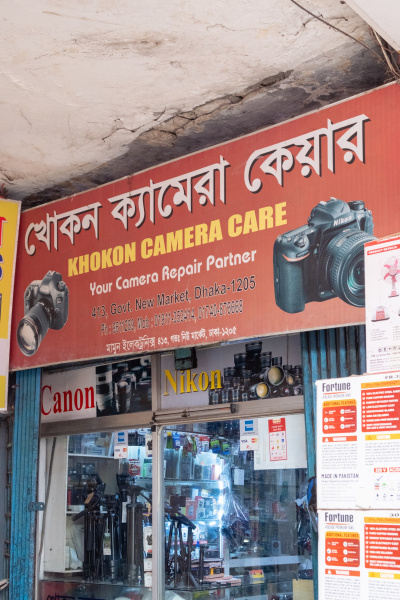
For many photographers in Dhaka, Anupom Singha Khokon is the person they turn to when a camera stops working, a lens develops fungus, or an old film body needs to be brought back to life. As the proprietor of Khokhon Camera Care in Dhaka’s New Market, he has spent more than three decades repairing cameras. But his relationship with cameras began much earlier, long before digital systems, mirrorless bodies, or error codes on screens.
“I have been working with cameras for a very long time,” he shares. In fact, he learned photography as a child. “I learned how to take photos when I was only in Class 5. We had a studio business.”

At that time, everything was film. His early training came not through formal classes but through daily exposure to the family studio. He watched others work, learned to take pictures, and gradually came to understand the entire process.
“Back then, photography was different; it was about film. You had to develop the film and then print the photos using an enlarger machine,” he recalls. He did both. “I used to print and take photos in the studio back then.”
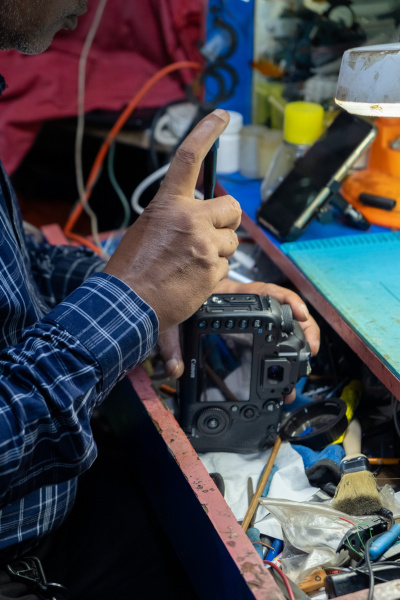
Learning through work
Khokon’s route into the profession was practical rather than conventional. After his SSC, he became more deeply involved in photography, working in studio photography, outdoor shoots, and reportage.
“After my Matriculation exams, I became fully involved in the profession,” he says. This was also a time when the media industry functioned differently. “Most of the people who collected the news didn’t know how to operate the cameras. They would collect the news, but we would take the pictures.”
Later, he completed a diploma in photography at Begart Institute of Photography, the institution founded by Manzoor Alam Beg, and later became an apprentice of the renowned photographer.
Adapting to every new camera era
One reason Khokon has remained relevant for so long is that he has adapted with every major shift in camera technology. He began with mechanical film cameras, then worked through the era when electronic systems were added to mechanical bodies, then DSLRs, and now mirrorless systems.
“Every step has brought something new,” he explains. “In the beginning, there were only mechanical cameras. Then electronics were added to the mechanical systems. Then came the shutters, and then DSLRs.”
When DSLR cameras first appeared, he realised he needed to learn again. And now, he is already looking ahead.
“Everyone is using mirrorless currently. After mirrorless, AI will perhaps come in the future. We will have to study that as well.” For him, technical change is not something to resist. “If your basics are strong, then nothing else is a problem.”
What camera repair actually involves
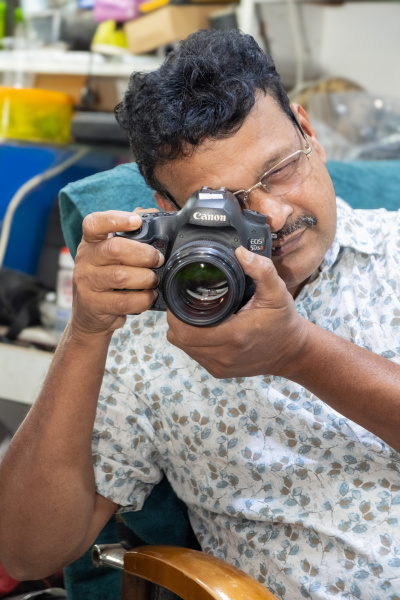
Khokon points out that many people do not understand what a camera engineer actually does. The work is no longer just mechanical. Modern cameras communicate through digital error messages, but those messages are not always accurate.
“Nowadays, the camera itself gives messages about the problem,” he says. “The error will appear on the back screen—Error 20, Error 30, Error 40. You have to understand these. However, these messages aren’t 100 per cent correct all the time.”
Lens repair is equally technical. “In lenses, problems usually show as communication errors,” he explains. “The stabiliser might be broken, or the autofocus motor might be bad.” He has seen the internal mechanics of lenses change, too, especially with newer magnetic motor systems replacing older gear-driven ones.
Still, for Khokon, repair is not only about replacing damaged parts. It begins with understanding how the camera is supposed to function. That is why he insists that photography knowledge is essential.
“It’s difficult to repair cameras without knowing photography,” he says. “You must know photography first.” A technician, in his view, needs to understand aperture, shutter speed, ISO, and output. “You must know photography; otherwise, you can’t fix cameras well.”
 For all latest news, follow The Daily Star's Google News channel.
 The problem is often neglect
Asked about the most common mistakes camera users make, Khokon’s answer is simple: poor maintenance.
“Camera care is the main thing,” he asserts. Bangladesh’s humid climate makes lenses especially vulnerable to fungus. “To prevent fungus on the lens, you must store it properly. Keep it in a dry cabinet, or use silica gel in an airtight box or container.”
He also warns about dust and sand. “If you take a camera to Cox’s Bazar, sand often enters through the gaps in the lens and jams it,” he says. “The lens won’t move properly; it will make a scratching sound because of the sand particles.” Much of the repair work he sees, then, could have been avoided with better handling and storage.
Why vintage cameras still come to him
Although digital cameras dominate the market, Khokon says interest in film cameras has grown again.
“The number of customers interested in film cameras has increased significantly,” he says. Film is expensive now, but the demand remains strong. “Sometimes people come to me with their grandfather’s camera and ask me to fix it by any means. No one else does this work anymore. I do it because I have a personal interest in it.”
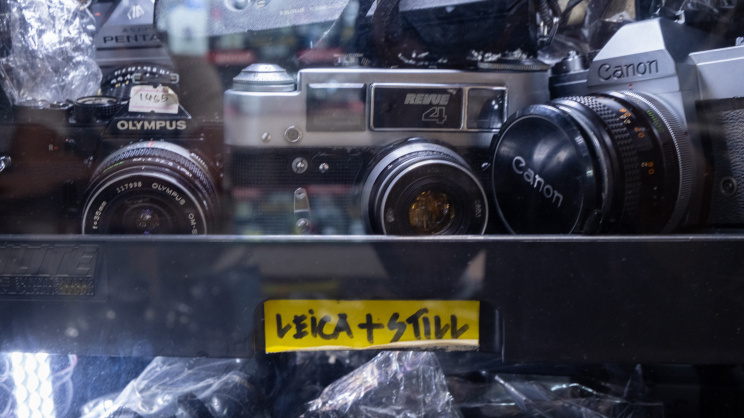
He still sells film, “one or two almost every day,” and regularly repairs older models such as Rolleiflex, Leica, Mamiya, Bronica, Yashica, Pentax, Canon, and Olympus. That continuing demand reflects both nostalgia and trust.
A profession built on patience
Khokon is clear that this is not an easy profession to pass on. “This is a job that requires a lot of patience,” he says. His sons did not want to learn it. Still, he has trained brothers, apprentices, and others who now work in different places.
Looking back, his own commitment seems rooted in childhood. “I didn’t go out to play; I spent my playtime fixing cameras,” he recalls.
That explains why he has lasted this long. For Anupom Singha Khokon, cameras were never just products to sell or gadgets to repair. They have been the centre of a lifelong practice—one that connects photography, engineering, and care in equal measure.
Comments