


How Bangladeshis abroad keep Pahela Baishakh traditions alive

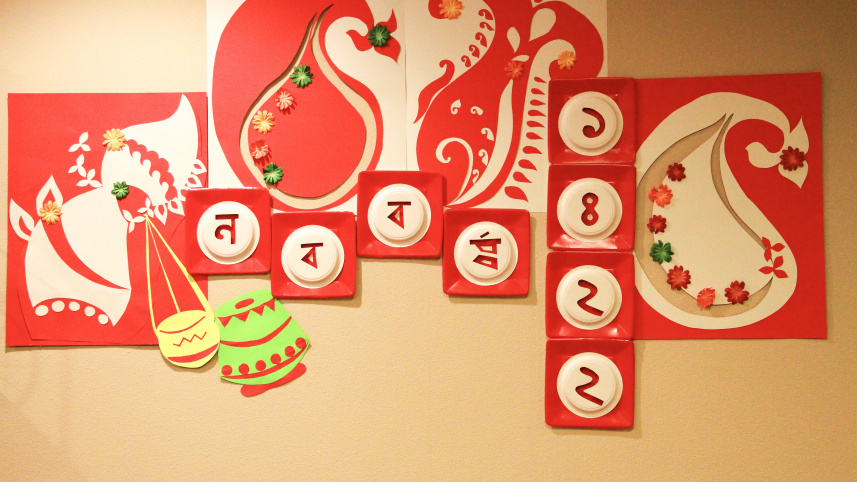
The first day of the Bengali calendar is a vibrant celebration of our rich cultural heritage, a reminder of who we are, and a bridge to our past. Whether they are at home or 9,000 miles away from their roots, the Pahela Baishakh celebration is something Bangladeshis eagerly anticipate every year.
The Bangladeshi diaspora, spread across the globe, celebrates Pahela Baishakh in various ways, from small-scale gatherings to grand celebrations. These festivities include traditional Bengali cuisine, folk music and dance, Baishakhi fairs, and more. We spoke to some of our non-resident Bangladeshi (NRB) women to gain insights into how they celebrate Pahela Baishakh while residing outside of Bangladesh.

Dr Nazia Hussein, Bristol, England
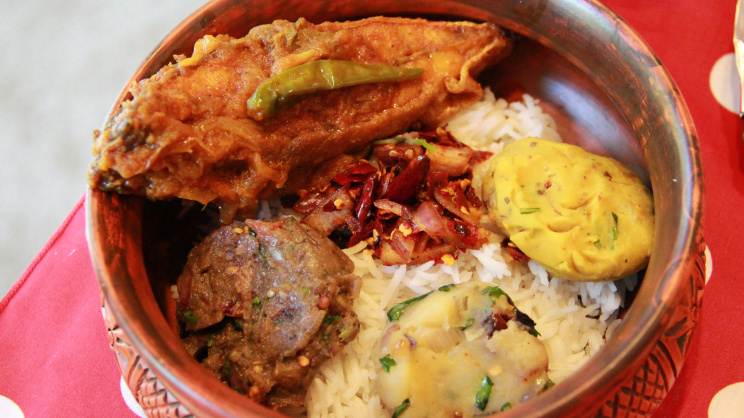
Dr Nazia Hussein, who is a senior lecturer of sociology at the University of Bristol, England, says that her current city, Bristol, has quite a large population of first-generation Bangladeshi immigrants, and the Pahela Baishakh celebration usually brings together 120 to 150 people each year.
The day-long celebration features around one hundred food items, with a brunch of more than twenty types of pitha, and an afternoon snack featuring tea, chotpoti, fuchka, samosa, shingara, muri, murki, and the like. The afternoon snack is followed by a hearty dinner.
“Last year, we made twenty-six types of bhorta, four or five fish items, daal, vegetables, chicken, beef, bou khud, khichuri, and plain rice. It is a grand Baishakhi dinner that we cook every year,” she said.
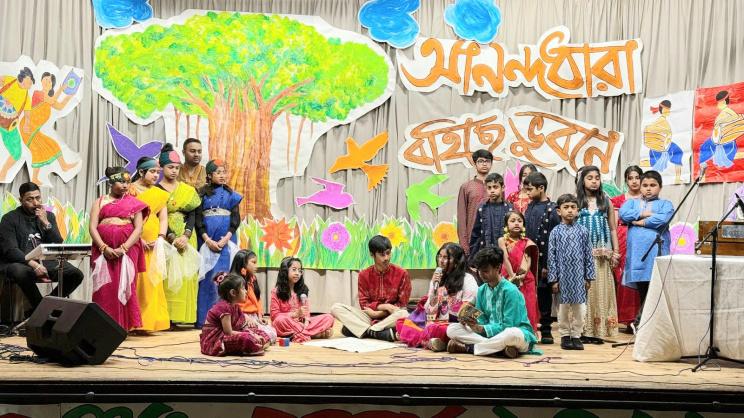
A big attraction of their Baishakhi celebration is the children’s performance, which Dr Hussein supervises every year. Last year, twenty-six children participated in a skit, which included a drama, a dance, and a song.
“We usually rehearse for about three months before the final performance, and I think that the weekly rehearsals are often much more fun than the actual show,” Dr Hussein said.
“It is so endearing to see how these children, who were born in England and cannot speak Bengali fluently, enjoy participating in Bengali dance and music,” she added.
Asked if she misses the Bengali New Year celebration in Bangladesh, Dr Hussein said that she does not. She thinks that the Pahela Baishakh celebration they have in Bristol is perhaps richer and more culturally attuned than it is in Bangladesh. She thinks that Pahela Baishakh celebrations in Bangladesh have changed over time because of cultural shifts.
“Here in Bristol, however, the Bangladeshi community celebrates Pahela Baishakh just like they did in Bangladesh twenty or twenty-five years ago,” she said. “I think it is nostalgia that makes us celebrate Pahela Baishakh just like we did when we grew up in Bangladesh, or maybe you can say that we, first-generation immigrants, are just frozen in time.”
Shahzia Sarwar, Oregon, USA
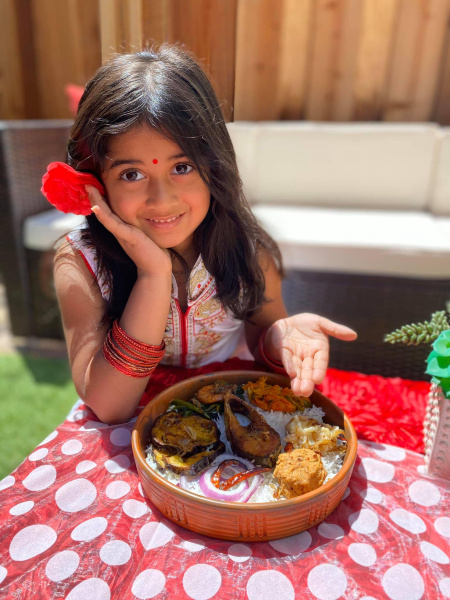
A resident of Portland, Oregon, Shahzia Sarwar has been fortunate enough to participate in grand Pahela Baishakh celebrations across three American states: New York, California, and Oregon.
To Sarwar, who is a lecturer of architecture, urban design, and digital visualisations at State University of New York (SUNY), Albany, New York, and Academy of Art University, San Francisco, California, Pahela Baishakh is a vibrant celebration that acts as a cultural bridge, connecting all Bangladeshis to their heritage and roots through Mangal Shobhajatra, cultural programmes, traditional attire, special photoshoots, and last but not least, mouthwatering Baishakhi favourites like bhorta, panta-ilish, pitha, and beloved street foods like fuchka and jhalmuri.
Asked if she feels more connected to her roots during the Pahela Baishakh celebration, Sarwar said, “The Bangladeshi community eagerly awaits this annual celebration. People set up food stalls and participate in songs and dances with great enthusiasm. This is the time of the year when the Bangladeshi community comes together, experiencing a unique sense of unity and an inner drive to preserve their cultural identity.”
Sarwar and her family always try to actively participate in Pahela Baishakh events through musical and dance performances.
“My husband and I always encourage our two children to speak Bangla at home and to listen to Bangla songs. We also make it a priority to take our children to the Baishakhi mela that our community arranges every year, as it allows them to learn about and appreciate Bengali culture,” she said.
Rabeya Zahed, Sydney, Australia
For Rabeya Zahed, an HR professional at Campbelltown City Council in New South Wales, Australia, Pahela Baishakh has always been a double celebration; her birthday coincides with Pahela Baishakh, which falls on April 14. However, since Pahela Baishakh is a much larger occasion to celebrate, her birthday often takes a backseat.
Every year, Zahed cooks a traditional Baishakhi meal at her home to usher in the Bengali New Year. The menu typically includes bou khud/khuder bhat, and several types of bhorta, fried fish, daal, and meat dishes. However, Zahed deeply misses the Baishakhi celebrations of her childhood with her friends and family.
 For all latest news, follow The Daily Star's Google News channel.
 “The Pahela Baishakh vibe is completely missing here. When you step outdoors, you do not see women in red and white saris, their hands adorned with glass bangles, and their hair in white garlands. Also, in Bangladesh, it is a public holiday, which makes it even more enjoyable,” she said.
However, various Bangladeshi communities of New South Wales organise grand Pahela Baishakh festivals every year. Zahed and her family also visit these festivals as part of their Pahela Baishakh celebrations. Additionally, Bangladeshis also host private Baishakhi parties at home.
“I have received two Baishakhi invitations for this year,” she said.
The Bangladeshi diaspora, spread across the world, looks forward to their annual Pahela Baishakh celebration. They welcome the first day of the Bengali New Year through various cultural performances, Mangal Shobhajatra, traditional Baishakhi delicacies, and other expressions of appreciation for their cultural heritage. In spite of residing thousands of miles away from their homeland, the love for their roots and Bengali identity remains steadfast in the hearts of non-resident Bangladeshis.
Comments