


Meet the creator decoding Bangladesh’s fashion trends
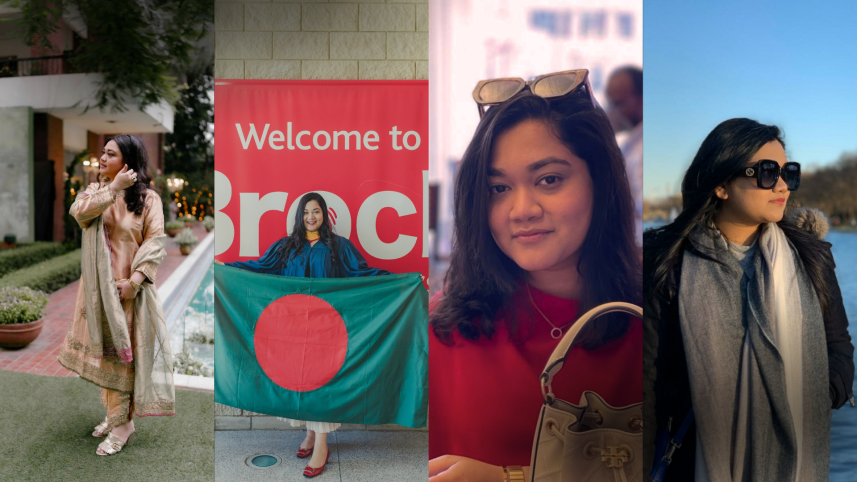
In Bangladesh's crowded digital landscape, creators routinely tell audiences what to wear, where to shop, and which trends to follow. Few stop to examine why those trends emerge in the first place. Fewer still treat fashion as something worthy of analysis.
That gap is exactly what Sadia Anika Hasan set out to fill.

Most people scroll past a celebrity outfit in seconds. Sadia Anika Hasan pauses, rewinds, and asks a different question: what does that outfit say about culture, identity, aspiration, and the moment we are living in?
"I used to binge-watch these kinds of analyses and deep-dive dissecting content," she explains. "There were creators in India, Pakistan, Canada, and the US. But I always felt that in Bangladesh we don't have any voice to explain or discuss our fashion trends, what's emerging here, or what's hot and happening."
Through short-form videos on Facebook and Instagram, Hasan has quietly begun carving out a niche that barely exists in Bangladesh: fashion commentary. Her work sits somewhere between fashion journalism, cultural criticism, and social media content.
Rather than simply showcasing looks, she breaks down styling decisions, examines cultural references, and encourages audiences to think about fashion as a reflection of society.
A missing Bangladeshi voice
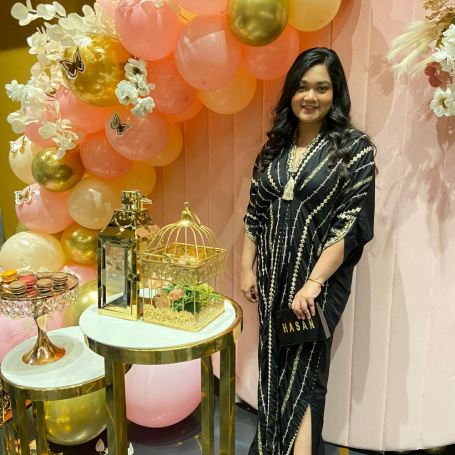
After high school, Hasan moved to Canada to study Mathematics and Economics. Fashion school was her childhood dream, but practicality prevailed. However, she noticed a curious imbalance while studying abroad. South Asian fashion conversations were dominated by India and Pakistan. People knew the leading designers, the emerging brands, and the latest trends from those countries. Bangladesh was largely absent from the discussion.
"Even Bangladeshi expatriates didn't know much about Bangladeshi brands beyond a few household names," she recalls.
The omission bothered her. Bangladesh has one of the world's most significant textile and garment industries, centuries-old weaving traditions, and distinctive design histories. Yet internationally, its fashion identity often remains overlooked.
"The intention was to create content that Bangladeshis would watch, but also content where non-Bangladeshis could learn something about us," she says. "Whenever people see a brown person, they immediately think Indian or Pakistani. They don't think of us as a separate identity."
Fashion as cultural evidence
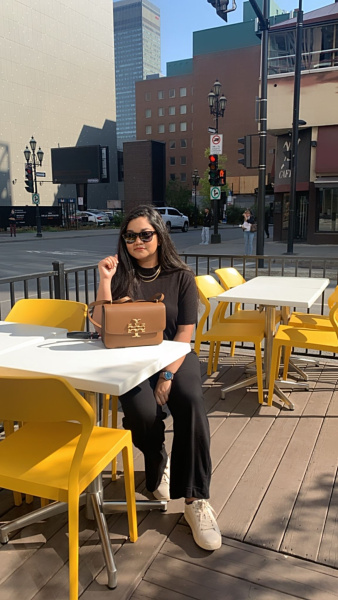
For Hasan, fashion belongs in the same conversation as literature, music, film, and visual art. "Fashion captures the evolution of culture," she states, adding, "It deserves to be studied."
That belief drives much of her content.
She speaks about fashion not as a collection of garments but as evidence of social change. A saree draped in the 1970s tells a different story from one worn today. The disappearance of widowhood dress codes, the rise of working women, the influence of migration, and the impact of cinema all leave traces in clothing.
"Fashion reflects migration, politics, cinema, our cultural identity, and a generation's worth of storytelling," she explains.
Her examples often stretch beyond Bangladesh. She references how wartime shortages influenced women's clothing in Europe or how designers such as Coco Chanel responded to changing gender roles. The same analytical lens, she argues, can be applied to Bangladeshi fashion history.
Why, she asks, are there so many discussions about the history of ghararas and shararas in neighbouring countries, but comparatively few conversations about Jamdani, heritage handlooms, or the evolution of Bangladeshi silhouettes?
Beyond trends
Hasan's most popular videos often focus on celebrity fashion, awards shows, or major brand developments. Yet, her ambitions extend beyond trend commentary.
Ultimately, she wants Bangladesh to occupy a larger place regionally and in global discussions. More importantly, she wants fashion itself to be taken seriously as a cultural subject.
 For all latest news, follow The Daily Star's Google News channel.
 "Fashion deserves to be understood rather than just consumed as a trend," she says.
It is a deceptively simple statement. Yet, in a world obsessed with what is new, Hasan's work asks audiences to slow down and examine what clothing reveals about who we are, where we came from, and how societies change. For a country whose fashion story is still underrepresented internationally, that conversation may be long overdue.
Photo: Courtesy
Comments