


Explore the untouched landscapes and cultures of Cox’s Bazar

For most of us, whenever the name Cox’s Bazar is mentioned, the picture of the city comes into our minds pre-packaged. The longest stretch of sand during the golden hour of the day, with crowded sunsets and hotel balconies angled towards the sea.
You already painted the picture in your head while reading the description, thinking, “I have been there and done that.” It is a place we visit with a checklist already written. The longest beach in the world. Fresh seafood. A few drone shots. A memory card full of the same horizon.

I went there to see what exists when you step slightly away from that horizon.
The decision was not driven by a sense of rebellion against popular tourism. It came from fatigue. I have written and read enough about Cox’s Bazar to know how quickly a place can be flattened into an idea. The beach dominates the conversation so completely that every other nuance the city has gets sidelined. And yet, like most places in Bangladesh, Cox’s Bazar is layered. You just have to be willing to look sideways instead of straight ahead.
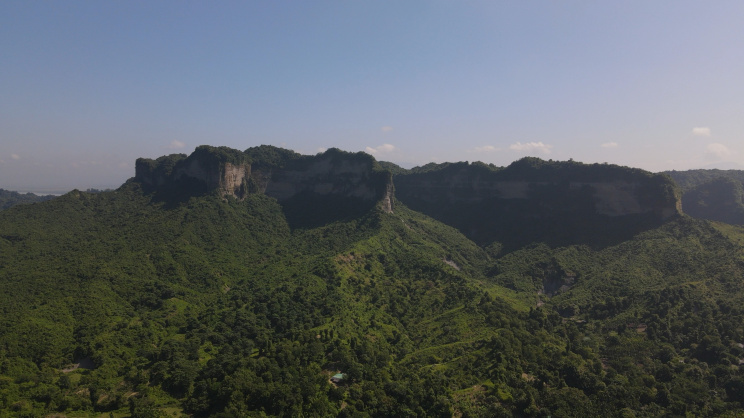
The first hint of that came from a name I kept seeing on obscure travel forums and half-buried reels. Hajipara Forest Reservation Area. Fifteen minutes from the city, close enough to feel almost suspicious, yet rarely mentioned. The road did not announce its arrival. There were no ticket counters, no souvenir stalls, no performative sense of welcome. Just green.
The walk up was short, but the reward felt disproportionate. From the top, the view opened into rolling green hills, small and uneven, stretching quietly into the distance. The air felt different, as if the city had loosened its grip in a way that made it easy to breathe deeply and feel the fresh air in your lungs after a long time. It was the first time during the trip that Cox’s Bazar did not feel like a destination. It felt like a place where people truly live.
That feeling deepened in Rakhine Para, in the Chauflandi area. The Rakhine community has existed here for generations, often mentioned in passing. Walking through the park, it became clear how cultural coexistence works not through grand declarations, but through daily rhythm. Homes are arranged in a way that Rakhine culture dictates.
Walking down the lanes of the Rakhine para, what felt most genuine was the complete lack of care of the residents there. Imperfect in every sense, it was this very essence that made the place so intriguing. There was no performance of identity here, no attempt to package tradition for outsiders. Just everyday life unfolding.
A short distance away, the landscape shifted again. Wind turbines rose against the sky, slow and deliberate. Cox’s Bazar’s wind farm, with a capacity of around 60 megawatts, stands as a quiet contradiction to the idea that development here must always be extractive or exploitative. The turbines did not dominate the view as much as I expected. They existed alongside it. Turning steadily, harnessing something that was already there.
In a country still struggling to diversify its energy sources, this felt significant. Not in a press release way, but in a practical one. Sustainable tourism is often spoken about in abstract terms. Seeing renewable energy integrated into the landscape made the idea tangible.
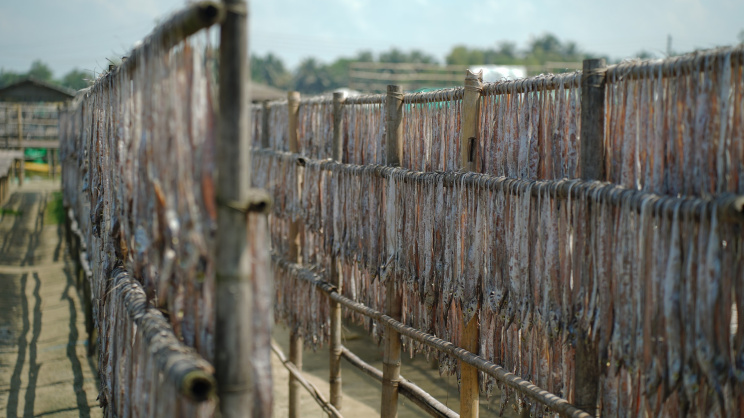
From there, the scent of dried fish announced Shutki Palli long before it came into view. Under the harsh sun, rows upon rows of fish lay exposed, transforming slowly through salt, heat, and time at the Najirartek Shutki Polli. Two young boys offered to walk us through the process. They spoke with a familiarity that only comes from repetition. Cutting, cleaning, drying. Hundreds of fish at different stages of becoming something else entirely.
It was not picturesque or fragrant in the conventional sense. It was raw, practical, and deeply human. For those who are wrinkling their nose while reading this, the “dried culture” has been passed down for centuries, born out of necessity for food preservation. It is an economy built on patience and labour with no visual aesthetics. Watching the process unfold, I was reminded how often we consume tradition without acknowledging the work that sustains it.
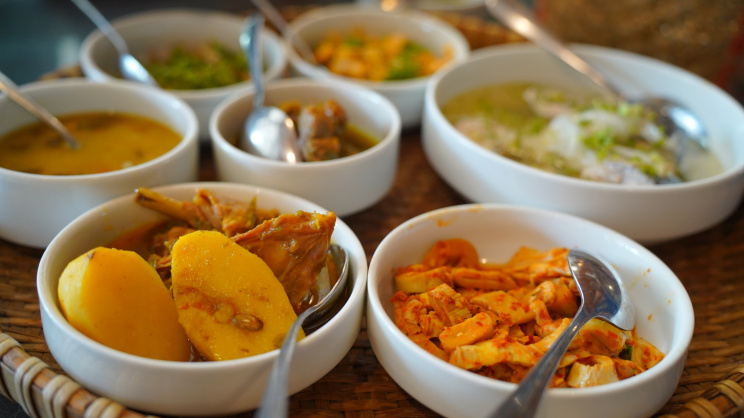
Through lunch, food became the entry point again, this time through Falonzee, in the heart of the city. A small place offering cuisine rooted in the ethnic communities of Cox’s Bazar. The flavours were unfamiliar yet comforting. Not because they tried to impress, but because they felt honest. This was not food adapted to fit metropolitan expectations. It existed on its own terms and was not afraid to let its patrons experience the culture through gastronomy.
The second day shifted the focus towards history in the Ramu region of the tourist city. Hiram Cox's bungalow just stands quietly in the background, carrying a name that a lot of us use without even giving it a second thought. Cox's Bazar, originally “Palongkee,” was named after Captain Hiram Cox, who had effectively been put in charge of dealing with the massive humanitarian fallout of Arakan refugees forced to flee from what is now Myanmar in the late 18th century.
Standing there, the name stopped feeling neutral. It became a reminder that this region has long been shaped by migration, displacement, and administrative intervention. The irony is impossible to ignore. A place now synonymous with leisure was once defined by refuge and resettlement. That history does not disappear simply because we no longer talk about it.
 For all latest news, follow The Daily Star's Google News channel.
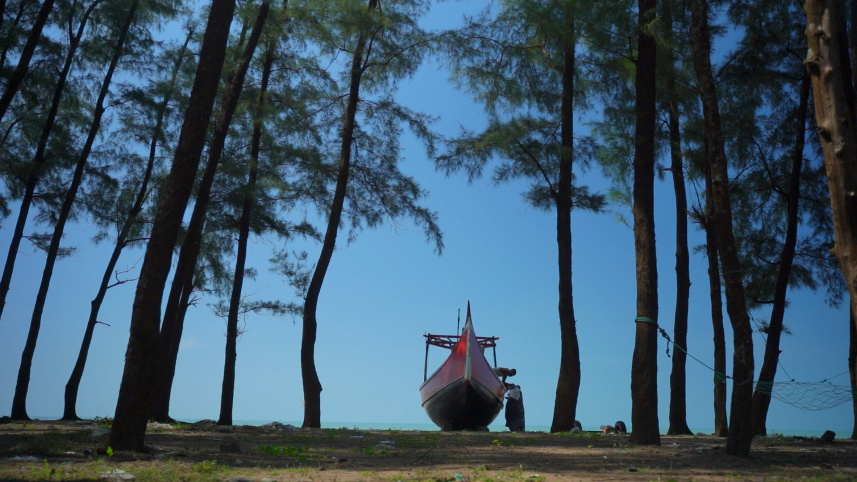
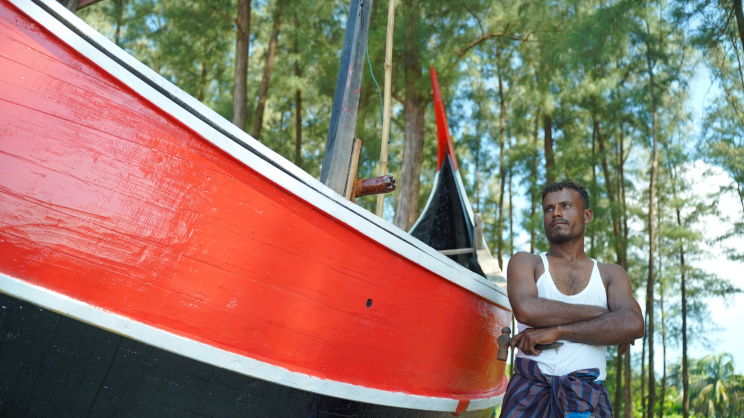
 While returning to the main city, I came across men repairing their sampans, the traditional boats used to venture deep into the sea. Watching them work was like witnessing knowledge passed through muscle memory. They spoke about distance, about staying out at sea for days, about trusting wood and instinct against waves that are rarely forgiving. After conversing with them for nearly an hour, I learned that the crescent shape of the boat helps to cut through the waves. And these boats are treated as a tool for survival, and the designs of Sampans have evolved through necessity.
Later that night, the fish markets near Kolatoli Beach came alive. Loud, chaotic, vibrant. Exotic catches lie out under harsh lights. Bargaining that felt almost theatrical. Yet, beneath the noise was an ecosystem at work. Fishermen, traders, buyers — all negotiating value in real time. It was messy, alive, and raw. You negotiate for the fish you like, and they will cook it for you. It is that simple.
At Mermaid Beach, the pace slowed further. A cooking lesson in barbecue crab might sound indulgent, but it became one of the most grounding experiences of the trip. Learning directly from a chef, hands in marinade, fire responding to timing rather than instruction. As someone who enjoys cooking, it felt less like a lesson and more like recognition. That food, when stripped of presentation, returns us to something instinctive.
The sunset that followed was remarkable in the best possible way. A sky that looked like a canvas was being painted on with the golden hour in real time, along with a calm sea below.
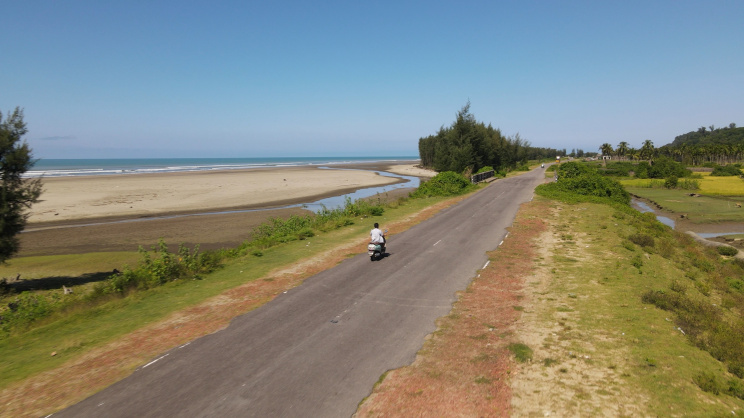
On the final day, the Marine Drive unfolded under clear blue skies. Riding a scooty along the curve of the coast felt indulgent and free. The sea was impossibly blue. The kind of blue that you see on your screens makes you question, “Are oceans really that blue?” Somewhere along that ride, I signed up for surfing lessons.
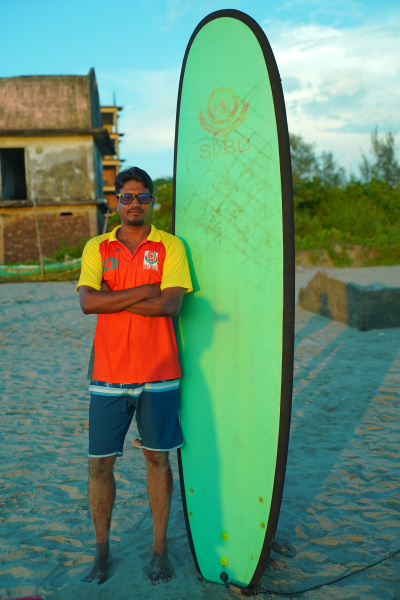
Learning to balance on a surfboard is a humbling exercise. The sea does not care about confidence. It responds only to adjustment. Falling repeatedly, listening to instructions, understanding currents, and learning about Bangladesh’s growing surfing and lifeguard culture shifted my perception again. This was not a novelty. It was discipline, training, and community.
By the time the trip was ending, it was not a single place that stayed with me, but a shift in how I was looking. The true colours of Cox’s Bazar begin to show when you arrive there without the instinct to take something from it. The moment I started paying attention to how things function — who shows up every day to keep them moving, and what the land quietly carries with it — and stopped thinking about what I could capture, frame, or package, the place began to feel different.
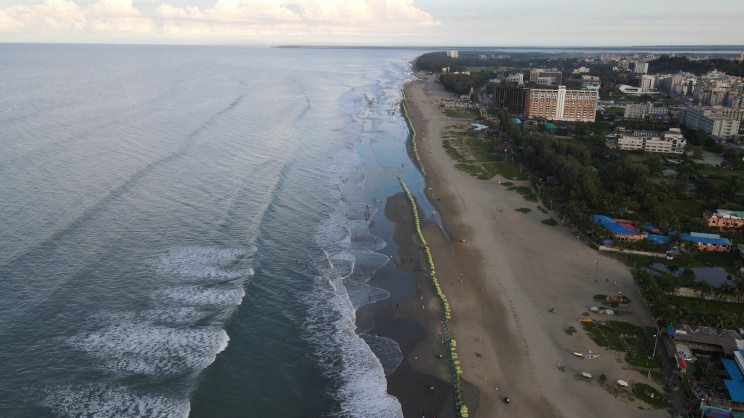
That realisation was slightly unsettling. As a writer, I am trained to compress places into neat ideas that travel well. Beaches, they cooperate. They give you symmetry, light, and scale without asking much in return. Forest paths, fish markets, workshops, kitchens, and neighbourhoods do not work that way. They ask you to slow down, to listen longer than is comfortable, and to accept that not everything is immediately legible or visually generous.
What we call sustainable tourism is not about avoiding the obvious or policing where people go. It is about widening the circle of attention, respecting different cultures, and preserving the landscape from littering. We have to let value exist outside the Instagram view. Travellers need to choose to spend their time and money in places that have always been here, doing their work quietly, long before anyone thought of them as experiences.
Cox’s Bazar does not need a new story written over it. It already has enough. It only has to be approached with a little more humility and a little less rush. The beach begins to communicate on its own terms when you take a brief step away from it. And once you hear it, it is hard to go back to looking at the place the same way again.
Comments