


The tragedy behind Hemingway’s triumph

"Any man's life, told truly, is a novel," Ernest Hemingway wrote in “Death in the Afternoon” (1932). Few lives have vindicated that assertion as emphatically as his own.
Surviving a stroke in my younger days, this was the line that led me to quit being a corporate citizen and go for a career in words.

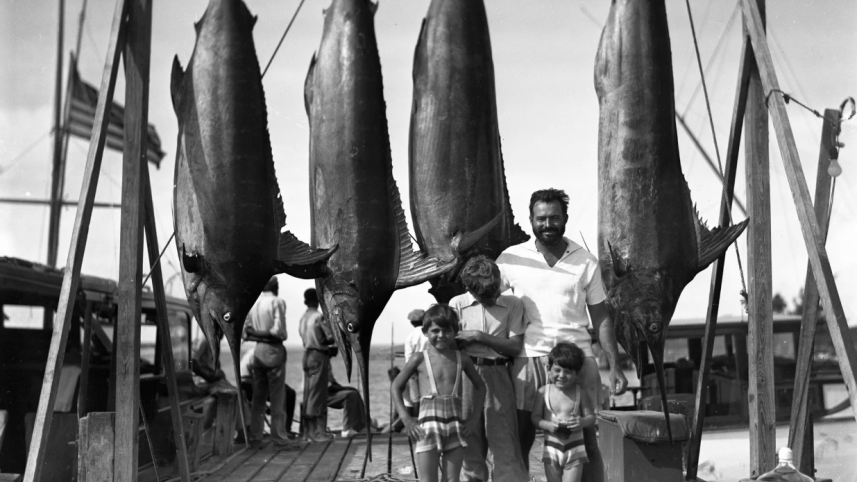
Journalist. Novelist. Nobel laureate. Veteran of two World Wars. Hunter of African plains. Deep-sea fisherman in the Caribbean. Bullfighting aficionado. Survivor of two plane crashes. Inveterate drinker. Incorrigible lover. A raconteur who traversed continents as readily as he traversed sentences.
Hemingway often feels less like a historical figure than a literary character who accidentally wandered into reality.
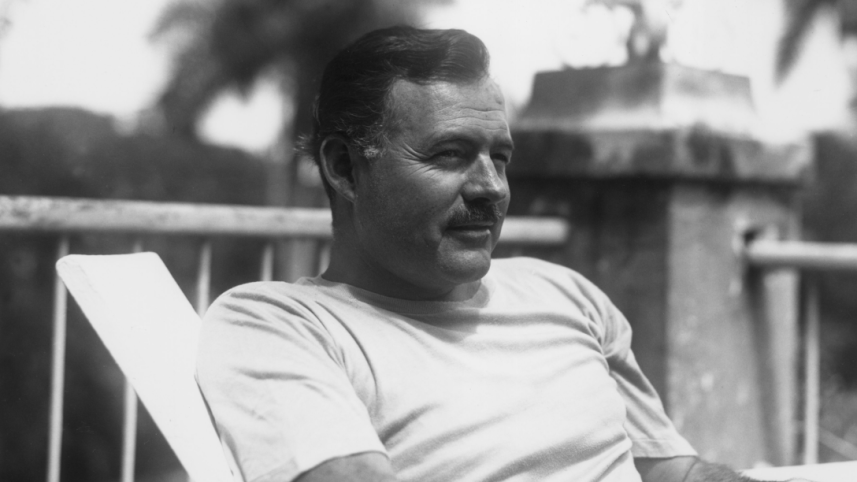
The very maquette of 20th-century virility. Yet every epithet, however flattering or fulsome, seems to collapse under the sheer immensity of the man. To call Hemingway "complex" is almost comically insufficient.
Born on July 21, 1899, Hemingway isn’t just a man who changed modern prose, but a man anchored by loneliness concealed beneath the long legend.
The visible Hemingway was only a fraction of the whole. He wrote as he lived, revealing little while carrying immeasurable weight.
The First World War merely accelerated what destiny had already begun.
Serving as a Red Cross ambulance driver on the Italian front, Hemingway suffered devastating wounds from mortar fire before enemy bullets found him again as rescuers carried him to safety. He returned home decorated for courage, but bearing injuries that no medal could acknowledge.
War taught him that heroism and horror often arrive hand in hand, a lesson that would echo through A Farewell to Arms, For Whom the Bell Tolls and virtually everything else he wrote thereafter.
"The world breaks everyone," he famously observed, "and afterwards, some are strong at the broken places."
The line has become a motivational aphorism. It is, in truth, a confession.
Paris in the 1920s transformed Hemingway into the defining voice of the Lost Generation. Amid cafés humming with Fitzgerald, Joyce and Pound, he stripped prose of ornament until every sentence possessed the precision of a surgeon's scalpel.
His journalism at The Kansas City Star had taught him economy; his temperament transformed economy into artistry. Every unnecessary adjective was excised. Every emotional excess was withheld. What remained possessed extraordinary force precisely because of its restraint.
Few writers have altered the architecture of modern prose so completely. Yet while his sentences became cleaner, his inner world grew increasingly chaotic.
The public adored "Papa Hemingway", the private man was locked in an altogether different pursuit -- an increasingly desperate struggle against inherited depression, alcoholism, mounting physical pain and a succession of traumatic brain injuries that modern medicine now recognises as profoundly consequential.
His life became a catalogue of collisions. Mortar explosions. Motor accidents. Concussions. Two plane crashes in Africa within days of each other. Skull fractures. Organ damage. Years of relentless drinking.
Today, neuroscience would almost certainly read these not as isolated episodes but as cumulative assaults upon an already vulnerable mind.
Beneath the luxuriant beard, safari jackets and cultivated machismo lurked a frightened boy who once threatened to shoot both his parents. A son brutalised by a disciplinarian father and psychologically bewildered by a mother who alternately dressed him as a girl and extolled his masculinity. A man born into a family haunted by depression, bipolar disorder and an almost hereditary intimacy with suicide.
 For all latest news, follow The Daily Star's Google News channel.
 His father died by suicide. So did two siblings. Another sibling's death was long suspected to be the same. His granddaughter would later meet a similar fate. Across four generations, the Hemingway family became haunted by a devastating recurrence of mental illness that, in the early 20th century, medicine scarcely understood and society preferred not to acknowledge.
The irony is almost Shakespearean. The man who taught generations to confront life with stoic courage inhabited an era that regarded psychological suffering as moral weakness, particularly in men. Seeking psychiatric help risked not healing but humiliation.
When Hemingway eventually entered the Mayo Clinic, treatment amounted largely to repeated electroconvulsive therapy, then in its crude infancy.
The procedure robbed him of what he treasured most -- the ability to write. For a writer, there can scarcely be a crueller bereavement than the loss of words.
His death in July 1961 has often been reduced to a grim footnote or sensational climax.
It deserves neither simplification nor romanticisation. No single cause can ever explain why a person reaches such a precipice. Human despair refuses the convenience of linear narratives.
But neither should history ignore the convergence of inherited illness, repeated neurological trauma, chronic alcoholism, physical suffering and an age unequipped to distinguish vulnerability from failure.
Yet none of this absolves Hemingway's flaws. He could be vain, domineering, unfaithful, frequently cruel and often emotionally destructive to those closest to him. To acknowledge his suffering is not to canonise him.
"Man can be destroyed but not defeated," Hemingway wrote.
The tragedy is that the author who gifted the world that immortal sentence could no longer believe it of himself.
His novels asked readers to look beneath the surface. His life demands that we do the same. For beneath the visible eighth lay the submerged seven-eighths: despair, desolation, brilliance and unbearable solitude. That unseen expanse, more than the mythology, is Ernest Hemingway's truest legacy.

Reflection / Every monsoon needs a song like this
Reflection / 'July 1. Too Tired.' Kafka felt it; so do we
Father's Day / Sooner or later, we all become our fathers

Kaleidoscope of flowers

musing / A small step to self-sufficiency
musing / So old-fashioned!

Monsoon and memories
#Perspective / A Father’s Day tribute to Don Corleone
Musing / Rise of the Covidiots