


The children Mother’s Day leaves behind

There is perhaps no figure more sanctified in civilisation than the mother.
Entire cultures have been erected upon her pedestal. Poets have exhausted their metaphors trying to liken maternal love to oceans, heavens and divine mercy. Religions have wrapped motherhood in halos. Nations invoke mothers as symbols of sacrifice. Even language itself softens around the word.

And yet, every civilisation also keeps a quieter archive -- the mothers who harmed, diminished, and manipulated.
Some love selectively. Some weaponise affection. Some turn emotional deprivation into an inheritance passed from one generation to the next like an antique curse.
Mother’s Day, for many, is a celebration. For others, it is a return to ghosts one spends the rest of the year trying not to summon.
Quite often, the vocabulary of “toxic parents” is abused by younger generations. A teenager denied indulgence now casually diagnoses discipline as trauma. A parent insisting upon structure, restraint and decency is swiftly branded oppressive.
The phrase has become fashionable enough to occasionally lose all meaning. There is indeed a difference between guidance and tyranny, between strictness and cruelty.
But exaggeration does not invalidate reality. Toxic parents do exist with dreadful certainty.
Some households are not homes but psychological weather systems, where children learn to survive rather than grow. In such homes, affection becomes conditional, tenderness becomes transactional, and love arrives only after obedience.
One child is dear while another is detested. Neglect becomes routine. Emotional humiliation becomes so frequent that it acquires the banality of furniture.

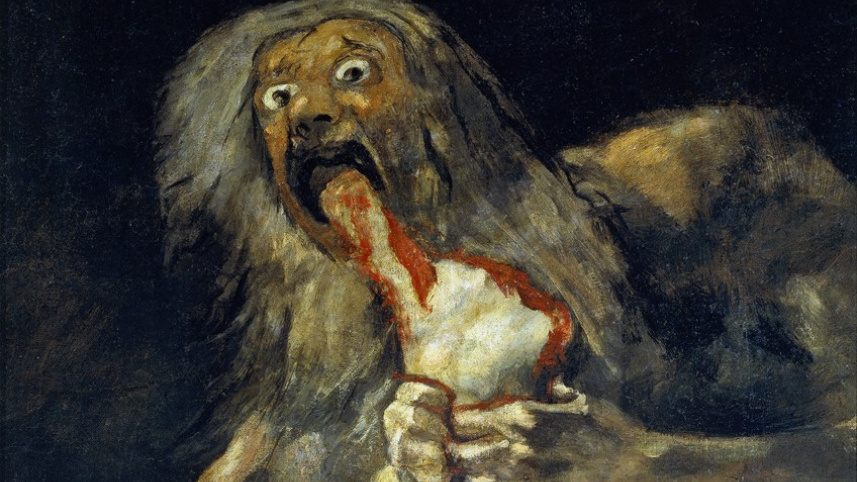
Francisco Goya’s masterpiece “Saturn Devouring His Son” is among the most horrifying works ever committed to canvas. Saturn, eyes maddened with paranoia, devours his own child in animalistic desperation. Flesh hangs from his hands. Darkness engulfs the frame. There is no grandeur in the violence, only madness, fear and consumption.
The titan consumes because he fears replacement. He destroys because he cannot bear vulnerability.
That is the true horror of toxic parenthood. It does not always kill the child physically. It merely feeds upon the child emotionally until very little remains intact.
Many toxic parents behave precisely like Saturn. They devour individuality. They consume confidence. They perceive independence not as growth but betrayal. A child becoming autonomous feels, to them, like mutiny. Thus, they suffocate aspirations, ridicule sensitivities and sabotage emotional development under the guise of concern.
The damage is rarely theatrical. More often it is microscopic and cumulative.
A cutting remark repeated for twenty years.
Affection withheld with surgical precision.
Comparison masquerading as motivation.
Silence employed as punishment.
 For all latest news, follow The Daily Star's Google News channel.
 Humiliation disguised as honesty.
Eventually the child internalises the verdict.
Ageing takes its course, but somewhere within remains a frightened version of one’s self still trying to earn affection that should have been unconditional.
And then comes the truly tragic part -- wounded children often grow into difficult adults.
Not necessarily cruel adults. But guarded ones. Distrustful ones. People who mistake distance for dignity because vulnerability once invited pain. They become emotionally overarmed. They sabotage intimacy before intimacy can abandon them first. They struggle to believe compliments. They anticipate betrayal even during tenderness.
There exists a popular tendency to romanticise suffering, to portray emotionally wounded individuals as deeper, wiser or artistically superior. This is literary nonsense. Trauma does not automatically produce profundity. More often, it produces exhaustion, hypervigilance, self-loathing -- a constant suspicion that one is fundamentally unworthy of love.
The “monster” is rarely born monstrous. Usually, he was once merely a child forced to survive conditions he could not comprehend.
This is where Goya’s painting becomes more than art. Saturn devours his child because he himself is governed by fear. Toxic parents frequently operate the same way. Many were once wounded children too. Their cruelty often originates in unresolved misery, inherited dysfunction and emotional illiteracy passed through generations like contaminated bloodlines.
There is also a particular loneliness in speaking honestly about toxic mothers. Society is more comfortable acknowledging monstrous fathers because paternal harshness has historically occupied familiar territory. But a cruel mother unsettles civilisation itself. She ruptures one of humanity’s oldest assumptions: that maternal love is instinctively pure.
Yet motherhood, like all human conditions, remains vulnerable to vanity, bitterness, narcissism, mental illness, resentment and emotional incapacity. Some mothers endear. Others engulf.
Goya understood this darkness instinctively. His use of violent chiaroscuro in “Saturn Devouring His Son” mirrors the duality of toxic parenthood itself. Outwardly there may exist care, sacrifice and social respectability. Beneath it lurk manipulation, domination and emotional starvation. The contrast between light and shadow is not merely artistic technique. It is psychological anatomy.
And perhaps that is why the painting remains eternally disturbing. It forces us to confront an unbearable possibility -- sometimes the people meant to protect us become the very architects of our ruin.
Comments