


97 attacks on shrines since Aug 2024, only 11 cases filed: Report
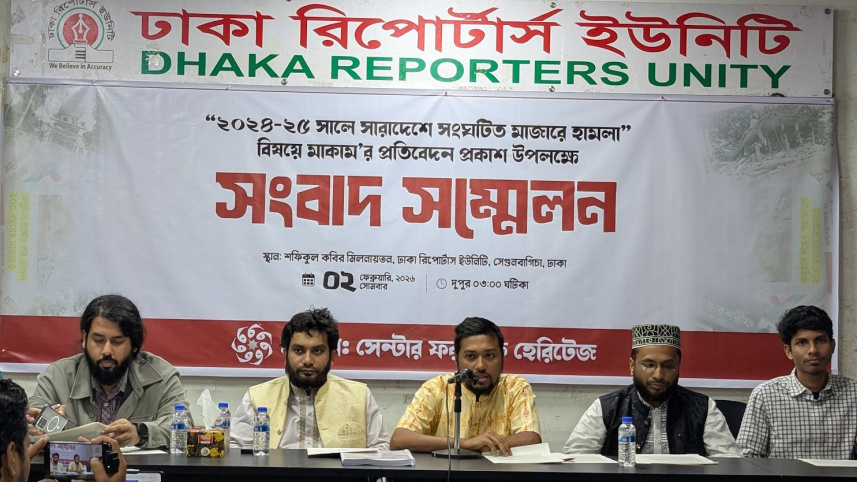
A new research report has revealed that only 11 cases were filed despite 97 attacks on shrines across Bangladesh in the one and a half years following the July Uprising, with investigations in 10 of those cases showing "no progress".
The findings were disclosed by Makam: Center for Sufi Heritage, a research organisation, in a report titled “Attacks on Shrines Across the Country in 2024‑25”, presented at a press conference at the Dhaka Reporters’ Unity.

The study, covering the period from August 5, 2024, to December 31, 2025, documented a pattern of violence -- leaving three people dead and 468 injured.
"The attack on Nural Pagla's shrine in Rajbari created a stir, leading police to arrest several suspects. However, we have seen no progress in the remaining 10 cases," said Makam Coordinator Mohammad Abu Saeed.
Explaining why cases were not filed in the other incidents, he said, "In the vast majority of cases, shrine residents were beaten and evicted. They are currently not in a situation to return and file a case."
The report found that majority of the attacks were carried out by mobs rallying under the banner of “Tawhidi Janata”, with alleged involvement of political activists.
Makam made specific allegations against Islami Andolan Bangladesh leaders and activists in 13 incidents, while Jamaat‑e‑Islami activists were linked to four attacks, and BNP activists to another four.
Dhaka division recorded the highest casualties, with over 180 injured and two killed. District‑wise, Cumilla saw the most attacks (17), followed by Narsingdi (10) and Dhaka (9).
Ahmed Ibrahim, advisor to the Bangladesh Legal Aid and Service Trust (BLAST), criticised law enforcement for failing to act despite video evidence circulating on social media.
He noted that at least 44 of the targeted shrines remain abandoned, with annual Urs ceremonies halted.
The study identified religious intolerance as the primary driver, accounting for 61 percent of the attacks.
In at least six cases, attackers used bulldozers and heavy machinery to demolish shrine structures. Loudspeakers were used to mobilise crowds in 10 cases.
The report also criticised the interim government for failing to take effective steps or announce compensation for the damaged shrines, underscoring what it described as a climate of impunity.
 For all latest news, follow The Daily Star's Google News channel.
Comments