


Jum cultivation in Bagaihat Reserve Forest defying law
Forests on 20,000 acres burnt, wildlife habitats destroyed, govt revenue earning tumbles
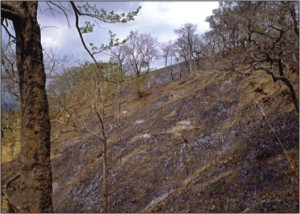
Burning up trees for jum cultivation threatens environment and ecology in Bagaihat Reserve Forest. The photo was taken from Machalong.Photo: STAR
At lest 20,000 acres of Bagaihat Reserve Forest in Bagaichhari upazila in Rangamati have been brought under jum cultivating in the current season by ethnic farmers, defying forest laws. The government is loosing a huge amount of revenue and at least 120 types of wildlife including birds have lost their habitats, environmentalists and locals said. Continuous tilling of hill slopes also cause massive soil erosion as forests and shrubs are cleared off and burnt, damaging bio-diversity that may cause environmental disaster, the environmentalists said. Valuable timber trees and medicinal plants are also stolen. Bagaihat Range Office sources said they are trying their level best to make farmers aware of the possible disaster, but they pay little attention to their advice. Though indiscriminate jum cultivation on flood-free hill slopes is increasing as it earns good profit for farmers, particularly in the rainy season, revenue income from the reserve forest is gradually decreasing. The sources said revenue income from Bagaihat Reserve Forest was about Tk 23 lakh in 2005-2006 financial year, which came down to only Tk 2.5 lakh in 2006-2007. The earning till March of current financial year was only Tk 50,000. This correspondent visited the forest areas last week and talked to many jumm farmers. Biru Kumar Chakma who burnt a big area in the reserve forest at Langalmara said, “Jum cultivation is our traditional right. I have cleared about five acres of the reserve forest. About 100 farmers did the same”. But he does not know that living in reserve forest with authorities' permission is illegal, let alone torching forests. He claimed that no forest employee ever told him not to clear forests for jum cultivation. Spownika Chakma, a woman member of Sajek Union Parishad, told this correspondent that the people living in the reserve forest are very poor. They have no source of income and so they continue jum cultivation. L-Thanga Pangkhuya, chairman of Sajek Union Parishad, said about 40,000 farmers who have houses in the reserve forest are engaged in jum cultivation. “We lost at lest 70 varieties of medicinal plants which were gifts of nature. This happens due to negligence of forest officials,” he said. Pradip Chowdhury, Programme Supervisor of Center for Sustainable Development (CFSD), said jum cultivation is responsible for extinction of wildlife. It harms the environment. Asked, Bagaihat Forest Ranger Delwar Hossen Khan admitted jum cultivation in the reserve forest and damage to the environment. He also admitted that many wild animals are leaving the areas for dense forests across the border. “I have only 18 staff including 3 deputy rangers, 3 foresters and 12 guards to look after about 47,000 acres of reserve forest. How I can fight with over 40,000 jum farmers with this small manpower?” he questioned.
 For all latest news, follow The Daily Star's Google News channel.
Comments