


Cattle farmers expect better prices ahead of this year's Eid-ul-Azha

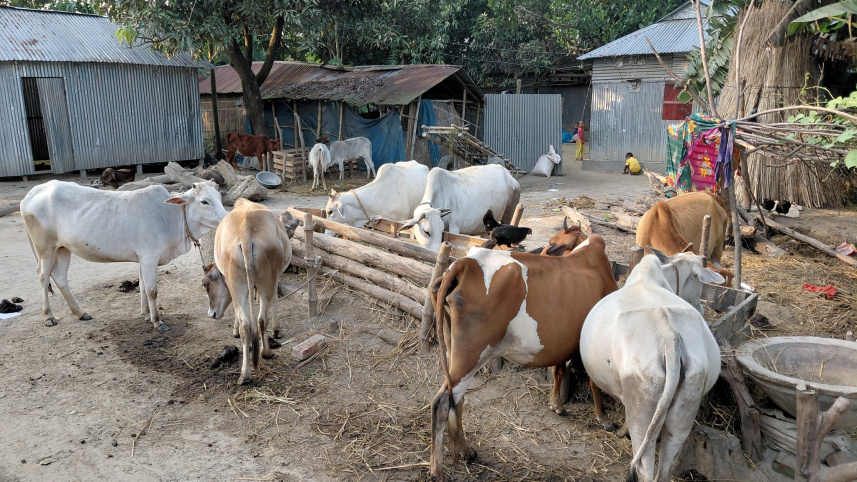
With Eid-ul-Azha approaching, cattle farmers across northern regions are looking ahead with renewed optimism, as it is believed that a reduced inflow of Indian cattle this year could help stabilise prices and improve demand for locally reared livestock after years of uncertainty and losses.
In Rangpur division, thousands of farmers have spent months raising cows, goats, buffaloes, sheep and dumba for the country’s largest seasonal livestock market, with hopes of securing fair prices and better profits.

Abdul Hai Sarkar, divisional director of the Department of Livestock Services in Rangpur, said farmers in the region suffered heavy losses in previous years after large numbers of Indian cattle entered border markets during the Eid season.
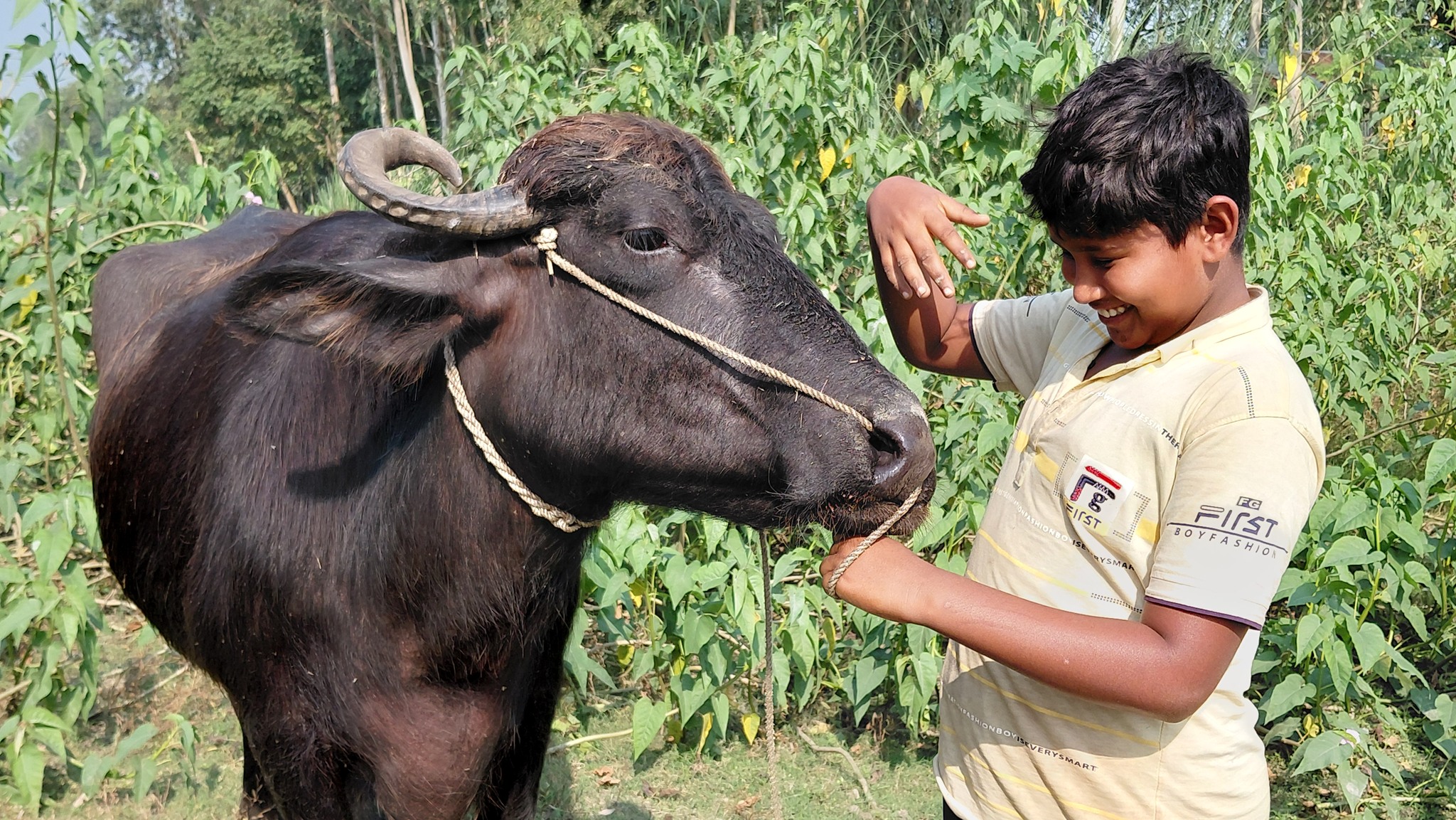
Many small and medium-scale farmers were forced to sell animals below production cost despite heavy spending on feed, medicine and labour, he said.
“This year, however, the situation appears more favourable for local livestock producers,” he told The Daily Star.
He said border surveillance has been strengthened ahead of Eid to prevent illegal cattle smuggling.
“Border Guard Bangladesh has intensified monitoring along border areas to stop the entry of foreign cattle,” he said.
“We expect local farmers to benefit if the markets remain stable.”
According to the livestock department, 295 temporary and permanent cattle haats will be set up across the eight districts of Rangpur division ahead of Eid-ul-Azha.
Officials said nearly 20 lakh sacrificial animals have been prepared across the division against an estimated local demand of around 14 lakh. The surplus of more than six lakh animals is expected to be transported to Dhaka and other urban centres.
Although formal Eid cattle markets are yet to open fully, trading has already begun in several rural areas. Farmers are grooming and fattening livestock in anticipation of higher demand during the final weeks before Eid.
Many farmers expect cow prices to rise by Tk 10,000 to Tk 15,000 compared to last year, while goat prices may increase by Tk 2,000 to Tk 3,000 depending on size and quality.
Akbar Ali, a farmer from Mahiganj in Rangpur, said he has prepared six cows and eight goats for sale this Eid season.
Across Rangpur, Kurigram, Lalmonirhat, Gaibandha, Dinajpur, Panchagarh, Thakurgaon and Nilphamari, livestock farming has become a major source of rural income. However, farmers say rising production costs remain a significant challenge.
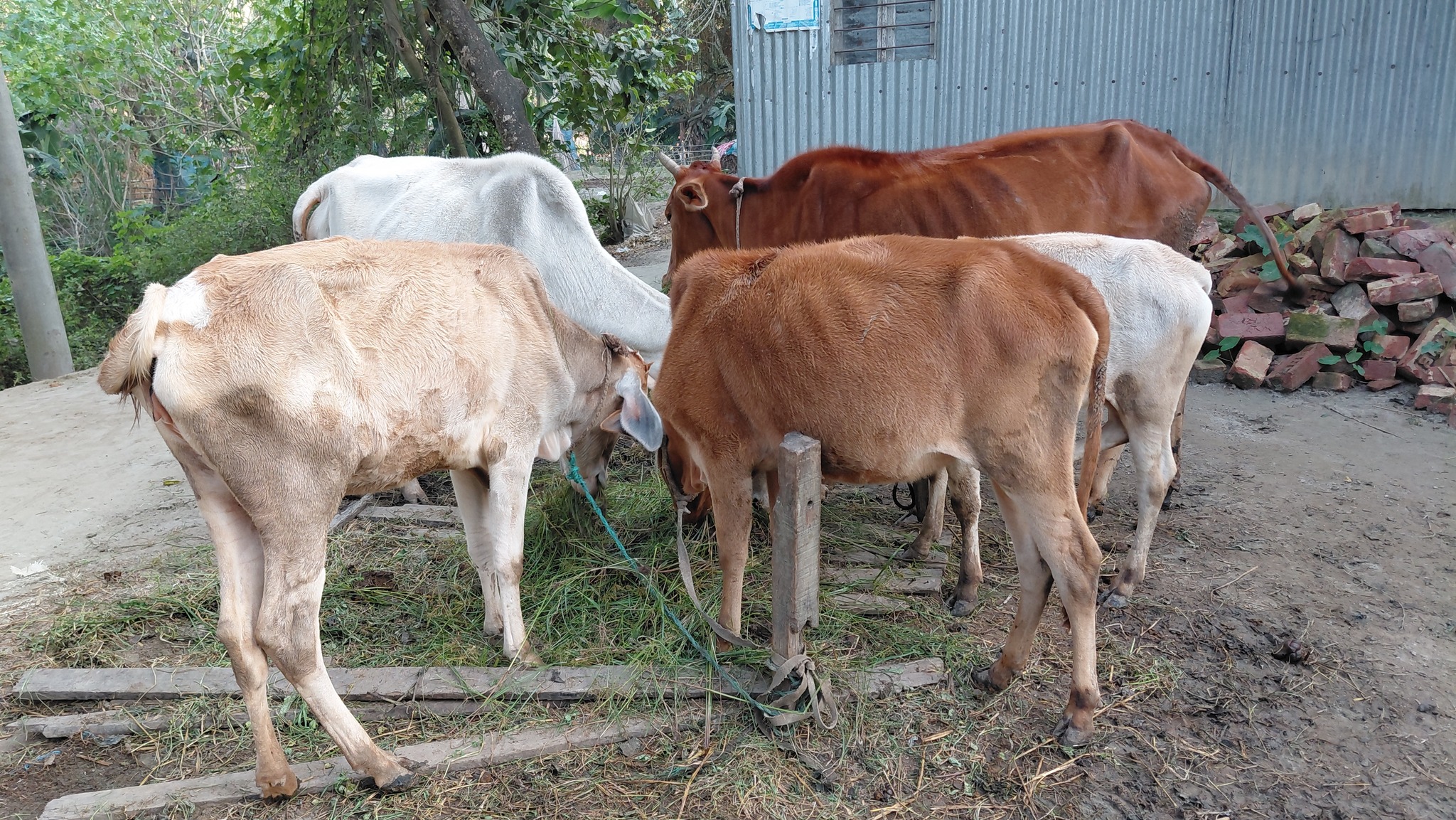
Prices of green grass, straw, bran, maize, oilcake and commercial feed have increased sharply over the past year. Veterinary medicine and transportation costs have also risen, putting additional pressure on small-scale farmers.
Sirajul Islam, 55, a cattle farmer from Durakuti village in Lalmonirhat Sadar, said he was disappointed by the last year’s Eid market despite months of hard work.
“Last year, I sold three cows for Tk 165,000, although I expected at least Tk 180,000 to Tk 190,000,” he told The Daily Star.
 For all latest news, follow The Daily Star's Google News channel.
 “The presence of Indian cattle reduced local prices. This year, I have prepared four cows and hope to sell each for Tk 65,000 to Tk 70,000.”
Standing beside his cattle shed, Sirajul said he spent sleepless nights caring for the animals and arranging feed, taking loans to continue farming.
“We depend on Eid sales to repay debts and support our families for the rest of the year,” he added.
Julhas Hossain, 50, a cattle farmer from Jatrapur village in Kurigram Sadar, echoed similar concerns. “We suffered losses last year because of the huge number of Indian cattle entering the markets,” he said.
“This year, I have prepared eight cows and expect a better return, though feed costs have increased sharply.”
He said many farmers in char and river basin areas now rely heavily on cattle farming as crop production becomes increasingly uncertain due to floods, river erosion and climate-related challenges.
Livestock traders and dairy farmers say Bangladesh is now largely self-sufficient in sacrificial animals and does not require cattle imports for Eid-ul-Azha.
“There is no need to import cattle from outside the country,” said Latifur Rahman, president of the Rangpur Dairy Farmers’ Association.
He further said, “Rangpur division alone has sufficient cows and goats to meet local demand, and we are ready to supply surplus animals to other regions.”
As Eid draws nearer, farmers across the northern districts are now waiting anxiously for buyers to arrive, hoping this year’s festival market will finally reward their months of labour, investment and care.
Comments