


Tarique to pick BNP presidential candidate

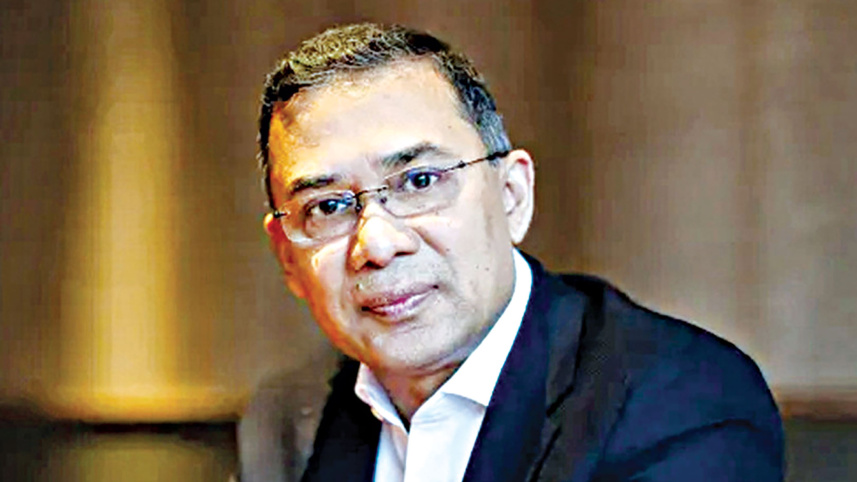
The BNP has entrusted party Chairman and Prime Minister Tarique Rahman with the authority to choose its candidate for the upcoming presidential election.
Senior leaders also urged the government to take urgent steps to ease worsening gas and electricity shortages.

The issues were discussed at a meeting of the party’s Standing Committee, chaired by Tarique at his Gulshan office last night.
BNP Secretary General and LGRD Minister Mirza Fakhrul Islam Alamgir briefed reporters after the nearly one-and-a-half hour meeting ended around 9:30pm.
The leaders also discussed the country’s overall political situation, public administration, the government’s development activities and the proposed local government elections.
Standing Committee member and Home Minister Salahuddin Ahmed told reporters that the Election Commission has already begun preparations for the presidential election, which must be held within 90 days of a vacancy under the constitution.
Asked about the BNP’s nominee, he said, “Once the election schedule is announced, party Chairman Tarique Rahman will decide who will be the party’s candidate.”
Party sources said Fakhrul raised the issue during the meeting and sought the views of senior leaders. Recalling that Khaleda Zia had previously been entrusted with making such decisions as party chief, the leaders unanimously requested Tarique, as the current chairman, to make the final decision on the nominee.
The candidate nominated by the parliamentary majority is typically elected. With the BNP holding a majority in parliament, its nominee is almost certain to become the next president.
Party insiders said no Standing Committee member proposed any name from within or outside the party. The leadership remained cautious because of its previous experiences with two former presidents.
The meeting also reviewed the timing of local government elections and assessed whether the prevailing political, administrative and security conditions were suitable for holding the polls.
After reviewing the situation, the Standing Committee concluded that holding local government elections before January 2027 would not be practical.
A Standing Committee member, requesting anonymity, said, “The law and order situation has still not improved as expected. If the government cannot hold peaceful elections, it will have a negative impact.”
During the discussion, Salahuddin assured the leaders that law and order would improve significantly within a short period.
Sources familiar with the meeting said they discussed how the worsening gas and power shortages have disrupted industries, power plants and fertiliser factories since July 22. Many households are also receiving little or no gas for cooking.
The gas shortage has reduced electricity generation and sharply increased outages. Last week, the power deficit exceeded 2,500 megawatts, up from less than 1,000MW earlier, the sources said.
Senior leaders warned that prolonged disruptions could fuel public dissatisfaction, hurt industrial production and put further pressure on the economy. They urged immediate administrative and technical measures to improve gas supplies and boost power generation.
Sources said the leaders decided to form, reconstitute or reorganise committees at different levels across the country ahead of the local government elections.
They also discussed strengthening the party’s grassroots organisation, improving coordination among leaders and activists, and resolving internal disputes.
The meeting further reviewed the government’s state reform initiatives and preparations for the BNP’s national council.
 For all latest news, follow The Daily Star's Google News channel.
 The Standing Committee also reviewed recent political developments, including programmes announced by opposition parties to mark the July mass uprising anniversary, and clashes between BNP and National Citizen Party activists in different areas.
Comments