


A Tk 120 crore bet on Natore’s rawhide market

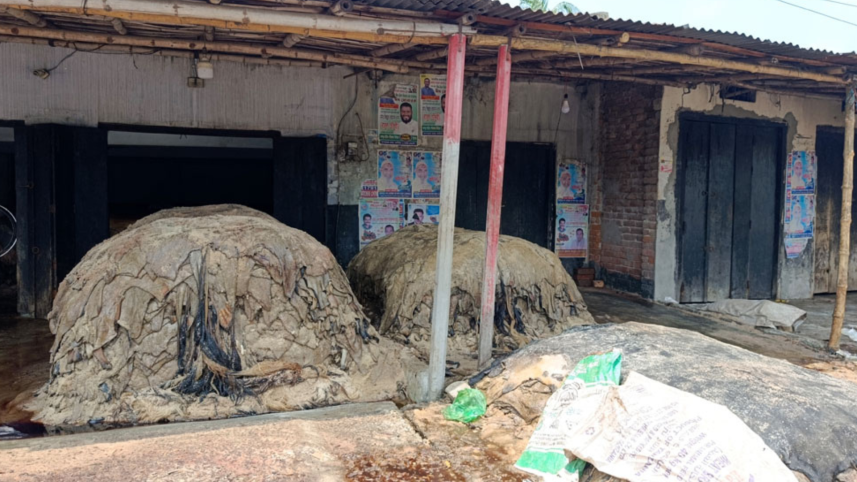
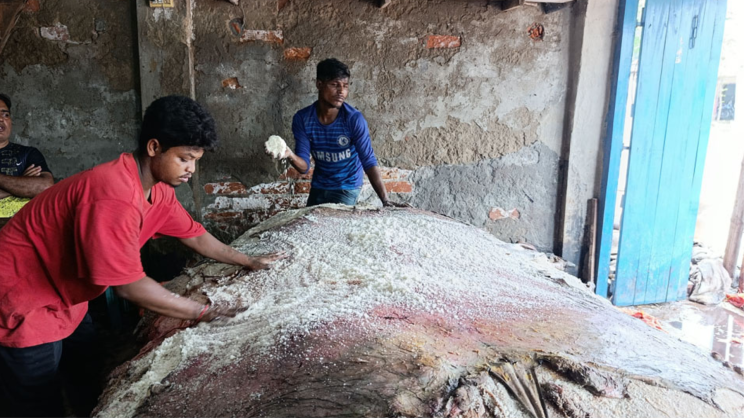
The hides arrive by the hundreds at the 50-odd wholesale outlets near Natore Railway Station. Labourers work around the clock -- scraping leftover meat, mixing salt, stacking cured hides into large lots.
Every Eid-ul-Azha, this northern town becomes the largest rawhide wholesale hub in the region, and this year the volumes are higher than last.

Over one lakh pieces have already been collected directly from the field, with cow hides purchased for Tk 700 to Tk 1,200 apiece. In the coming week, traders from 30 surrounding districts are expected to bring in another 10 to 12 lakh salt-treated pieces.
Md Abdul Halim Khan, secretary of the Natore Rawhide Wholesalers Association, said they are targeting a seasonal turnover of Tk 100 to 120 crore, up from Tk 70 to 80 crore last year.
But the optimism is cautious.
"The cost of preserving a single hide -- including salt and labour -- ranges from Tk 50 to Tk 60," said Md Ripon, a wholesale shop manager who procured over 3,000 hides this season compared to 1,000 to 1,200 last year.
"We bought most of our stock for Tk 700 to Tk 1,000, but we remain uncertain about whether the tanneries will compensate us fairly."
The market has a long history. It boomed in the 1980s after shifting near the railway station from its original location at Tebaria Haat, eventually drawing merchants from over 40 districts and supplying tanneries across Dhaka, Jashore, and Chattogram.
But the last five to six years have been difficult. Tanneries have repeatedly delayed or defaulted on payments, outstanding dues reportedly exceeding Tk 20 crore. The number of active outlets has dropped from over a hundred to around 50 or 60, and traders now arrive from only 25 to 30 districts.
Md Nurul Islam, a veteran who recently left the trade and rented out his shop, has seen the shift firsthand.
"By the '80s, Natore had become a national hub. We were the backbone of Dhaka's tanneries," he said. "Now many have lost their savings and walked away from businesses their families ran for generations."
Some have adapted quietly. Md Masum stopped buying hides directly after years of losses and now only stores and processes stock for other traders, earning a commission.
"Returns from tanneries are so unpredictable that most traders don't dare risk their own capital anymore," he said.
In seven to eight days, tannery representatives are expected to arrive to buy the preserved stock.
Abdul Halim summed up the mood plainly: "If tanneries honour the government-fixed rates, traders will survive. But historically, when we go to sell, we are deprived of expected prices. Sometimes we can't even recover our basic overhead costs. Everything now depends on their demand and willingness to pay."
With the hides salted and stacked, traders are now waiting for buyers to arrive to find out whether this season will bring profits or losses.
 For all latest news, follow The Daily Star's Google News channel.
Comments