


DHL Express Bangladesh partners with NCC Bank to cut emissions from air shipments
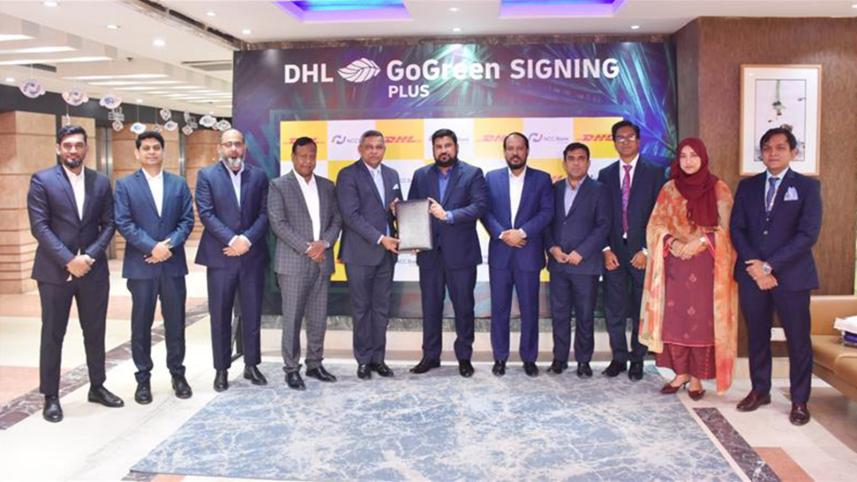
DHL Express Bangladesh has partnered with NCC Bank to reduce greenhouse gas emissions from the bank’s international air shipments through DHL’s GoGreen Plus service.
Under the partnership, NCC Bank will reduce emissions linked to its shipments by 30 per cent by using the GoGreen Plus service, which targets Scope 3 emissions. These are indirect emissions generated across a company’s value chain, including transportation and distribution.

The service uses an “insetting” approach that allows DHL to replace fossil fuels with Sustainable Aviation Fuel across its global network. Through a book-and-claim system, the resulting environmental benefits are allocated to customers investing in the solution, even if their individual shipments are not physically transported using aircraft powered by sustainable fuel.
GoGreen Plus is currently the only solution in the global express logistics sector that enables customers to use Sustainable Aviation Fuel to reduce emissions associated with their shipments.
Md Miarul Haque, managing director of DHL Express Bangladesh, said:
“We are thrilled to welcome NCC Bank to our GoGreen Plus initiative. By adopting sustainable aviation fuel, NCC Bank is taking a meaningful step toward reducing the environmental footprint of its shipments. Together, we can accelerate the adoption of sustainable aviation fuel across the air transport industry.”
DHL Express launched the GoGreen Plus service in 2023 to help customers reduce carbon dioxide equivalent emissions from air freight through the use of Sustainable Aviation Fuel. The initiative is supported by long-term supply agreements with BP, Neste, Cosmo Energy and the Cathay Group.
Sustainable Aviation Fuel is produced from alternative raw materials such as used cooking oil, waste and hydrogen, which have a lower-emission energy profile compared with conventional jet fuel derived from mineral oil.
The GoGreen Plus service supports DHL Group’s commitment to achieve net-zero greenhouse gas emissions by 2050, with a focus on decarbonising air transportation, which accounts for the largest share of the group’s carbon footprint.
 For all latest news, follow The Daily Star's Google News channel.
Comments