


If not on campus, where is she safe?


A public university campus is supposed to be one of the safest places for a student, where she can walk at 11:00pm without fearing for safety. She should not have to wonder whether the person behind her is a stranger passing by or someone waiting for an opportunity to attack her.
She should not have to run through the dark to escape an attempted rape on her own university campus. Yet that is exactly what happened at Jahangirnagar University campus around 11:00pm on Tuesday.

She was walking along a campus road when an unidentified man started following her. He wound something like a net around her neck and dragged her towards the extended section of Al-Beruni Hall.
She screamed for help when a rickshaw and three motorbikes passed. Left alone, she fought back. She resisted, screamed again, and did everything she could to escape.
She survived because she protected herself when no one else stepped forward. Her courage deserves acknowledgment. But no woman should have to fight for safety on her own campus.
When a campus fails to protect a student within its own boundaries, it becomes a question of the university authorities’ management, safety system, and most importantly, accountability.
That is why the proctor’s statement has triggered anger. After the incident, the proctor yesterday reportedly said, “Ensuring security is not the responsibility of the proctor, but of the registrar.”
The proctor’s office is typically one of the first points of contact for students when their safety is at risk.
When a young woman had just survived an attempted sexual assault, students expected acknowledgement and admission of failure if not apology. They expected someone in authority to say, “We failed her, and we will fix this.”
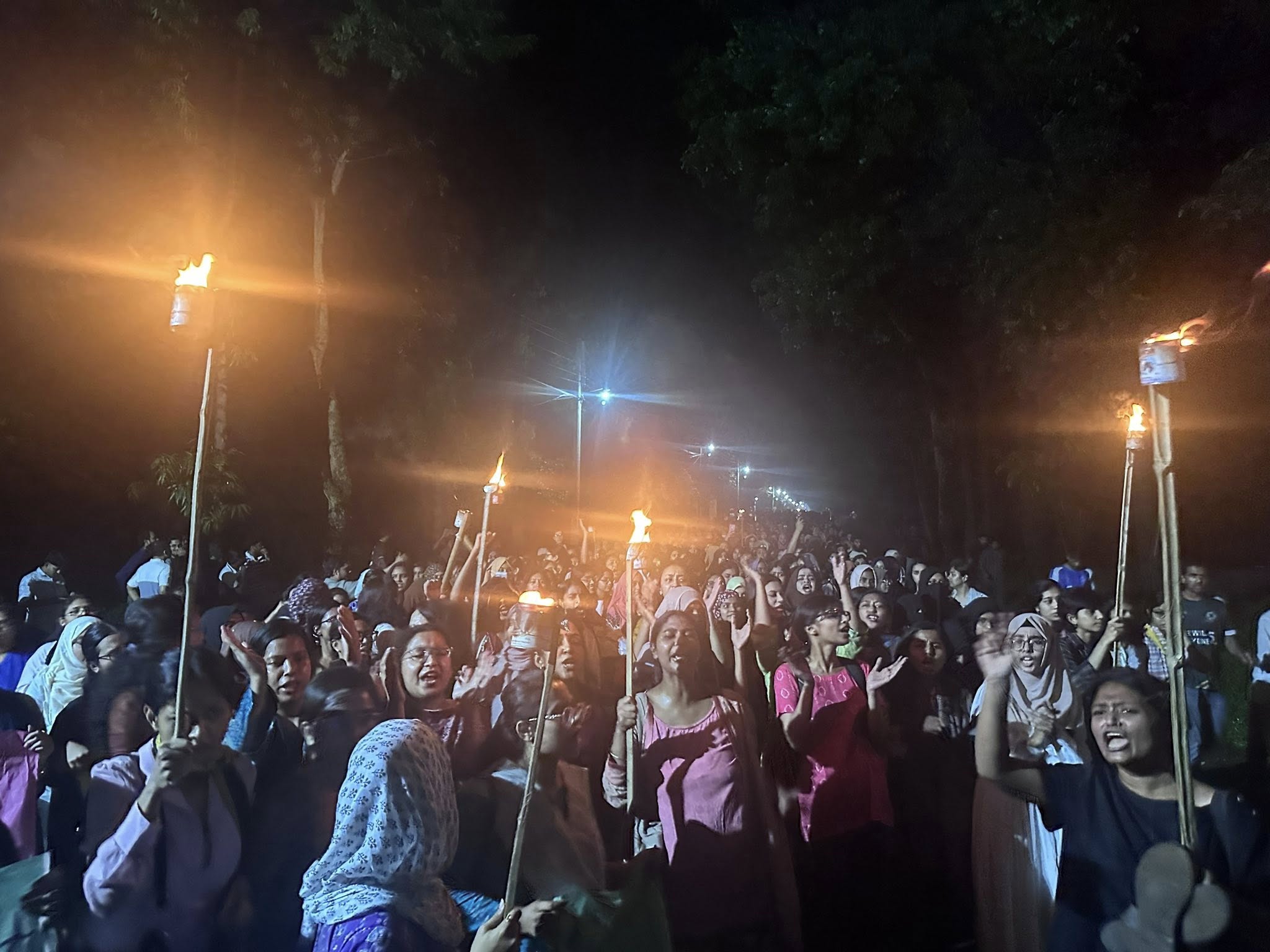
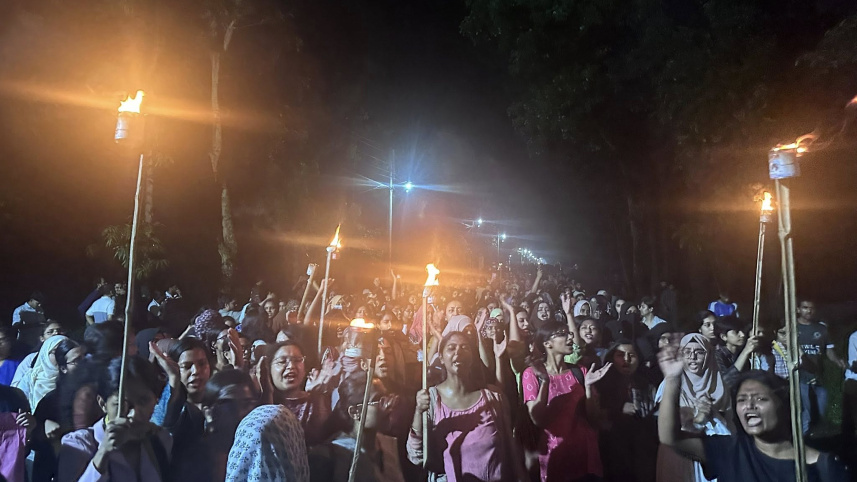
That is why, after the proctor’s statement, more than 1,000 female students gathered in front of the office, demanding his resignation.
Moreover, the incident has occurred at a sensitive time, with new students set to begin classes in just a month. Many of them have been eagerly waiting to step into university life and begin a new chapter.
But what message are they receiving? That a student can be attacked inside her own campus? That she may have to scream for help just to survive? And that even after such an incident, officials may still debate whose responsibility her safety was?
The suspect must be brought to justice. But more importantly, the administration must stop speaking in the language of denial.
 For all latest news, follow The Daily Star's Google News channel.
Comments