


Mini human brains grown in labs could outperform AI, researchers say
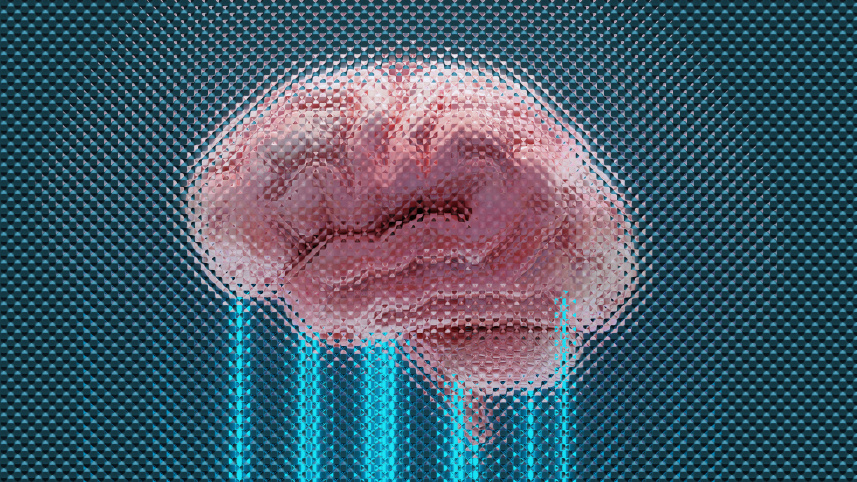
Scientists at laboratories across the United States and Australia are growing miniature human brains from stem cells and training them to perform computing tasks, raising the possibility that biological tissue could one day rival or complement artificial intelligence systems in certain applications.
These structures, known as brain organoids, are grown by converting adult skin, blood, or hair cells into a stem cell state and guiding them to form clusters of neurons. While far simpler than a human brain, they produce electrical signals and can be conditioned to respond to stimuli.

Researchers at UC San Diego have used them to guide robots through mazes and study neurological conditions including autism. At Johns Hopkins University, they form the basis of emerging biocomputing systems. And at Melbourne-based startup Cortical Labs, they have been trained to play the 1972 arcade game Pong and, more recently, the first-person shooter Doom.
Cortical Labs has developed a device called the CL-1, roughly the size of a toaster, that keeps cultures of up to a million neurons alive for six months. The company describes its ambition as becoming the Nvidia of neural computing, offering what its chief operating officer Brett Kagan calls "neurons as a service." The company argues that biological tissue offers properties currently unavailable in silicon: self-repair, adaptability, and energy efficiency.
The field received a significant boost in 2025 when the US National Institutes of Health announced it would no longer award grants for research relying exclusively on animal testing, and followed that with an $87 million investment in a standardised organoid modelling centre.
Ethical questions, however, remain unresolved. Organoids currently sit in a regulatory grey zone, classified neither as persons nor as animals. Philosophers disagree sharply on whether a sufficiently advanced organoid could be considered sentient, and no agreed framework exists for determining when, if ever, one might achieve some form of awareness.
he practical ceiling on organoid size has so far limited the debate, as organoids beyond roughly five millimetres in diameter suffocate without a vascular system. Researchers at Johns Hopkins are now working on artificial blood vessels to overcome that constraint, with a one-centimetre organoid, comparable in size to a mouse brain, described as the field's next major target.
 For all latest news, follow The Daily Star's Google News channel.
Comments