


Ruling party ‘lions’ in budget debate, ‘cats’ in delivery: Jamaat MP Shafiqul
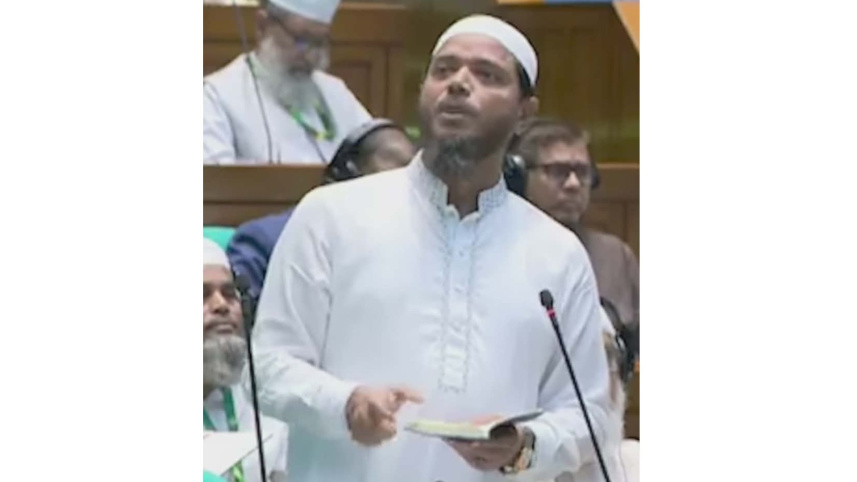
Patuakhali-2 Jamaat-e-Islami MP Shafiqul Islam Masud today said ruling party members appear in the role of “lions” during discussions on budget but act like “cats” when it comes to service delivery and implementation.
While taking part in the discussion on proposed budget for 2026-27 at the parliament, he said people want a budget that is implementable, not just aspirational.

“We want not just dreams, but something that can be implemented. That is why opposition discussions are not liked by the ruling party,” he said.
He questioned the real measure of success, saying that budget achievements cannot be judged by MPs thumping their desks, but by the smiles on ordinary people’s faces.
He criticised the lack of effective participation by both citizens and MPs in budget formulation, and pointed out the absence of modern presentation tools such as infographics, visual dashboards, and simple tables, which are common in developed countries.
Regarding the health sector, he condemned the government’s decision to cancel the license of Ad-din Hospital.
He asked why the license was revoked over the death of six newborns, while the health minister did not consider resigning when 300 children died of measles nationwide.
On the education sector, Shafiqul said despite claims of prioritisation, allocations do not reflect it. He alleged that nearly 2 lakh MPO listed teachers had not received their May salaries and were living in hardship. “If teachers are not paid regularly, how can we say education is advancing?” he asked.
He also raised concerns about the banking and industrial sectors, criticising the influence of business groups over Islami Bank and warning that increased tariffs and regulatory duties on raw materials for the steel and iron industry could harm domestic production.
Dhaka-16 Jamaat MP Abdul Baten questioned whether giving concessions to major loan defaulters while burdening small businesses with taxes would yield any benefit. He stressed that VAT affects rich and poor alike, but ordinary and low income people suffer most.
 For all latest news, follow The Daily Star's Google News channel.
Comments