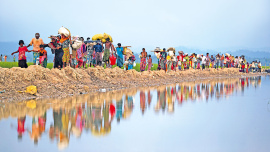
Myanmar’s partial Rohingya repatriation plan: Another attempt to mislead Bangladesh?

“A sincere diplomat is like dry water or wooden iron.” [Joseph Stalin, The Elections in St. Petersburg, 1913]
On 15 August, the Myanmar Ministry of Foreign Affairs issued a press statement on the state’s “ongoing efforts” towards the repatriation of Rohingya refugees. In its statement, Naypyidaw presented its own version of the Rohingya crisis and accused international media outlets of “partiality” and “disseminating disinformation”. Most importantly, the statement argued that only 308,797 persons residing in refugee camps in Bangladesh have been “verified” as former residents of Myanmar’s Rakhine State. Since this statement reflects the official position of the Myanmar government on the Rohingya issue, it needs to be examined in depth.
First, consistent with its earlier position, Myanmar has refused to accept the distinct identity of the Rohingyas and branded them as “Bengalis” in the statement. However, the Rohingyas do not self-identify as Bengalis and view themselves as a distinct ethnic community. According to renowned British historical sociologist Anthony Smith, an ethnic community is defined by six features: a common proper name, a myth of common ancestry, shared historical memories, one or more elements of common culture, a link to a historic homeland, and a measure of solidarity.
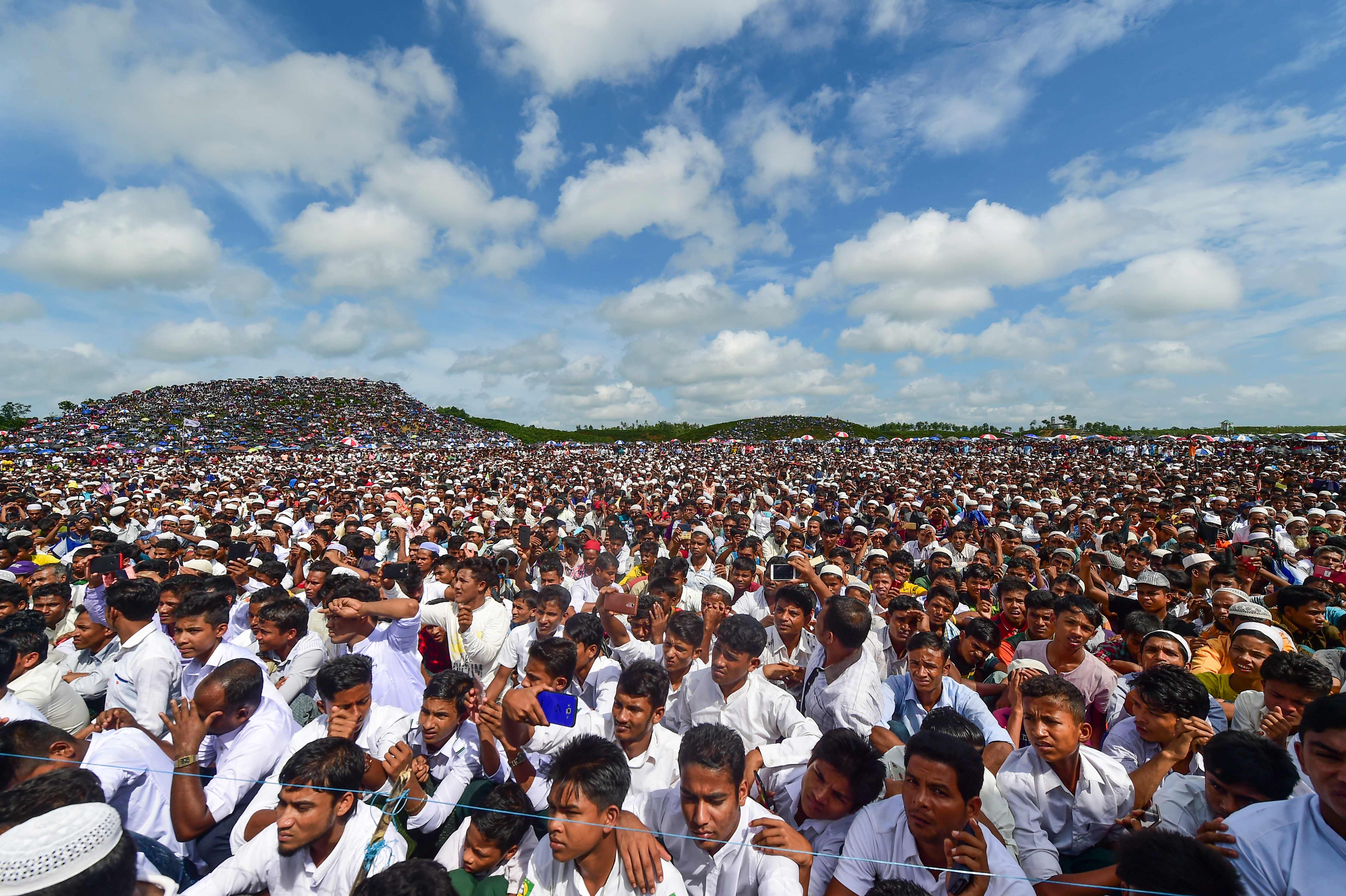
The Rohingyas unanimously use the name “Rohingya” for themselves. They trace their history back over a millennium through a fusion of local roots and interactions with Arab, Mughal and Portuguese merchants. They speak a common language, predominantly subscribe to Islam, and display distinct cultural traits. They share links with northern Rakhine State and view it as their homeland. Moreover, they have demonstrated a measure of solidarity and collectively survived a series of ethnic-cleansing campaigns since 1978. Hence, the Rohingyas constitute a distinct ethnic community.
Moreover, according to Article 27 of the 1966 International Covenant on Civil and Political Rights (ICCPR), the cultural, religious and linguistic identities of ethnic minorities must be protected. By misrepresenting the Rohingyas as “Bengalis”, therefore, the Myanmar government is effectively seeking to deprive the Rohingyas of their distinct cultural and linguistic identities. This amounts to an implicit violation of international human rights law.
Second, the statement argues that the Rohingyas fled their homes in 2017 in response to Myanmar’s “counter-terrorism measures”. By making this claim, it seeks to fully exonerate Myanmar from any wrongdoing. However, the so-called “counter-terrorism measures” were, in actuality, accompanied by massacres, rapes, arson, plunder and the destruction of villages, and the United Nations (UN) called the campaign “a textbook example of ethnic cleansing”.
Third, the statement claims that 740,000 Rohingyas lived in northern Rakhine State prior to the crackdown and that 540,000 of them took shelter in Bangladesh. Both claims are factually incorrect. According to the General Administration Department (GAD) of Myanmar, 767,038 Rohingyas lived in northern Rakhine State in 2016, and only 79,038 of them remained in 2018, with at least 688,000 Rohingyas taking shelter in Bangladesh. Thus, the Myanmar government’s own internal records contradict the statement. Moreover, according to a quantitative study conducted in 2017, at least 898,499 Rohingyas lived in northern Rakhine State in 2017. Naypyidaw is therefore deliberately scaling down the number of Rohingyas formerly living in northern Rakhine State and the number of Rohingyas who fled to Bangladesh in 2017.
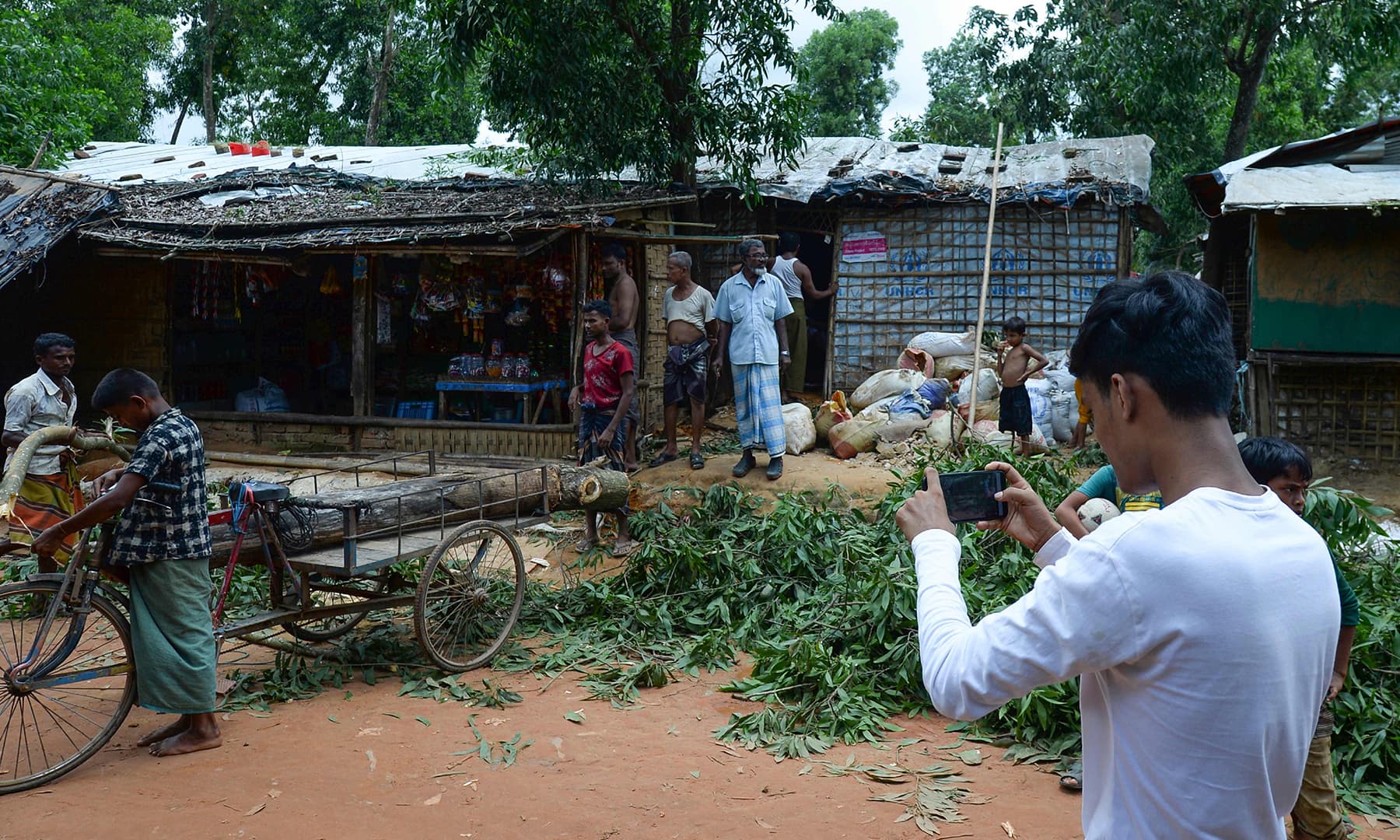
Fourth, the statement puts forward the claim that the number of Rohingya refugees in Bangladesh is less than a million. It bases its argument on deliberately scaled-down figures for the number of Rohingyas living in northern Rakhine State before 2017 and the list of refugees provided by Bangladesh in 2018. However, it is clear from the Myanmar government’s own records that it has misrepresented data about the number of Rohingyas in northern Rakhine State. Moreover, Bangladesh provided a list of 828,824 refugees between 2018 and 2021. As 30,000–35,000 children are born every year to Rohingya refugees, the overall refugee population has increased substantially since 2018. Also, at least 153,640 Rohingyas took shelter in Bangladesh in 2025–2026 owing to atrocities committed by the Arakan Army. Furthermore, Myanmar conveniently ignores the 300,000 Rohingya refugees who lived in Bangladesh before 2016.
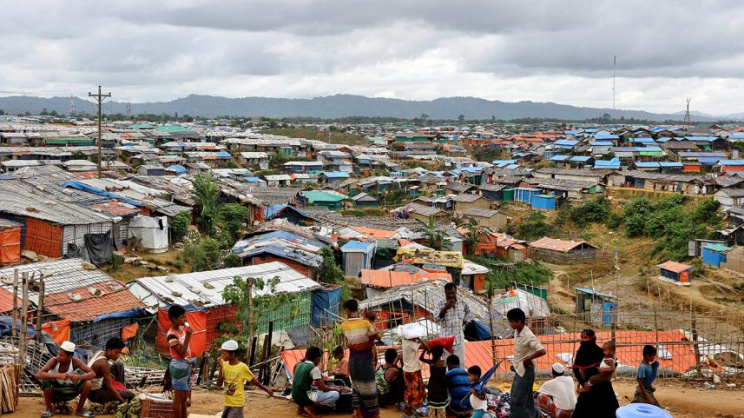
Most importantly, the Office of the UN High Commissioner for Refugees (UNHCR) documents the presence of 1,200,171 registered Rohingya refugees in Bangladesh, while a large number of Rohingya refugees remain unregistered and scattered across the country. Hence, Myanmar’s claim about the number of Rohingya refugees in Bangladesh is factually incorrect.
Fifth, the statement posits that Myanmar has “verified” only 308,797 Rohingyas as former residents of Rakhine State, indicating that it is willing to repatriate only these individuals. While some Bangladeshi media outlets have portrayed this as a positive development, Myanmar has effectively refused, through this statement, to repatriate the majority of Rohingya refugees. According to the UNHCR, 1,200,171 Rohingya refugees currently reside in Bangladesh, and there are tens of thousands of unregistered refugees. In fact, some estimates place the number of Rohingya refugees in Bangladesh at well over 1.5 million. Hence, Myanmar has agreed to repatriate only 20–25 percent of the Rohingya refugees while seeking to avoid responsibility for the remaining 75–80 percent. This does not serve the interests of either Bangladesh or the vast majority of the Rohingyas.
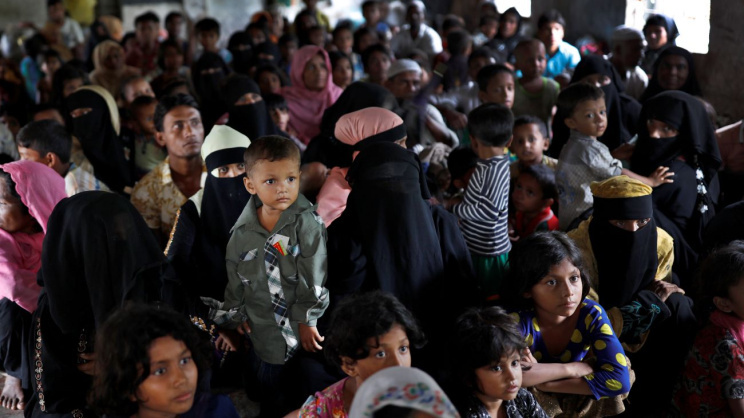
Sixth, the statement mentions that Myanmar previously repatriated 186,968 Rohingyas between 1978 and 1979 and 236,495 Rohingyas between 1992 and 2005. However, it conveniently ignores the fact that many Rohingyas displaced during these periods were not repatriated and that, before 2017, approximately 300,000 Rohingya refugees resided in Bangladesh. Myanmar has effectively denied their existence.
Finally, the statement points out that the repatriation of the “verified” Rohingya refugees would take place only after the security situation in Rakhine State is stabilised. However, the Arakan Army controls some 90 percent of the state, and the Tatmadaw is yet to achieve any breakthrough on the battlefield against it. So, the repatriation of even the limited number of “verified” refugees remains uncertain for an indefinite period.
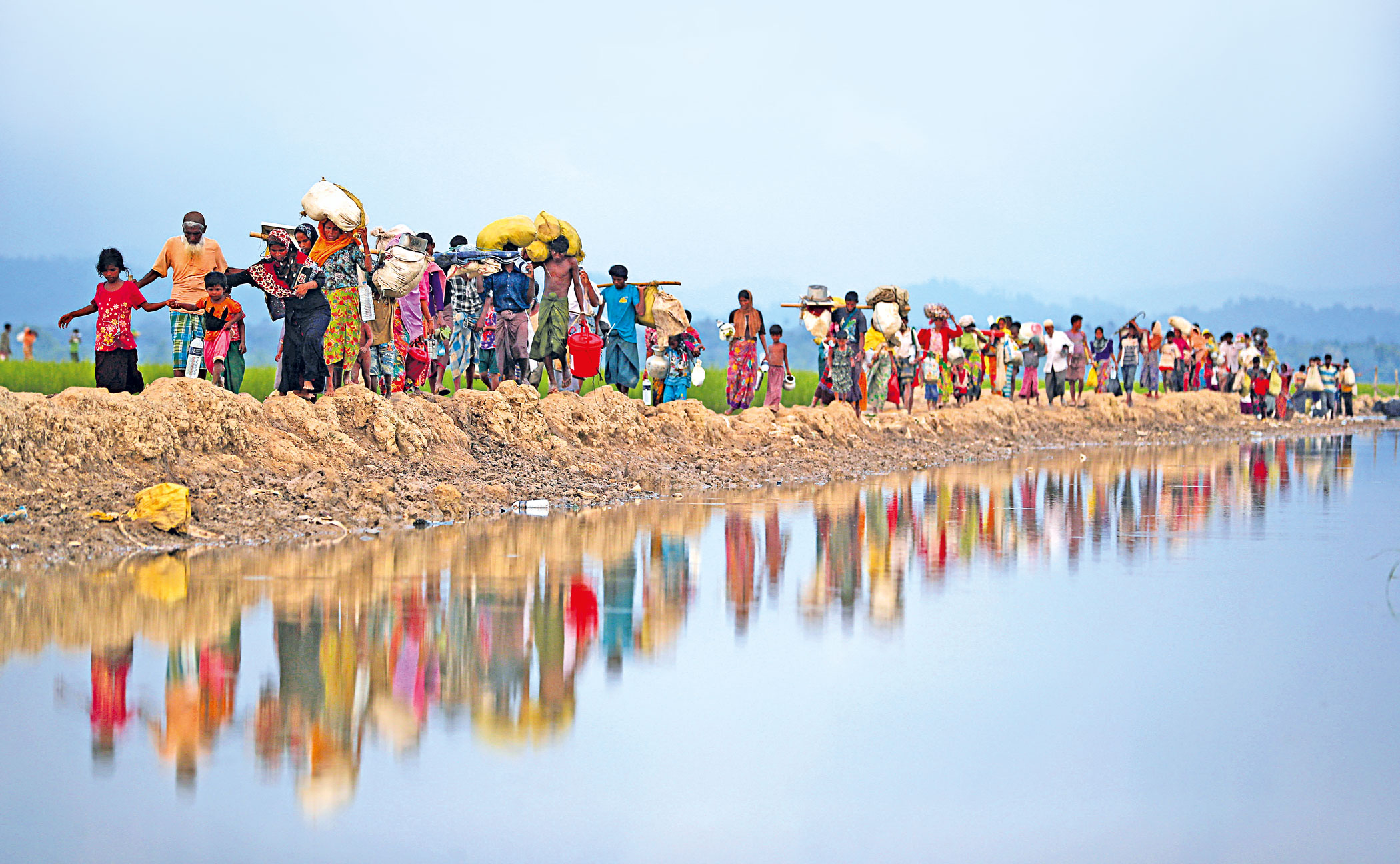
The statement by the Myanmar Ministry of Foreign Affairs, therefore, contains numerous factual errors and misleading claims, while seeking to absolve the government of Myanmar of any responsibility for triggering the Rohingya refugee crisis. Through this statement, it has repeated dehumanising rhetoric that denies the Rohingyas their identity, denied their distinctness as a community, and squarely blamed the Rohingyas themselves for the crisis. Moreover, the statement deliberately reduced the number of refugees and suggested the possible repatriation of only 20–25 percent of them, and that too at some point in the distant future.
In fact, a distinct pattern can be discerned from Myanmar’s behaviour. In 1978, Myanmar expelled between 200,000 and 250,000 Rohingyas into Bangladesh and, after extensive negotiations, took back 186,968 Rohingyas, leaving thousands stranded in Bangladesh. Afterwards, it stripped nearly all Rohingyas of citizenship through the 1982 Citizenship Law. Then, in 1991–1992, Myanmar again expelled between 250,000 and 270,000 Rohingyas into Bangladesh and, after extensive negotiations, repatriated 236,495 Rohingyas, again leaving thousands stranded in Bangladesh. Finally, in 2016–2017, it again expelled between 700,000 and 750,000 Rohingyas into Bangladesh and, after extensive negotiations, is now offering to repatriate only a minority of them. So, Myanmar is effectively seeking to replicate the scenarios of 1978 and 1991–1992, but on a grander scale.
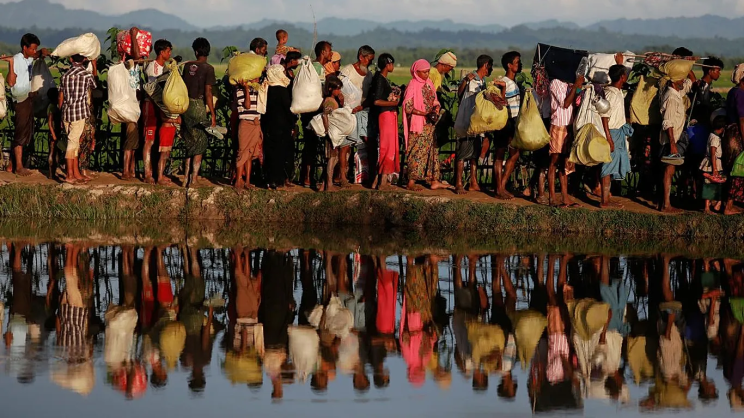
Accordingly, Bangladesh and the international community should recognise the fact that unless Myanmar agrees to provide full citizenship to the Rohingyas and end their prolonged statelessness, the vicious cycle of expulsion and partial repatriation will continue. The cycle needs to be broken, and this will only be possible if Myanmar provides full and unconditional citizenship to the Rohingyas, with a sincere commitment to protecting all their civil, political, social, economic and cultural rights.
Hence, the only durable solution to the Rohingya refugee crisis is the safe, voluntary, dignified and sustainable repatriation of all Rohingya refugees from Bangladesh to Myanmar, with credible guarantees for their rights. Any other solution, including Myanmar’s latest proposal to repatriate only “verified” Rohingyas without any credible guarantees, is likely to prove insufficient and unsustainable in the long run.
The central issue, therefore, is not simply how many refugees Myanmar is prepared to receive, but whether their return can occur within a political and legal framework that prevents renewed persecution. A credible repatriation process must address the conditions that produced displacement in the first place, particularly the Rohingyas’ statelessness, exclusion and lack of effective protection. Bangladesh should therefore resist any arrangement that reduces repatriation to a numerical exercise, while the international community should ensure that Myanmar’s commitments are independently monitored and verifiable. At the same time, responsibility for resolving the crisis must remain firmly with Myanmar, rather than being shifted onto the refugees or Bangladesh. Without meaningful guarantees of equality, security and rights, repatriation risks becoming a temporary relocation rather than a genuine resolution of the crisis.
Md. Himel Rahman is a lecturer in the Department of International Relations at Gopalganj Science and Technology University.
Send your articles for Slow Reads to slowreads@thedailystar.net. Check out our submission guidelines for details.

Is Trump’s Gaza peace plan falling apart?

What Japan’s changing Indo-Pacific strategy means for Bangladesh

Can India and Bangladesh build a more equal economic partnership?

Bangladesh First: Rethinking the relationship with India
A new political voice is emerging from the Rohingya diaspora. Why it matters

Bangladesh’s FDI puzzle: Why human capital, not red tape, is the real constraint
Will the Saudi Arabia-Turkiye-Pakistan Makkah Agreement create a new regional security order?
Why Bangladesh needs a regional strategy beyond SAARC
Why every protest matters: Lessons from Bangladesh, India and Nepal