


Speaker halts debate over interpretation of Quran verse, calls for restraint
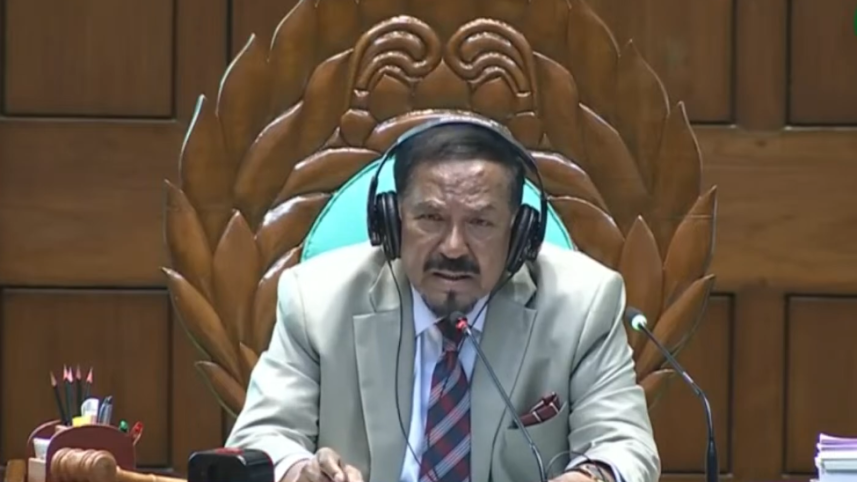
A debate erupted in the parliament today over the interpretation of a verse from the Holy Quran during discussions on the proposed budget for fiscal year 2026-27.
Participating in the budget debate, BNP MP Alamgir Mohammed Mahfuz Ullah Farid criticised the opposition for bringing out a procession on budget day.

“Why did they bring out a march that day? I could not understand. They will come to us, to our prime minister, to our ministers to ask for budget, to ask for allocation. But they will go to the streets and march,” he said.

Farid then recited a verse from Surah Ibrahim and said, “One must be grateful in life. One must be grateful for allocations. One must be grateful to our honourable Prime Minister Tarique Rahman. One must be grateful to our honourable ministers. They [opposition] do not show gratitude... Therefore, they must face severe punishment.”
Following his remarks, Jamaat-e-Islami MP Najibur Rahman rose on a point of order.
“The Quran and Hadith are not subjects of mockery or ridicule. If they are mocked, it is very regrettable,” he said.
Arguing that the verse had been misinterpreted, Najibur said, “Does it mean that they will increase if we praise them, and beat us if we do not? That is a wrong and highly misleading interpretation.”
Referring to the alleged misinterpretation, he added, “On this matter, Rasul (PBUH) gave stern warnings that these are not subjects of mockery or ridicule.”
“We must take this matter very seriously. The Quran and Hadith must never be misinterpreted or disparaged,” he told Speaker Hafiz Uddin Ahmad, drawing his attention to the issue.
The speaker said Farid was a senior parliamentarian.
“I do not believe he would make any sarcastic comment about Quran and Hadith. Still, we will examine it. If any wrong interpretation is given of Quran and Hadith, it will be expunged.
“Misinterpretation of Quran and Hadith will never be acceptable in Bangladesh, a Muslim-majority country,” he said, amid desk-thumping by lawmakers.
Home Minister Salahuddin Ahmad then intervened, saying he did not want to debate the issue.
“However, it would send the wrong message to suggest, in any way, that one of our honourable MPs had misinterpreted a Quranic verse,” he said.
The minister noted that Farid was a Mawlana and a madrasa graduate. “He mentioned the verse in context. If we show gratitude for Allah’s blessings, Allah will increase them for us.”
He added that the government would also condemn any statement by an MP that was even inadvertently disrespectful to Islam. “This should not be politically misinterpreted, and it should not be politically used,” he said.
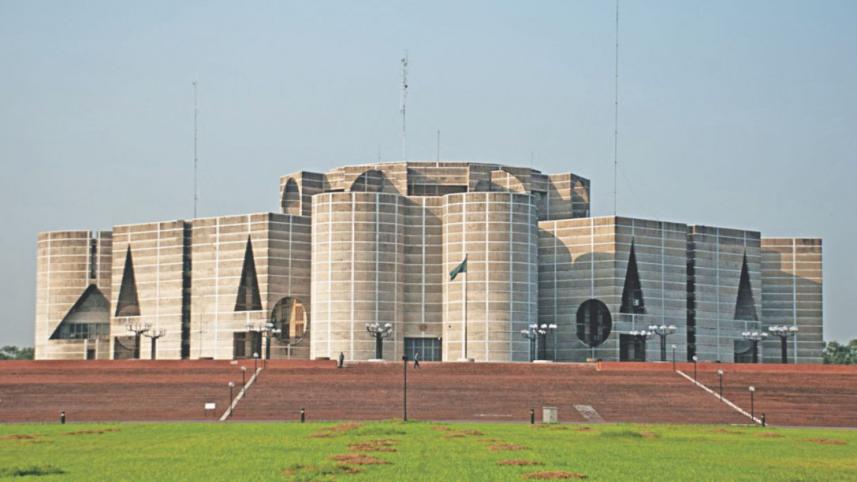
As opposition members continued to object, the speaker said, “I already said Alamgir Mohammed Mahfuz Ullah Farid would not make sarcastic comments here. I do not want debate on this.”
“Most of us here are Muslims, as are 92 percent of the country’s people. I therefore do not want any contentious discussion in parliament on such a sensitive issue,” he added.
 For all latest news, follow The Daily Star's Google News channel.
 The speaker then gave the floor to Jamaat-e-Islami MP Mujibur Rahman, saying, “Do not raise anything that creates debate. Most here are Muslims, most respect the religion.”
Mujibur said, “Why was this verse revealed? The context is that Allah has placed countless blessings in this world. He said, if you try to count Allah’s blessings, you will not be able to finish counting.”
He suggested that the speaker consult a scholar if he deemed it necessary.
“This verse does not mention human contributions,” he said.
The speaker replied, “There are many madrasa-educated scholars here, more on that side. We have acknowledged that. But even in my treasury bench, there are one or two.”
The speaker then resumed the budget discussion.
Comments