


‘A betrayal of democracy’
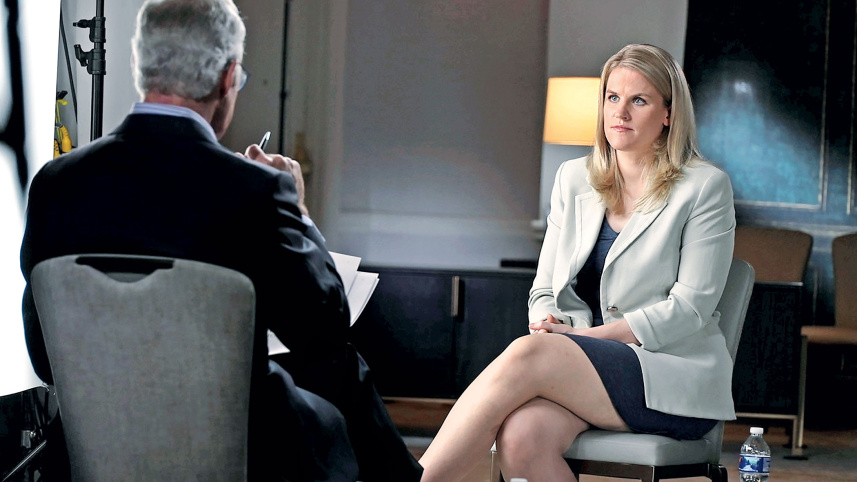
The whistleblower who shared a trove of Facebook documents alleging the social media giant knew its products were fueling hate and harming children's mental health revealed her identity Sunday in a televised interview, and accused the company of choosing "profit over safety."
Frances Haugen, a 37-year-old data scientist from Iowa, has worked for companies including Google and Pinterest -- but said in an interview with CBS news show "60 Minutes" that Facebook was "substantially worse" than anything she had seen before.

She called for the company to be regulated. "Facebook over and over again has shown it chooses profit over safety. It is subsidizing, it is paying for its profits with our safety," Haugen said.
"The version of Facebook that exists today is tearing our societies apart and causing ethnic violence around the world," she said.
The world's largest social media platform has been embroiled in a firestorm brought about by Haugen, who as an unnamed whistleblower shared documents with US lawmakers and The Wall Street Journal that detailed how Facebook knew its products, including Instagram, were harming young girls, especially around body image.
US Senator Richard Blumenthal responded to the interview ahead of Haugen's appearance to testify in Congress next week, saying in a statement: "Facebook's actions make clear that we cannot trust it to police itself. We must consider stronger oversight."
In the "60 Minutes" interview Haugen explained how the company's News Feed algorithm is optimized for content that gets a reaction.
The company's own research shows that it is "easier to inspire people to anger than it is to other emotions," Haugen said.
"Facebook has realized that if they change the algorithm to be safer, people will spend less time on the site, they'll click on less ads, they'll make less money."
During the 2020 US presidential election, she said, the company realized the danger that such content presented and turned on safety systems to reduce it.
But "as soon as the election was over they turn them back off, or they change the settings back to what they were before, to prioritize growth over safety, and that really feels like a betrayal of democracy to me," she said.
 For all latest news, follow The Daily Star's Google News channel.
Comments