


Italy-bound fortune seekers: Scarred, they return to debt and isolation


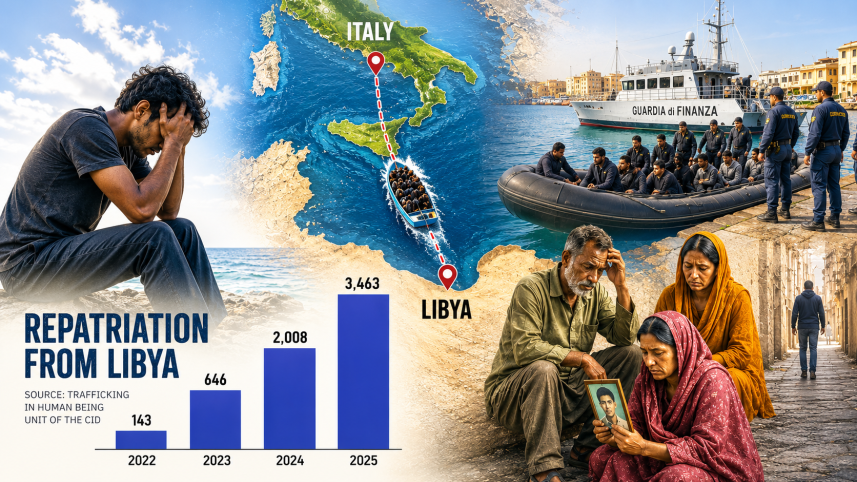
Concrete houses with bright colours are dotted across several villages in Shariatpur, standing as proof of the hard-earned economic success of Bangladeshi migrants in Italy.
For many young men in these villages, Italy represents an escape from poverty and a chance at a better life.

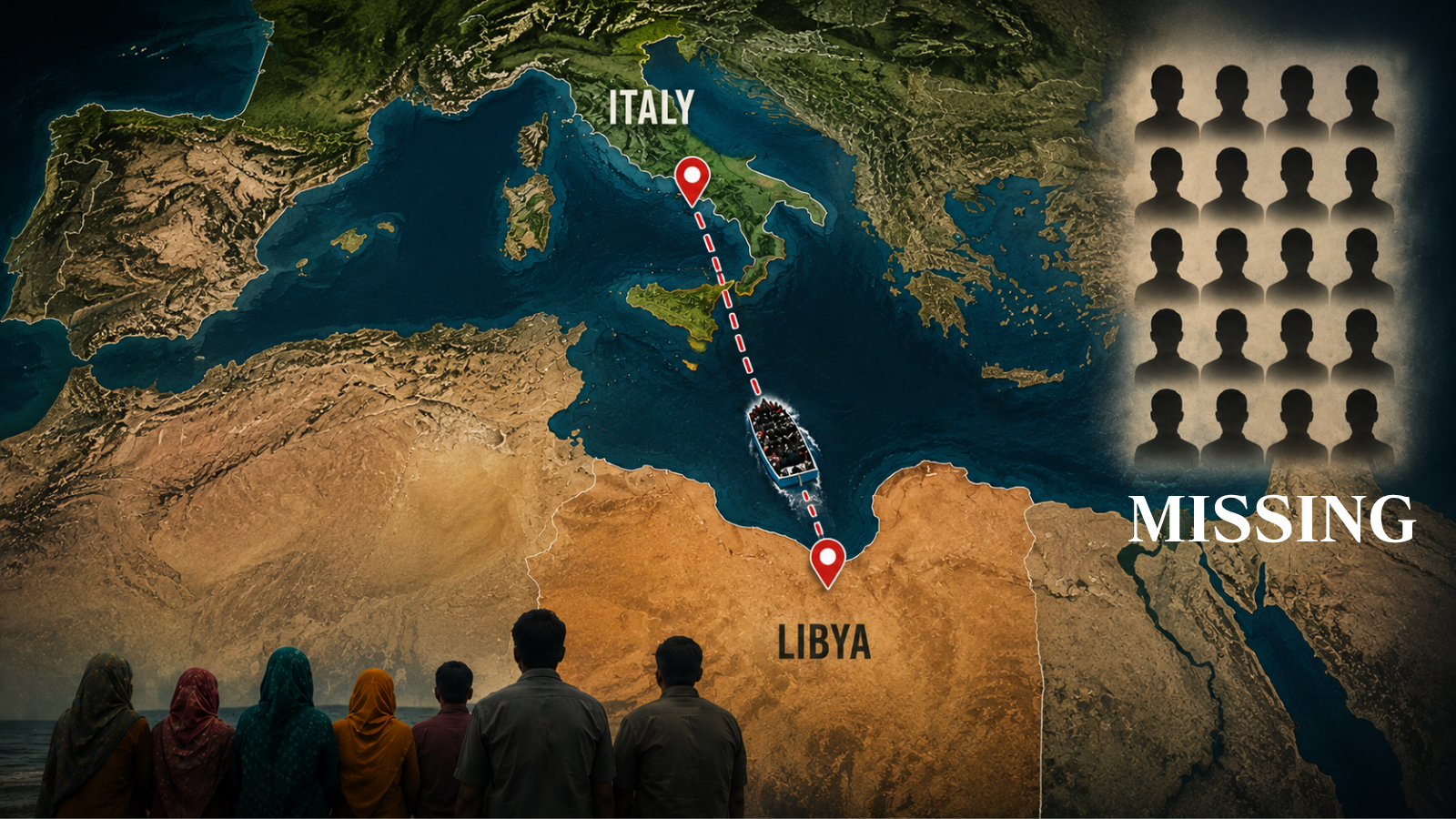
But the dream of reaching Europe is often shattered. Many of the fortune seekers embark on perilous journeys through the Mediterranean from Libya, only to face torture, detention, extortion and near-death experiences at sea. Many others lose their lives along the way.
For those who make it back alive, home often turns into another battleground marked by debt, trauma and social isolation.
“I thought I was going to Italy to save my family. Instead, I had to return home to a cycle of debt and nightmares,” said 43-year-old Khabir Hossain Khan, a father of two from Paschim Kotapara in Shariatpur Sadar Upazila.
He once worked as a salesman at a shop but the income was barely enough to support his family of four. Then came the promise of finding a better life in Italy.
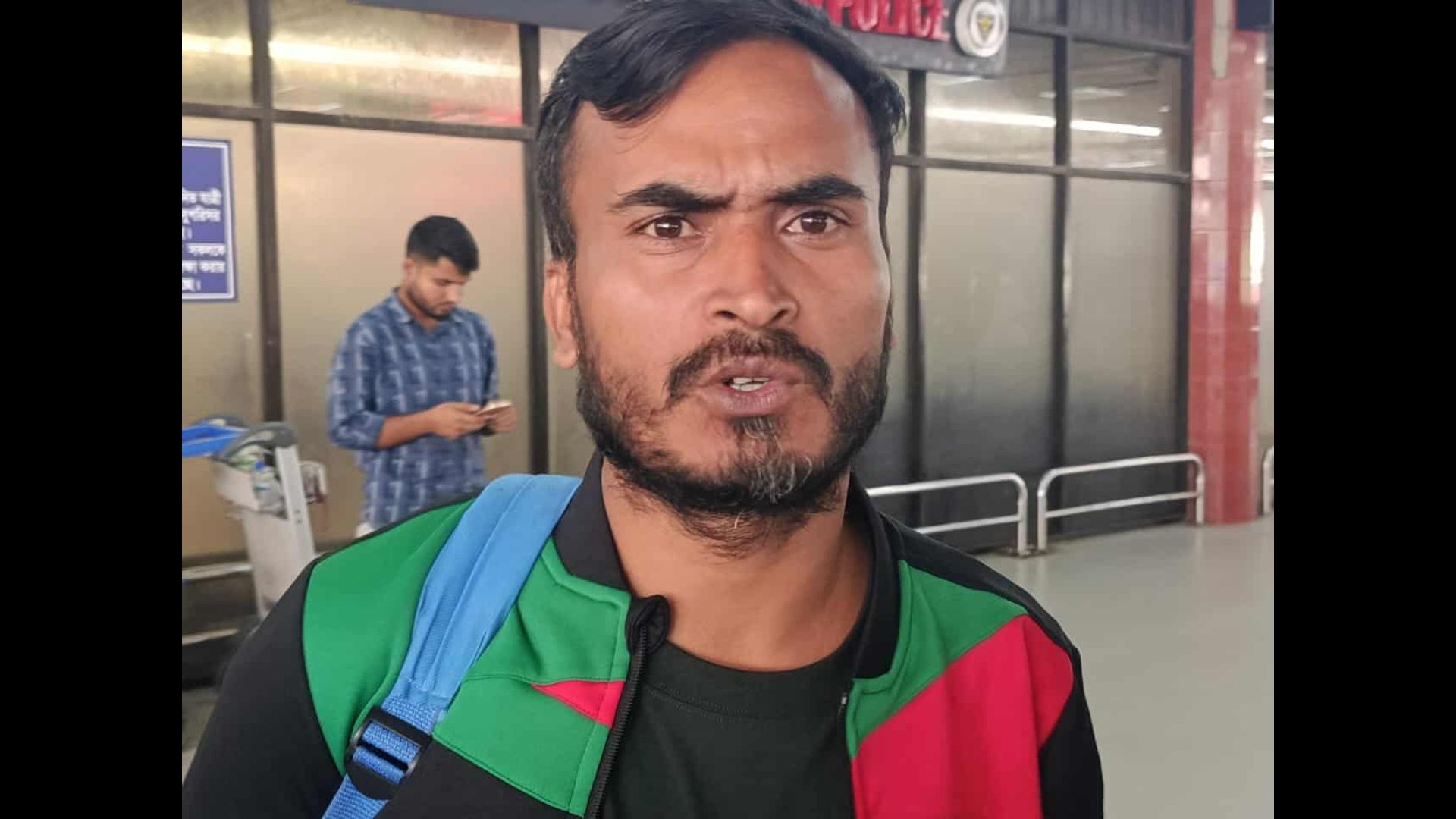
“A broker told me that many people were going to Italy through Libya and earning well there. He said it was safe,” Khabir recalled.
The deal sounded simple: he would pay Tk 4 lakh once he reached Libya. Then he would be taken to Italy through the Mediterranean.
On November 4, 2023, Khabir left Bangladesh on a route now familiar among irregular migrants -- Dhaka to Dubai, then to Libya via Egypt.
After arriving in Benghazi, a Bangla-speaking broker received him. He was then taken to Tobruk, a port city in the northeastern region of Libya. What followed was months of captivity.
In February 2024, Khabir was moved to what migrants call a “game house” -- a facility where migrants are confined before they embark on sea crossings to Italy.
“The rooms had no fans. Food was scarce. We sometimes survived on raw noodles... The guards would resort to horrific torture. They would beat us with thick ropes and plastic pipes for no reason.”
Then came an attack from a Libyan gang of human traffickers.
They stormed the camp, kidnapped the migrants, and demanded ransom from their families in Bangladesh. Khabir’s captors demanded Tk 10 lakh from his family members, who had to borrow the money at high interest rates.
But freedom did not come even after his family paid the ransom.
Libyan police later raided the camp and detained the migrants, including Khabir. He had to spend more than four months at overcrowded detention centres in Benghazi.
At one of the centres, migrants were crammed so tightly that they could barely move their arms. On most days, they were served one meal, sometimes two.
Eventually, Khabir was transferred to a deportation centre where the International Organization for Migration (IOM) facilitated the voluntary return of migrants.
 For all latest news, follow The Daily Star's Google News channel.
 Khabir finally returned to Bangladesh in January 2025 but he had to pay a steep price.
He now carries the burden of a Tk 18 lakh debt -- part of which he owes to NGOs and the rest to local lenders who charge steep monthly interests.
He runs a tea stall and a small laundry shop to support his family and clear the debt.
“My main focus now is to take care of my children and pay off the loans,” he said.
In neighbouring Dakkhin Bhashanchar village, 27-year-old Mohammad Arif Bepari too has a harrowing tale to tell.
Arif had initially planned to migrate legally to Hungary in 2020. As he failed to get a Hungary visa, he was persuaded by brokers to try to find a better life in Italy. They promised that he would be taken to the European country via Libya in 10 days, and it would cost him Tk 13 lakh.
His family used all the savings and borrowed from relatives to facilitate his journey. Arif left Dhaka for Dubai on March 18, 2024, and then flew to Libya via Egypt.
In Tripoli, he spent nearly three months inside a “game house”, where migrants lived under constant fear.
“If someone’s family made any delay in making payments, traffickers would take him to a separate room and then torture him,” Arif said.
On the night of Eid-ul-Azha in June 2024, traffickers took the group to a coastal area. Fifty migrants, mostly Bangladeshis, were forced onto a boat meant for 30 people.
The boat capsized in the Mediterranean within around 90 minutes of departure.
Arif first grabbed an oil drum to stay afloat. Later, another Bangladeshi migrant handed him an inflatable pillow. He floated for nearly seven hours before swimming back to the Libyan shore.
“Many were swallowed by the sea,” he said.
The survivors were later detained by Libyan police and sent to jail. “Police personnel there would often beat us,” he recalled.
For more than two months, Arif lived through torture and hunger. He was finally repatriated to Bangladesh in August 2024 with the IOM’s assistance.
Following his return, Arif suffered severe psychological trauma and required counselling. Now he works at a pharmacy, hoping to rebuild his life.
“I tell everyone not to take this route… But people still go,” he said.
According to the IOM, more than 31,000 migrants, including Bangladeshis, have died or gone missing in the Mediterranean since 2014 -- many along the Libya-Italy corridor.
Despite repeated reports of torture and deaths, Bangladeshis continue to take the Libya route in large numbers. Many young men in villages across Shariatpur and Madaripur appear willing to take the risk. When evening falls, they gather at tea stalls and talk about crossing the sea to reach Italy.
Comments