


Employ better strategies to stop lynching
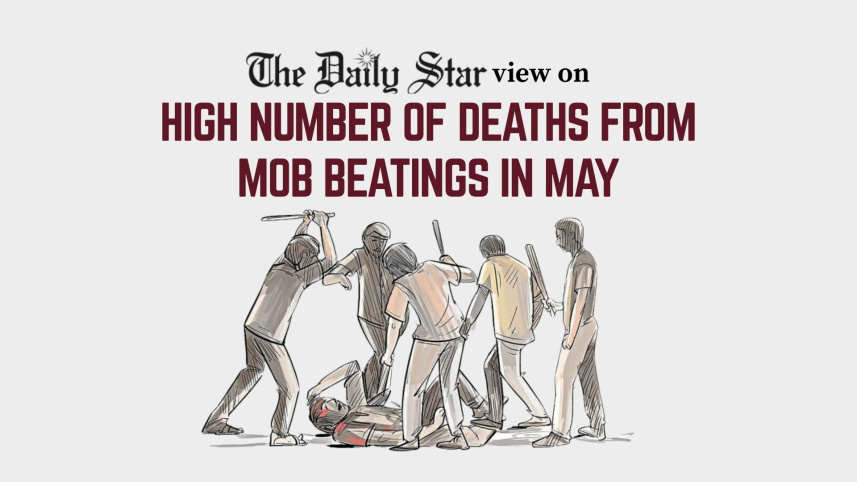
When it comes to killings, it is only the brutality or the unique circumstances that draw our attention and shock our conscience. Hundreds of other homicides that never make it to the front page leave us with the delusion that certain crimes, such as mob violence, have stopped, until a cumulative statistic is presented. That’s exactly why the latest report published by rights organisation Manabadhikar Shongskriti Foundation (MSF) feels shocking. MSF data shows that May has witnessed the highest number of deaths by mob beatings this year: 32 people were lynched over allegations of theft, robbery, attempted rape and sexual assault, murder, mugging, drug peddling, and even over insulting remarks.i
The report compared this statistic with data from previous months. In April, 21 deaths from mob violence were reported, 19 in March, 18 in February, and 21 in January. The number of people injured in mob beatings in May was also much higher than that in April—71 compared to 49. Even law enforcers were not spared during mob beatings last month. The statistics and allegations indicate a dangerous trend: the increasing tendency to take the law into one's own hands. And such a tendency can grow only when people’s trust in the country’s law and justice system erodes significantly.

Moreover, mob violence is often perceived as a nameless, faceless crime. People participating in the act don't fear legal retribution as they think they would not be identified amid a crowd committing the crime. Yet, in today’s day and age, when technologies such as CCTV cameras and mobile phones are ubiquitous, video recordings of such crimes should dispel the illusion of anonymity that often emboldens participants. But in Bangladesh, that does not happen, because even cases arising from high-profile incidents of mob violence remain stuck in lengthy investigations and legal proceedings. What’s more, alleged perpetrators can often take advantage of legal loopholes and roam free, while the victims’ families live in fear of retribution.
Thus, enacting new laws to deal with mob violence alone will not prevent this criminal act. Neither will the home minister's warning about not tolerating mob justice. What is needed is a repair of our justice system, its lengthy processes, weak investigations, and its tendency to favour those with money and political influence. Also, the government must come up with strategies to reinstate people’s trust in law and its enforcers. Mere cosmetic changes will not do. Law enforcers’ presence should be enough to dissuade crime. Also, civic and moral education that teaches young people to respect the law and rules of the land and to differentiate right from wrong must be mandatory. Incidents of mob violence should not exist at all, let alone be common in a functional democracy.
 For all latest news, follow The Daily Star's Google News channel.
Comments