


ICU beds shouldn’t be a matter of luck
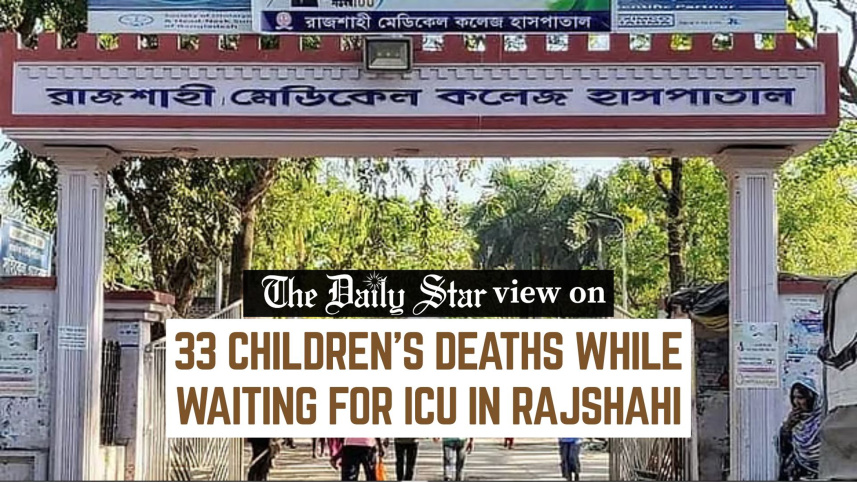
As citizens of this country, one of our basic rights is to live a life free from harm and have access to timely and adequate medical care when needed. But time and time again, that basic right is stripped away, leaving us vulnerable in precarious situations. One such incident reported by Prothom Alo recently occurred at Rajshahi Medical College Hospital (RMCH) where some 33 children died within 11 days while waiting for admission in the hospital’s intensive care unit (ICU). The RMCH ICU in-charge said timely admission to the ICU might have saved some of these lives. These deaths point sharply to a healthcare system that continues to fail its most vulnerable population.
What makes the RMCH crisis particularly inexcusable is that it was not simply a matter of scarcity but a gross failure to utilise the already existing facilities. The RMCH has a 60-bed ICU complex—with 20 paediatric beds and 40 adult beds—but only the 40 adult beds are functional. The hospital authority, in the absence of government support—including equipment and trained personnel—has allocated some 12 adult beds for children under special arrangements. The Prothom Alo report also mentions the 200-bed children’s hospital constructed in the Lakshmipur area of Rajshahi. Built at the cost of Tk 34 crore, this hospital has 10 dedicated paediatric ICU beds. However, despite construction being completed in 2023, the facility has yet to become operational. Even at the Dhaka Medical College Hospital, the country’s largest government hospital, only a fraction of patients seeking ICU care can be accommodated each day.

This troubling phenomenon, where infrastructure exists but remains unused due to a lack of institutional goodwill and sound operational plan, also leads to a massive waste of the already limited healthcare budget. We frequently hear about new hospital buildings built and then left abandoned all around the country. Meanwhile, nearly 80 percent of our annual health budget is wasted on purchasing equipment that is not needed, which often sits idle and unused.
What the RMCH crisis ultimately exposes is an unacceptable failure in governance, fuelled by negligence and a culture of lack of accountability. This cannot be improved without combined efforts from the policymakers, healthcare professionals, and general citizens. Only with greater transparency in government spending, optimal use of the existing resources, and a firm commitment to ensuring that every medical case receives proper and timely treatment can we ensure that lives are no longer needlessly lost.
 For all latest news, follow The Daily Star's Google News channel.
Comments