


War calls for judicious behaviour
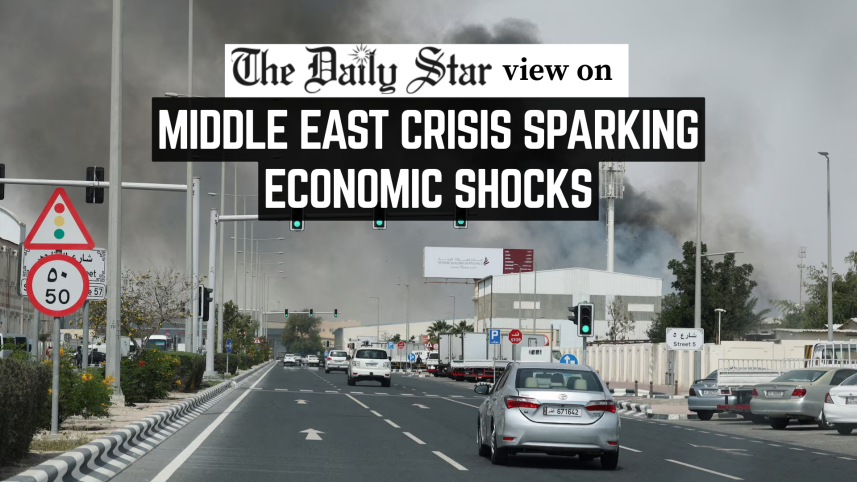
The US-Israel war on Iran may not be on Bangladesh’s border, but it definitely is on our economic horizon. Like many other countries, Bangladesh is also reeling from the immediate impacts of the war, which include a surge in oil prices, disruption of a major trade route, and cancellations of hundreds of flights. However, the short, mid, and long-term aftermath of the war are what we must prepare for. And that calls for cautious and prudent monetary and fiscal choices at the policymaking level, while at the individual level, frugality, not panic.
Our biggest concerns lie with fossil fuels—oil and gas. According to official statements, Bangladesh still has adequate fuel stocks, which it maintains during normal times. However, the country may have to pay higher fuel prices in the mid-term, even if the war is short-lived, as prices are not likely to drop anytime soon. Besides, the disruptions in global supply chains caused by the literal closure of the Strait of Hormuz would not be resolved immediately, which means increased logistics and transportation expenses for exports. In other words, reduced export earnings. Both of these factors would place additional pressure on the country’s foreign exchange reserves. Furthermore, the war in ME could reduce remittance flow, which had increased in the last one and a half years, strengthening the reserve. Nevertheless, suspension of some ongoing projects in the ME may result in temporary layoff of workers. Plus, due to flight cancellations, thousands of migrant workers are yet to return or reach their workplaces in the ME. These factors are likely to translate into lower remittance flow in the mid and long-run.

To keep the economic wheel running, the first instinct would be to pay off for costly imports from the foreign reserve, as the Awami government did. However, experts suggest that Bangladesh should avoid such a strategy and opt for alternatives, including negotiating deferred payment with oil exporters, seeking financing from the Islamic Development Bank for fuel imports and finding alternative fuel sources. The government should also pursue multilateral lenders for faster disbursement of loans they had previously promised. Indeed, the Global South, which often bears the major brunt of economic crisis, could collectively up with creative strategies to face this imminent economic whirlwind.
The government must also heed economists' advice not to cut the policy rate or pass on the higher energy price to consumers. Lower policy rate may boost investment, but it will also push up the already high inflation rate. Also, to keep agricultural production smooth, the government should look for alternative sources to import fertiliser. So far, the decisions the government has taken demonstrate caution and restraint. However, at the individual level, we, the public, need to practice frugality and cut down on our energy consumption voluntarily. The government alone cannot weather the difficult times ahead; we, the citizens, need to understand the war’s impact and provide support without panicking.
 For all latest news, follow The Daily Star's Google News channel.
Comments