


Iran war and the long shadow of oil colonialism

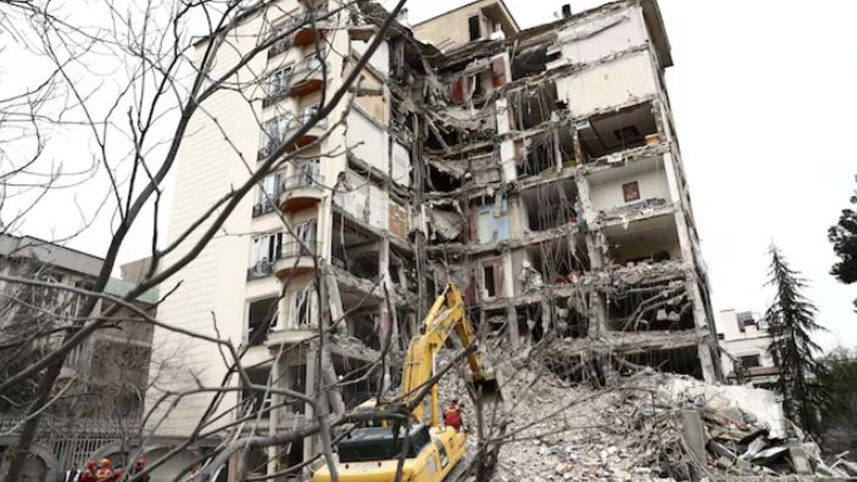
We are separated, the UK and Bangladesh, by a war zone. It is affecting us both, especially through a rise in energy costs, though not with equal effects across the different classes and groups that make up our respective societies. These costs are a sharp reminder of global interconnectedness, with new elements emerging daily. There are clear differences of opinion and judgement about the ongoing war within the UK: the populist right buying into Trump and Israel’s agenda; the centre very cautious, seeking legality and adopting only a defensive stance; the left and Greens, along with peace groups and the Muslim diaspora, implacably opposed.
Much is intermingled in terms of history, responsibility, and present alignments. What is the longer view? Are we now looking at the denouement of a particular, extended “colonial” era arising from World War I, which entailed the collapse of the Ottoman Empire and a Gulf region reset by rich, western industrialising societies intent upon capturing access to oil and establishing ownership through its exploitation once above ground (through refining and transportation)?

Obviously, a major part of the post-World War I settlement in the region was the formation of Israel. Britain held this West Asian space towards the end of that war and, in the 1917 Balfour Declaration, acceded to the Zionist quest for a homeland for displaced Jews “alongside” Palestinian pastoralists. This position was later ratified during the British Mandate for Palestine under the League of Nations. Over the last century, “alongside” has morphed into “at the expense of” Palestinians, predictably generating resistance to ongoing Israeli expansionism in the region and the resulting sequence of atrocities. Everyone in these territories is now at risk, with ultra-Christian Zionists in the US stoking a genocidal agenda.
More widely in the Gulf region, the last century has entailed a political resettlement beginning with the formation of new client nations, comprising tribal and clan identities reorganised into monarchy and subjugation. These emergent “royal and oil” states were serviced by oil companies and educated immigrants from neighbouring urban cities, with residual desert pastoralism persisting in the hinterland of high-rise urbanism and refineries. Except for desert shepherds, all have been living off quasi-monopoly “rents” (the OPEC cartel) from globally desired fossil fuels, directly or indirectly, through royalties, profits, salaries, and construction contracts.
This oil colonialism was supported by transforming the pastoral and caravan traditions of Islam into this newly settled era over the last 110 years—a modern syncretism combining Western extractive technologies with conservative Islam: an international cultural alliance largely for the purpose of sharing the rents from oil exploitation. Thus did Christian colonialism intersect with Islamic dependency. The history of empire across Asia, whether under the Ottomans, Mughals, or the British, acknowledged the principle and convenient necessity of indirect rule, or suzerainty, leaving local institutions to manage the day-to-day conditions of colonial extraction and allocation of rents, enough to the domestic population to maintain its loyalty. This “colonial” settlement included Persia, especially exaggerated during the artifice of the short Pahlavi dynasty, which came to a sticky end in February 1979.
The outcomes of this “colonial” era have not been great for the ordinary people of the region. Palestinians suffer through displacement and marginalisation from their own space, as exemplified by the 1948 Nakba to Gaza and persistent Israeli encroachment into the West Bank. Note that Israeli Zionists have room for manoeuvre in this zero-sum expansionism: Israel does not import oil from within the region. Thus, ordinary Israelis are experiencing acute insecurity, with only a semblance of democracy now being tested by their elite’s ultra-nationalistic ideology.
And outcomes for ordinary people elsewhere in the region have not been favourable, either. Tiny elites have historically been assigned control over allocating rents across their subjugated populations, without democracy or freedoms of any kind. A significant proportion of these populations are immigrants, without even the rights of indigenes, liable to imprisonment or deportation at any hint of voice, especially women. These are authoritarian regimes hosting the neo-colonial military bases of Western allies to ensure the flow of oil at cartel prices (rents).
Persia, now Iran, might have escaped this Arab scenario in the February 1979 uprising against repression. This uprising can be seen as an outcome of rapid urbanisation from desert conditions during the Shah’s nearly three-decade oil bonanza, courtesy of US- and UK-backed oil companies. Such rapid urbanisation releases a new urban “cheek-by-jowl” experience of relative deprivation—a lesson for all societies presently undergoing rapid transformation from desert or agrarian pasts. But the February 1979 uprising was quickly overtaken by a new, theocratic nationalism, requiring “othering” and enemies to cohere and subjugate the domestic population: Western “satans” and neighbouring hostile non-Shia Islamic sects. Women suffered, freedoms were curtailed, and obedience became a condition of personal security and safety. This Iranian version of anti-colonial sentiment has, alas, turned in on itself and become barely distinguishable from its neighbours. Its brief glimpse of post-colonial freedoms was crushed. Again, oil rents (via Kharg Island) are allocated by an unaccountable elite (Islamic Revolutionary Guard Corps, etc.), now boxed into a corner of self-preservation—directly and via regional proxies—at the expense of its people.
These ultimately fragile political settlements in the region are now under threat from the local divisions engineered by historical colonial forces. Some might be tempted to represent such divisions as sectarian splits within Muslims. Local wars have indeed been fought in these terms over the last three decades. But rather, it is the steady Iranian extraction since 1979 from its “colonial” dependency (with, of course, the dangers of entering other dependencies such as Russia) that has starkly revealed the choice elsewhere in the Gulf between autonomy and ongoing dependent existence— a division, or, dare one say, a “gulf”—easily represented externally by sectarian differences, but more likely rooted in Western concern that Iran’s post-Pahlavi assertion of autonomy has a demonstration effect in the region. This comes at a time when capitalist interest groups are fighting a rearguard action globally to protect their fossil fuel monopolies and associated rents from the reordering implications of renewables.
In this fight, the principals in the West and their elite regional agents share short-term common interests in defending existing business models, especially as the energy demands of the AI revolution are so high. Such AI development must not be impaired by the prospect of oil-rich countries like Iran escaping dependency and thus gaining the ability to influence global prices of increasingly scarce hydrocarbons. We saw this briefly in the 1973 “oil crisis.” Perhaps this is why China and Russia seem content to stand back, monitor events, and extract advantages. Any demonstration effect of Iran’s independence—despite its high internal cost to freedoms—would not ultimately serve China and Russia’s interests either, at least until renewables and nuclear energy can replace oil and gas.
So, that brings us to Trump and his desire to continue the hydrocarbon business model. Like in Russia, US oligarchs also benefit from the present rise in oil prices at the expense of their own populations. The risks of transitioning to renewables are too great for Trump’s brand of elite domination, his political agenda reliant on oil billionaires and his own business model dependent on ever-increasing debt to sustain his otherwise fragile property positions. He needs the banks, and they need oil. But Trump also needs a populist base to maintain his ability to orchestrate this rent-seeking behaviour, ensuring that he becomes too big to fail for the banks. It is a high-wire act. “They [the banks] are in blood, stepped in so far, that to retreat were as difficult as going o’er”—to quote Macbeth.
Maintaining that populist base requires Trump to imitate or mirror the behaviour of autocrats in the Gulf and elsewhere, except that, for now, he still has to operate within the remnants of democracy until he can dismantle them entirely. Will the 2026 midterms be cancelled? Signs of such an agenda are visible in present-day US politics, aided by entrenched capitalist interests and fragmented cultural factions of regressive Christianity, who see their paternalistic authority threatened by wokeism and female emancipation—much like in the Gulf region.
Dr Geof Wood a development anthropologist, is emeritus professor of international development at the University of Bath in the UK. He has authored several books and numerous journal articles.
Views expressed in this article are the author's own.
Follow The Daily Star Opinion on Facebook for the latest opinions, commentaries, and analyses by experts and professionals. To contribute your article or letter to The Daily Star Opinion, see our guidelines for submission.
 For all latest news, follow The Daily Star's Google News channel.
Comments