


Why our economy looks rich on Facebook but broke in real life

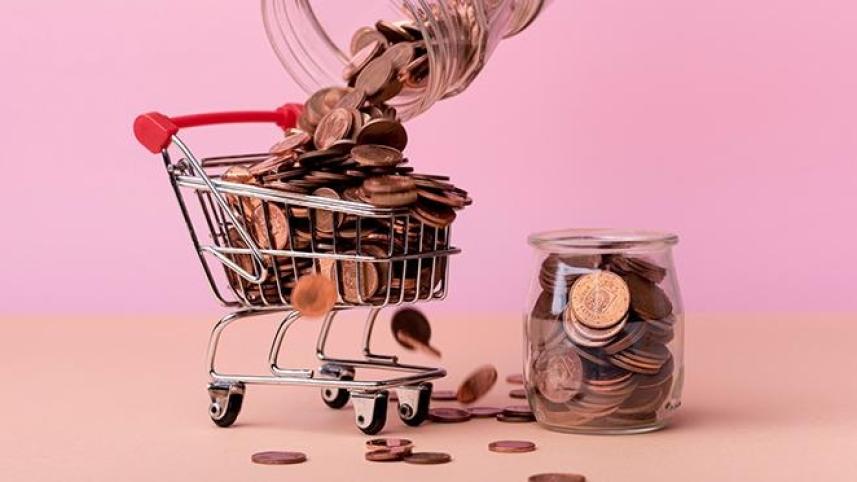
The world is warning of a looming economic downturn, yet many of us here we are—scrolling, shopping, and insisting we are living our best lives, even as our mobile banking apps beg to differ. The focus remains firmly on flash sales and cashback offers. Economists globally compare the present moment to the years preceding the Great Depression, and many in Bangladesh is playing along with remarkable enthusiasm. We are a country where consumption for many has become a national identity rather than a financial act. Our GDP graphs tell one story. Our bank balances tell another, and our online personas tell a third story entirely, one usually involving brunch.
Back in the 1920s, Americans often spent money they did not have because keeping up appearances mattered more than financial stability. In Bangladesh, many of us have turned this instinct into an art form. Whether it is an Eid outfit, imported skincare, a birthday dinner in Gulshan, or a pair of trainers costing more than a month's rent in Mirpur, some of us buy to belong. We buy to feel modern. We buy because everyone else is buying—and God forbid someone thinks we are not doing well. And, much like the 1920s, Bangladesh has found its own version of mass debt normalisation. Our grandparents saved cash in tin trunks. We save screenshots of instalment plans. The rise of buy-now-pay-later culture worldwide has been localised here through loan apps, informal credit, and bKash borrowing. Debt has become invisible, convenient, and socially acceptable.

But invisibility does not mean harmlessness. When a significant share of young people in Dhaka tend to juggle delayed payments, digital loans, and lifestyle expectations shaped by TikTok, you do not have a consumption boom—you have a brewing fragility. Around 97 percent of Gen Z says social media influences what they buy. The remaining three percent have never seen their Explore page. Most of these Bangladeshis seemed to be buying under pressure, not capacity, and pressure is far more dangerous. Pressure pushes a lower-middle-income household to keep up with upper-middle-class spending to prove they are doing "fine." Pressure convinces a 24-year-old to spend half her salary on a handbag she cannot afford because everyone else in her office carries one. Pressure tells people to buy the lifestyle first and figure out the finances later.

The illusion of stability is maintained through small, delayed payments that create artificial demand. Back then, instalment plans made people feel richer than they were. Today, loan apps do the same job quietly, efficiently, and without the inconvenience of paperwork. Instalments are the new meditation. Debt is the new normal. Shame is the only thing no one is willing to put on instalment.
Meanwhile, the actual economy is under strain. Inflation remains high. The dollar is volatile. Imports are expensive. Banks are wobbling. And yet our social media feeds resemble a country on the verge of hosting Fashion Week. If the West has New York Fashion Week, then Bangladesh has Instagram, where the vibrant activity drowns out the warnings. The bigger danger is structural. Today's economy relies heavily on a few dominant corporations. In Bangladesh, everything from food to fintech to mobile banking to consumer imports is controlled by a small circle of powerful players. When one stumbles, the shock spreads quickly. The system looks stable only because debt wears excellent make-up.
The truth is simple: Bangladesh is living in a period of aspiration without stability. A generation raised on global content and local constraints is trying to merge two incompatible realities. They have a caviar taste in an economy that frequently offers tap water. They have dreams shaped by YouTube and salaries shaped by budget speeches. The mismatch is not a moral failure; it is an economic one. This is not a call for austerity. It is a call for awareness. A nation cannot rely on borrowed confidence forever. Households cannot outsource their futures to instalment plans. And young people cannot build financial security on the shaky foundation of trends that expire faster than your bKash balance on the 29th of the month.
If we continue mirroring the worst patterns of the global economy, we may discover the consequences the hard way. The Great Depression did not begin with one dramatic moment. It began with millions of small decisions layered upon each other until the system cracked. Bangladesh still has time to step back from that cliff. But that requires honesty about where our economy stands, how our society consumes, and why appearances have become more important than affordability. Because the world of easy instalments and digital glamour may look modern, but underneath, it carries the same fragility that history has already warned us about. And history, unlike debt collectors, never sends just one reminder.
Barrister Noshin Nawal is a columnist for The Daily Star. She can be reached at nawalnoshin1@gmail.com.
Views expressed in this article are the author's own.
Follow The Daily Star Opinion on Facebook for the latest opinions, commentaries, and analyses by experts and professionals. To contribute your article or letter to The Daily Star Opinion, see our guidelines for submission.
 For all latest news, follow The Daily Star's Google News channel.
Comments