


Appointing a new Bangladesh Bank governor has never been so chaotic

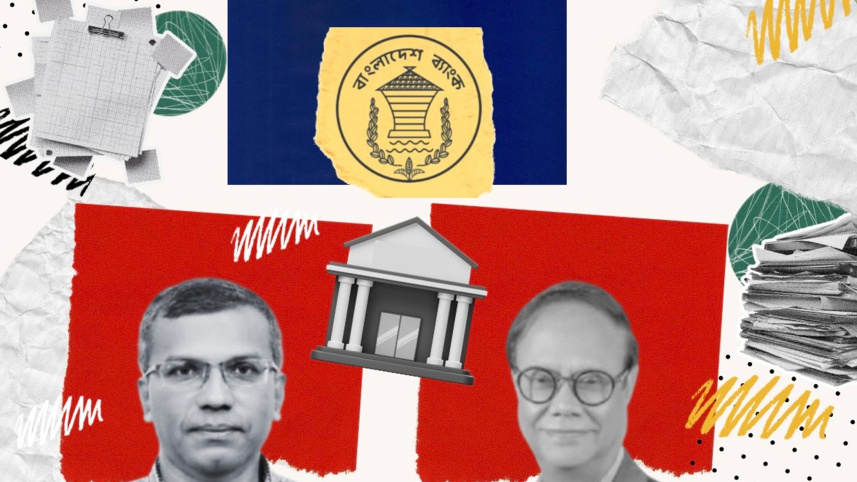
If morning shows the day, appointing a new governor to the central bank of the country by abruptly ousting his predecessor testifies neither prudence nor fairness for the newly elected BNP government. It does not dovetail with the philosophic call of BNP’s iconic leader, Khaleda Zia, who spoke about building a “knowledge-based society” on the very day when the previous prime minister, Sheikh Hasina, was ousted from power. Nor does it pass the litmus test for BNP’s election manifesto where the party vowed to build a “meritocratic Bangladesh.”
There has been no sign of upholding those commitments, particularly during what went down on the central bank premises on February 25. Appointing a new governor has perhaps never been so chaotic and frustrating, particularly under an elected regime.

The way the former governor, Dr Ahsan H Mansur, was forced to walk out of office, and the way the governor’s adviser, Ahsan Ullah, was treated by a mob in a place like the Bangladesh Bank set a bad precedent for the central bank history. It also tarnished the image of the new government under the leadership of Tarique Rahman, who has so far been applauded for his economy of words and measured conduct.
While Tarique Rahman’s oath as prime minister heralded the demise of mobocracy, its re-emergence on the central bank premises was not only disrespectful to a monetary scholar and an erudite banker, but also ominous to the future of leadership in the money and financial industry. The government failed to handle the situation in a tactical, respectful manner at a time when its welcoming flowers were still fresh.
If the forced ouster had happened during the Yunus government—the interim period that was largely characterised by mobocracy and vandalism—people would likely have accepted it as one of so many similar occurrences. But the resurfacing of mobocracy under a ruling party that earned an absolute majority in parliament via a landslide victory becomes unacceptable, and demands justice. It is hard to believe that only the agitation factor of some Bangladesh Bank employees was at the root of the outburst that led to the mishap. Rather, conspiracies of certain oligarchs, who grew fat during the Awami League regime and were quite antagonistic to Dr Mansur’s steps of bank consolidation and other reforms, led to an unceremonious departure of a brilliant economist.
Ahsan Mansur’s Bangladesh Bank stood out for institutional resilience at a time when most organs of the Yunus regime appeared to be facing strain and uncertainty. His main challenges included reducing inflation, stabilising the exchange rate, raising the level of foreign exchange reserves, increasing remittances and exports, completing the merger of the dysfunctional Islami Shariah-based banks, and finally ensuring financial stability in the market. He was not necessarily successful in achieving all his goals effectively, but his policy directions purely complied with the textbook solutions of central banking, whose conspicuous absences during the Awami regime rule triggered high inflation and dwindling reserves.
Mansur failed to bring inflation down to five percent not for his inaction but for the utter fiscal incapacity of the finance ministry. Monetary tightening by raising the policy rate and thus restricting private credit growth exerted downward pressure on inflation for sure, but excessive government borrowings from the banking system contributed to excessive liquidity, which in turn revitalised price hikes. Eventually, inflation didn’t cascade down as expected—a failure attributable mainly to three inefficient ministries: finance, commerce, and home. The home ministry was undoubtedly the worst during the interim. Institutional factors such as syndication by big cartels and extortion by political mastans added fuel to the flame of inflation. And the governor did not get adequate cooperation from his colleagues sitting at the Secretariat. That largely says why inflation dominated the market while reserves were on the rise, diluting the fear of any abrupt shortage of foreign currencies.
What the market expected was that the former governor would continue with the new government until the regime found another “Mansur,” with formidable qualifications in the line of macroeconomics, central banking, financial markets, and public policy. These expectations became more valid when the BNP championed meritocracy in its manifesto and speeches. The selection of ministers made a respectable balance between political loyalty and expertise. But the choice of the new governor became highly disproportionate with BNP’s recent nominations for other leadership positions.
Being a businessman is not a fault for the new governor. Rather, his business experiences can add value to his policymaking. But being recorded as a loan defaulter in the past and now being appointed as a regulator to fight the indomitable culture of default create doubts about whether the governor will really be a good fit for this position.
The selection process of the central bank governor in all developed countries is highly rigorous and challenging. While stakeholders pay little attention to the selection of different ministers, who are picked from the winning party, the governor’s selection goes through huge debates and intellectual scrutiny. The US president, for example, proposes the name of the Federal Reserve chair and Congress jumps into a wide-scale investigation and evaluation of the candidate.
While most governors hold doctorate degrees in economics, finance, banking, or public policy, having PhDs is not enough to be eligible for the position. Other attributes such as publications, policy advocacy, profound knowledge, professional background, strong personality, and recognition in the relevant fields are deeply desired when a central bank governor’s credentials are examined before making the final decision on the leadership post. It will be hard for the government to convince the stakeholders, economists, and policy experts that the party leaders carried out a serious homework before making the decision about the post of the governor of the Bangladesh Bank that holds the helm of the economy.
Dr Birupaksha Paul is professor of economics at the State University of New York in Cortland, US.
Views expressed in this article are the author's own.
Follow The Daily Star Opinion on Facebook for the latest opinions, commentaries, and analyses by experts and professionals. To contribute your article or letter to The Daily Star Opinion, see our guidelines for submission.
 For all latest news, follow The Daily Star's Google News channel.
Comments