


Bangladesh’s ‘Tesla’ crisis is really a crisis of regulation

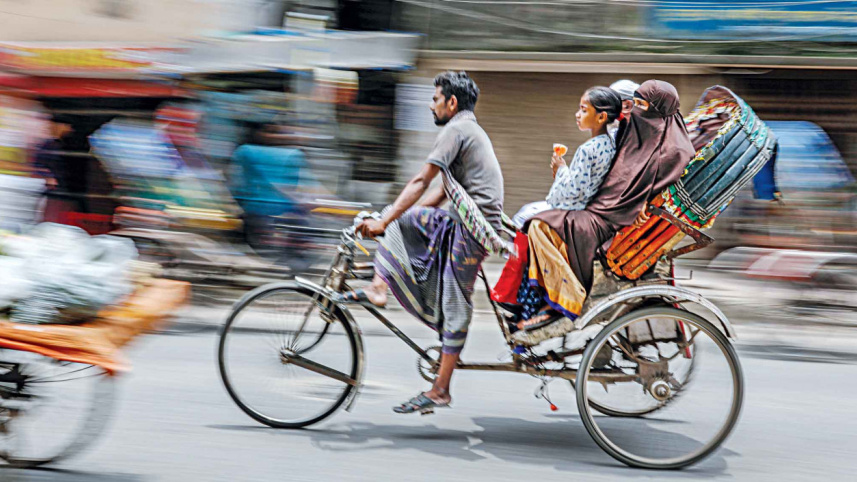
Whether through human-perpetrated violence or traffic-related incidents that claim thousands of lives each year, there is ample evidence suggesting that our roads are simply not safe for us. Bangladesh has a high rate of road fatalities, about 67 per thousand kilometres of road. This year, between January and July alone, the country has recorded at least 3,257 deaths in some 4,910 road accidents, nearly two deaths for every three accidents. What is particularly alarming is the disproportionate number of fatal incidents, more than 78 percent, involving battery-powered three-wheelers, colloquially known as “Tesla”.
Last month, on August 19, a student of the Independent University, Bangladesh (IUB), fell onto the road after being obstructed by an unidentified auto-rickshaw when a covered van ran him over. The victim—Oli Nur Mahmud—died shortly after being taken to hospital. Earlier in 2024, the unfortunate and avoidable death of Jahangirnagar University student Afsana Karim Rachi also illustrated the human cost of unsafe operation after she died after being hit by a battery-powered rickshaw on campus. Unfortunately, tragedies like this have become dangerously common in recent years, underscoring the need to regulate the proliferation of three-wheelers effectively. It is also important to acknowledge that the battery-powered rickshaws might be just one symptom of the country’s electricity and road-safety crises, not the root of our problem. Millions of people depend on these vehicles, either temporarily or permanently, for their livelihoods and mobility. Simply removing them from the roads without providing viable alternatives would therefore create another crisis without addressing the one that already exists.

A January 2026 study—surveying some 384 drivers, 392 passengers, and 63 garage owners across the city—found that 97.4 percent of battery-powered rickshaws in Dhaka were operating outside formal registration systems. It also found that 75 percent of battery-rickshaw drivers were new entrants who had never previously driven pedal rickshaws. Such a level of informality makes enforcement difficult. Without registration, it is harder to establish ownership, investigate crashes, monitor vehicles, or hold operators accountable. But regulation cannot stop at registration alone. There is also the question of electricity. According to figures from the Centre for Policy Dialogue (CPD), battery-powered rickshaws consume an estimated 750–800 megawatts of electricity a day, equivalent to roughly 4 to 5 percent of Bangladesh’s total electricity generation. The same report estimated that illegal electricity connections associated with charging these vehicles could be causing around Tk 4,000 crore in annual revenue losses. These numbers are significant, but they also require a distinction that is often missing from the public debate.
A driver who pays a garage owner to charge a battery is not necessarily the person who arranged an illegal electricity connection. The battery-rickshaw economy includes drivers, vehicle owners, garage operators, charging businesses, and manufacturers. Electricity theft, therefore, needs to be pursued through the networks that facilitate it, rather than by treating every driver as equally responsible. Importantly, the electricity consumed by these vehicles is not going to disappear if the vehicles are simply banned. If battery-powered transport remains part of Bangladesh’s urban economy, its electricity demand needs to be brought into formal energy planning. The same logic applies to transport.
Battery rickshaws are not merely an informal nuisance. They fill a genuine gap in Dhaka’s transport system. The January 2026 study cited earlier found that 82 percent of surveyed passengers preferred battery rickshaws, primarily because they were faster and relatively inexpensive, while most trips were between one and three kilometres. They are particularly important for the last mile between major transport corridors and residential areas. A 2025 study of Dhaka metro users found that around 43 percent relied on informal rickshaws as their primary transport to metro stations. This creates a legitimate policy dilemma. Removing battery rickshaws without providing affordable alternatives could leave passengers stranded and workers without an accessible source of income. That, however, does not excuse unsafe driving. At least 30 percent of surveyed passengers, who participated in the January 2026 study by Innovision Consulting, reported accidents involving battery-powered rickshaws, compared with 18 percent involving pedal rickshaws. It also found that 44.54 percent of battery-rickshaw accidents resulted in serious or very serious injuries, compared with 29.58 percent for pedal rickshaws.
A faster, heavier vehicle requires better brakes, steering, tyres, lights, and driver training than a traditional pedal rickshaw. Yet the sector has developed largely outside the formal licensing and registration system. And that is precisely where regulation should begin.
First, registration must become practical and affordable. Every commercially operated battery rickshaw should have an identifiable registration number linked to its owner and basic vehicle information. Second, drivers should receive basic training and licensing. Training should cover traffic rules, pedestrian safety, braking, overtaking, passenger limits, and emergency procedures. The cost must be low enough that formalisation does not push poor workers further into informality. Third, vehicles need minimum safety standards. Brakes, steering, tyres, lights, reflectors, electrical wiring, batteries, passenger capacity, and maximum speed should be regulated. Manufacturers and assemblers should also be brought under a formal safety framework. Fourth, charging must be brought into the legal electricity system. Licensed charging stations with metered connections would allow the government to measure demand, collect revenue, and identify electricity theft. It could also create legitimate businesses around charging, battery servicing, maintenance, and recycling.
Ultimately, the objective should not be to legitimise unsafe vehicles. It should be to make an existing transport sector safer and more accountable. Bangladesh has already moved beyond the point where battery rickshaws can be treated as a temporary phenomenon. They are part of the urban transport economy and an important source of income for thousands of workers. That is why the debate should move beyond the question of whether “Teslas” should be banned. The better questions are, in fact, harder: how can these vehicles be registered? How can drivers be trained? What safety standards should they meet? How should their electricity demand be regulated? And how can the state crack down on electricity theft without destroying the livelihoods and mobility networks that have grown around them? And this is precisely where government intervention can wield the best results.
Musrat Hossain Mithila works at Slow Reads, The Daily Star. She can be reached at mmusrat30@gmail.com.
Views expressed in this article are the author's own.
Follow The Daily Star Opinion on Facebook for the latest opinions, commentaries, and analyses by experts and professionals. To contribute your article or letter to The Daily Star Opinion, see our guidelines for submission.
 For all latest news, follow The Daily Star's Google News channel.
Comments