


Can Bangladesh ease dollar dependency without risking stability?

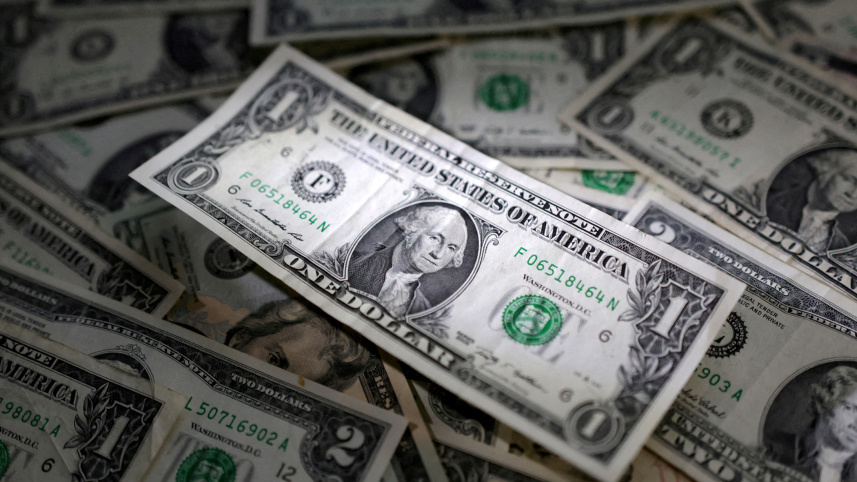
The current structure of the global monetary system, long characterised by the hegemony of the US dollar, reveals several signs of fracture. In the case of Bangladesh, a trade-oriented, remittance-dependent nation in transition, the consequences of de-dollarisation attempts cannot be overlooked.
Empirical data confirms the ongoing trend. According to figures released by the International Monetary Fund (IMF), the US dollar’s share of foreign currency reserves decreased from roughly 71 percent in 1999 to around 57 percent by the end of 2025, the lowest level recorded in the last 30 years. Central banks’ gold reserves are increasing rapidly; in 2025, the amount of gold held by central banks exceeded the total of US treasury securities on their balance sheets for the first time.

Moreover, the practice of using economic sanctions to impose a political agenda has only reinforced countries’ efforts to find alternatives. For example, the proportion of BRICS transactions in local currencies by Russia has reached 90 percent since the country invaded Ukraine in 2022. Meanwhile, the Cross-Border Interbank Payment System (CIPS), the Chinese counterpart of SWIFT, connects over 5,000 banking institutions across 190 countries.
Still, it would be inappropriate to say that the days of the US dollar are numbered. The currency maintains its dominance in foreign exchange markets, is used in around half of all international trade transactions, and has the deepest capital markets globally.
Bangladesh’s dependency on the US dollar is evident in several respects. Almost all export revenues are denominated in dollars; in FY2025, they totalled $39.35 billion of RMG exports alone. The country has attracted unprecedented remittance flows ($30.33 billion in FY2025), mostly received in dollar terms. Forex reserves are also primarily held in US dollars, amounting to $35 billion as of February 2026.
There are risks inherent in this reliance. Tighter monetary policy in the US results in depreciation of the taka against the dollar, higher import costs, and inflation, as seen in 2022-2024 when the taka’s value against the dollar fell from 86 to 121 and even further. Thus, Bangladesh was affected when Western sanctions on Russia made repayment of the $12 billion loan for the Rooppur Nuclear Power Plant project through SWIFT impossible. Bangladesh is not merely a passive observer here. As early as in April 2023, Dhaka and Moscow decided to settle the Rooppur loan payments—the first instalment amounting to about $318 million—in Chinese yuan via the CIPS.
Soon afterwards, Bangladesh Bank included the yuan in its RTGS system and considered joining CIPS. Further, in mid-2023, Bangladesh and India reached an agreement to settle their bilateral trade in rupees and taka using a nostro-vostro model. Subsequently, the Reserve Bank of India (RBI) issued a new currency swap programme for 2024-27, with a dedicated rupee swap window of 250 billion rupees—the facility available to Bangladesh.
Though the amounts are small, these transactions have significant implications as they indicate that Bangladesh’s policymakers now see currency diversification as strategic.
Engaging in a strategic de-dollarisation process offers the country multiple benefits. First, there is a significant reduction in transaction costs. In light of an import cost of $14 billion annually from India, when the dollar is used as the medium, the extra banking cost is high. Settling in rupees or yuan could eliminate a level of conversion, thus reducing banking fees and mitigating the risk of exchange rate changes.
Second, de-dollarisation serves as a means to hedge against fluctuations in the dollar’s value. It will therefore reduce dependency on dollar value fluctuations beyond Bangladesh’s control.
Third, de-dollarisation could create opportunities for new financing mechanisms. For instance, by targeting the BRICS New Development Bank’s lending portfolio in local currencies, which is set to rise to 30 percent by this year, Bangladesh could gain access to credit lines in currencies other than the US dollar.
However, the country should adopt a realistic view of de-dollarisation. China’s capital controls limit its capability as a global reserve currency. In line with former World Bank lead economist Dr Zahid Hussain’s analysis, Bangladesh’s $12 billion-plus trade deficit settled in rupees could be irrelevant unless Indians accept the taka. This is unlikely, since Indian exporters have little incentive to accept payment made in taka.
Additionally, there are issues regarding export markets. Over 80 percent of the country’s RMG exports go to the EU and US markets, which deal with the US dollar.
In geopolitical terms, it is worth noting that Bangladesh is participating in a $5.5 billion loan programme of the IMF. Therefore, the country should avoid anything that is viewed as destabilising the global dollar financial system. An example is the incident where US sanctions on NIKIMT led to a near-disruption of the yuan payment agreement in 2023.
Bangladesh does not have to take a side in the currency war. Instead, it needs a practical approach to diversifying its forex reserves. To do so, Bangladesh Bank should establish a reserve diversification policy under which holdings of the yuan, gold, and possibly even euros could increase over time, along with the development of an institutional arrangement for managing reserves across multiple currencies. The government needs to facilitate bilateral currency settlement arrangements with both India and China, and ultimately with all ASEAN countries, and to develop the relevant payment architecture to facilitate these transactions. Export diversification is essential as around 80 percent of our exports go to dollar-denominated regions. Expansion of our trade in Asia, Africa, and Latin America, where local currency settlements are increasingly feasible, will help us both financially and commercially.
Lastly, participation in multilateral talks on designing payment mechanisms, such as the BRICS and Saarc dialogues, or in ASEAN discussions, is critical to ensuring our involvement in the international trade rulemaking process. The process of de-dollarisation is neither a revolution nor an illusion. This is a long-term and gradual process, one that will take decades to be realised. What Bangladesh needs to do now is build the capability to navigate this new world order. It has taken the initial steps. Now comes the part on whether the country will proceed with purpose or simply flow with the tide.
Dr M Kabir Hassan is professor of finance and Moffett chair at the University of New Orleans in the US.
Views expressed in this article are the author's own.
Follow The Daily Star Opinion on Facebook for the latest opinions, commentaries, and analyses by experts and professionals. To contribute your article or letter to The Daily Star Opinion, see our guidelines for submission.
 For all latest news, follow The Daily Star's Google News channel.
Comments