


Happy Fourth of July, America

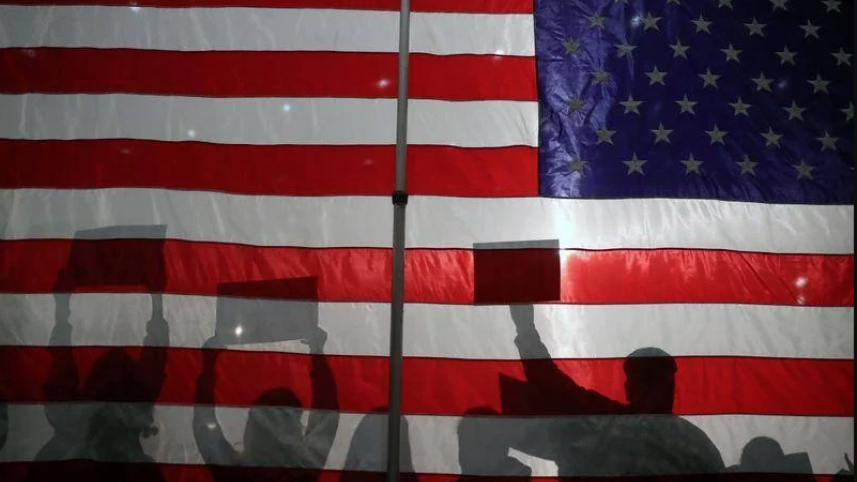
This year, July 4 marks 250 years of US independence. Happy Birthday, America.
But, truth be told, America outrages and frustrates me.

The endless wars, sometimes so frivolous that they are bizarre, such as when the US attacked Grenada in 1983 and the latter had fewer than 1,00,000 people and its main export was nutmeg. The obscene inequality: how the country’s top one percent owns half the stocks in the US. The ugly, racist animus against immigrants has manifested recently in harrowing raids by masked government goons. A healthcare system that is one of the leading causes of personal bankruptcies (the US owes $220 billion in medical debt, forcing one in three US adults to cut back on food and housing). A horrible coarsening of politics where lies, prejudice, and vitriol rule: US President Donald Trump is Exhibit A. He has called Mexican immigrants “criminals and rapists,” alleged that Haitian immigrants eat “cats and dogs,” and called many less developed nations “sh*thole countries.”
Yet, for all of that, there is no question about the huge impact of this 250-year-old project. After World War II, the US emerged as a 600-pound gorilla in global geopolitics and economy.
Until Trump refused to concede his 2020 loss, the US had over two centuries of uninterrupted history of peaceful constitutional transfer of power. After many a bitterly fought campaign, the gracious concession speech of the losing presidential candidate remains for me one of the finest traits of US democracy, whether it is Republicans John McCain and Mitt Romney or Democrat John Kerry.
The US has opened its arms to tens of millions of immigrants from all over the world, including over 3,00,000 Bangladeshis, who have built a better life for themselves here and supported folks back at home.
The US universities are its crowning jewel. Along with its own citizens, these institutions have drawn tens of millions to the US from the rest of the world. Many stay on. Others, like thousands of Chinese, go back to power progress in the old country.
When the US began as a country, it was ridden with slavery. But between the Civil War (1861-65), the Civil Rights Act and Voting Rights Act in the 1960s, and the election of Barack Obama as the first African-American president, the country has taken breathtaking strides towards its goal of achieving “a more perfect union.”
The trouble is that each stride has been followed by backsliding. Following President Lyndon Johnson’s landmark achievements—the Civil Rights Act, the Voting Rights Act, Medicare, Medicaid, and the Clean Air Act—Richard Nixon came to power. White voters in southern US states, chafing at desegregation and minority rights, fled the Democratic Party for the Republican Party. Obama’s presidency produced a similar backlash. Trump rode the wave of White grievance. Now, the Supreme Court has gutted the Voting Rights Act.
Trump has turned the Republican Party into something of a cult—if you cross him, you are toast. He can throw out incumbent legislators, as seen with Louisiana Senator Bill Cassidy and Kentucky Representative Thomas Massey. Some Republican lawmakers in Indiana balked at Trump’s call for redistricting; five of them lost bids for reelection. All told, it’s not a great time for the US.
It’s too bad, because I have an enormous fondness for the decency and humanity of ordinary US-Americans.
During the Black Lives Matter movement—a nationwide civic protest against the 2020 killing of George Floyd, an unarmed African-American man, by a police officer in Minneapolis—ordinary people—Black, Brown, and White—protested all over the country. More recently, also in Minneapolis, when masked ICE agents began to abduct suspected immigrants, folks put their foot down. After Alex Pretti, a nurse and protester, was killed by ICE agents, the community erupted into such a seething rage that Trump had to back off.
The endearing compassion of ordinary people in the US has brought about a remarkable change in public opinion.
Decades ago, when I came to the US, well-wishers warned me that speaking up against Israel could mean trouble. AIPAC—the American Israeli Political Action Committee—was all-powerful. Bipartisan busloads of Congressmen attended its conventions. Few politicians dared to cross AIPAC.
Yet, times change. As one AP report says, “American sympathies in the Middle East have shifted dramatically toward the Palestinians, according to new Gallup polling, after decades of overwhelming support for the Israelis.”
Among Democrats, two-thirds back Palestinians, while only one-fifth back Israel. In Democratic politics, AIPAC has become so toxic that it funnels money through other groups.
Overall, the US faces daunting challenges both globally and domestically. Particularly after its unprovoked war against Iran, it is at a geopolitical impasse with no easy escape. A technologically resurgent China is breathing down its neck with its infrastructure projects, trade, and EV making enormous inroads in Asia, Africa, and Latin America. The US, its judgement clouded by fevered xenophobic prejudice, seems to have no answer.
Domestically, the aggrieved middle and working class, particularly younger people, are bristling with resentment at a society where wealth continues to be concentrated in the hands of a miniscule few while ordinary folks grapple with rising prices and an uncertain future.
For the sake of its warm, decent, caring ordinary people, I sincerely hope the US finds a way out of its current challenges.
Ashfaque Swapan is a writer and editor based in Wisconsin, US.
 For all latest news, follow The Daily Star's Google News channel.
 Views expressed in this article are the author's own.
Follow The Daily Star Opinion on Facebook for the latest opinions, commentaries, and analyses by experts and professionals. To contribute your article or letter to The Daily Star Opinion, see our guidelines for submission.
Comments