


If we can’t get the disability numbers right, how can we plan for them?

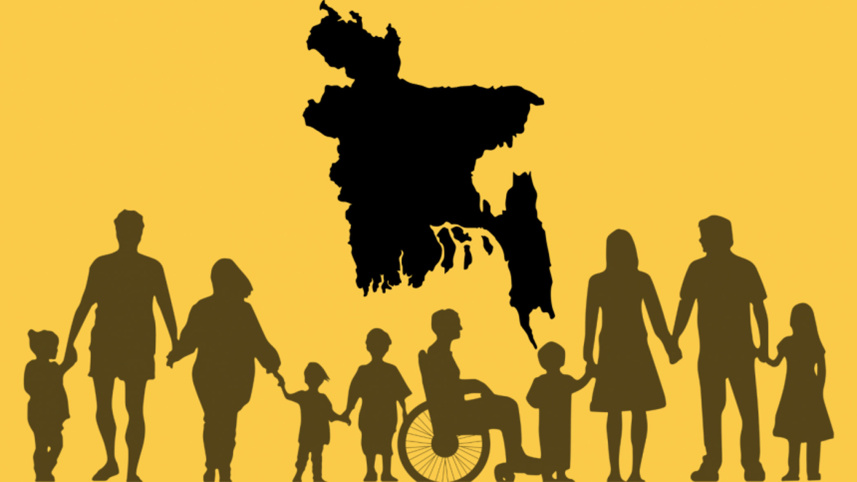
How many persons with disabilities live in Bangladesh? It sounds like a simple question. Yet the answer remains one of the country’s most consequential statistical puzzles. Different national exercises in Bangladesh have produced sharply divergent estimates, ranging from around 2 percent in some datasets to nearly 7 percent in others, and topping 9 percent elsewhere. This stark contrast becomes even harder to ignore when set beside the World Health Organization’s global estimate: 1.3 billion people, or approximately 16 percent of the world’s population, experience significant disability. Is Bangladesh genuinely an outlier? Or are millions disappearing into administrative blind spots simply because of how we define, survey, and record disability?
Consider the official figures. The Household Income and Expenditure Survey (HIES) 2010 placed disability prevalence at 9.07 percent. By HIES 2016, that figure had dropped to 6.94 percent. Meanwhile, the Bangladesh Bureau of Statistics’ National Survey on Persons with Disabilities 2021 reported an overall prevalence of just 2.80 percent, with 3.29 percent among men and 2.34 percent among women, and higher rates recorded in rural areas than in urban centres. Crucially, that very same BBS survey also found that 7.1 percent of the population experienced at least one functional difficulty. The takeaway suggests that even within a single national survey, the answer shifts depending on how the question is framed.

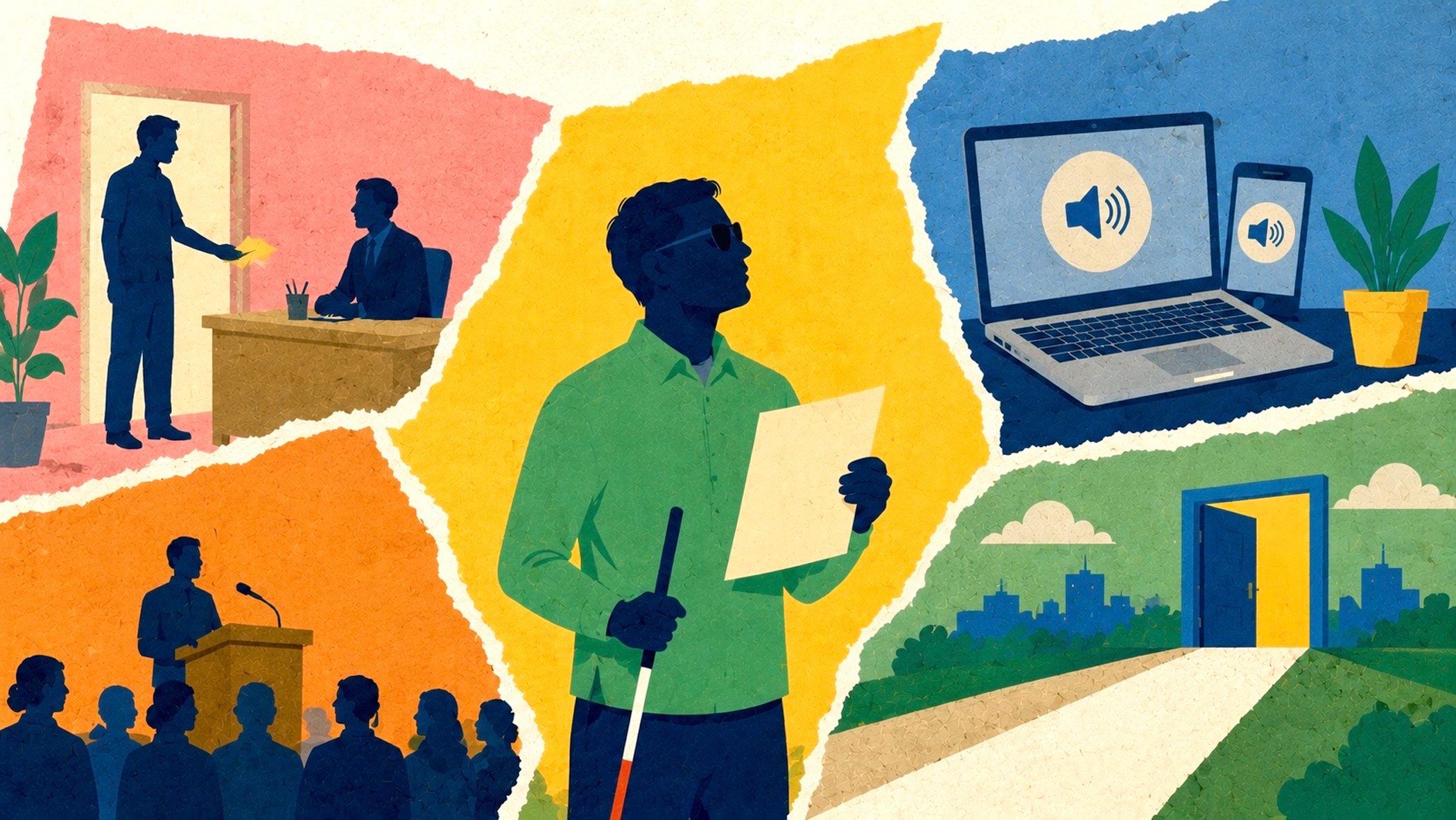
This does not necessarily imply that one survey is authoritative while the others are erroneous. Disability estimates are notoriously sensitive to survey methodology, age demographics, severity thresholds, and whether a questionnaire relies on formal legal classifications, self-identification, or functional limitations in daily life. However, when these methodological variations remain unexplained, or when incompatible metrics are conflated, policymakers and the public are left with a distorted view of reality. And, this is far from a mere technical squabble among statisticians as it carries immediate consequences for national planning. Government budgets, healthcare allocations, social protection schemes, and educational infrastructure rely on accurate figures.
Low reported prevalence must not be mistaken for low actual prevalence. Social stigma, fear, and shame often compel families to conceal disabilities. Furthermore, enumerators are frequently ill-equipped, while blunt direct questions (such as, “Are you disabled?”) invariably trigger underreporting from individuals wary of labels or legal repercussions. Moreover, a broad spectrum of conditions remains non-visible, including psychosocial disabilities, learning difficulties, memory impairment, chronic pain, and neurological conditions. International comparisons illustrate how methodology shapes visibility.
The United Kingdom’s Family Resources Survey for 2024-25 classified one in four people as disabled. Similarly, Canada’s 2022 Survey on Disability revealed that 27 percent of citizens aged 15 and above, roughly eight million people, lived with one or more limiting conditions. These metrics demonstrate what happens when national frameworks capture non-visible conditions and measure functional limitations in daily life.
Bangladesh must also re-examine its legal recognition process. The Rights and Protection of Persons with Disabilities Act, 2013 lists 11 specified disability types alongside a 12th open category for “other disability.” By way of comparison, India’s Rights of Persons with Disabilities Act, 2016 expanded its recognised conditions from seven to 21, explicitly incorporating specific learning disabilities, multiple sclerosis, thalassaemia, haemophilia, sickle-cell disease, and acid-attack survivors. While an open “other” category offers theoretical flexibility, it requires assessable criteria and sensitised frontline officials to function fairly. Without streamlined registration, individuals whose conditions fall outside traditional frameworks remain excluded from disability allowances, educational support, employment quotas, and specialised healthcare. Missing an administrative record effectively erases a citizen from the entire chain of public policy.
Consequently, Bangladesh ought to treat disability data as foundational development infrastructure rather than a narrow welfare concern. The national census, HIES, Labour Force Survey, health information systems, and social protection databases should adopt harmonised, internationally comparable tools. However, standardising a core framework does not mean every survey must be identical. A national census requires a concise question set, whereas specialised exercises require child-functioning or psychosocial modules. So, every published dataset must explicitly detail its definition, sample frame, and severity threshold so policymakers understand what can, and cannot, be directly compared. Equally vital is the meaningful involvement of organisations of persons with disabilities (OPDs) in designing questionnaires, training field enumerators, and interpreting findings. Bangladesh needs far more than a basic headcount. Data must reveal where people live, the structural barriers they face, and how disability intersects with gender, poverty, age, geography, and climate vulnerability, all while safeguarding personal privacy.

If Bangladesh is committed to genuine inclusive development, it must begin by counting every citizen accurately. Those left out of the numbers will inevitably be left out of the nation’s future, and persons with disabilities should no longer have to remain invisible for the state to see them.
The views expressed are the author’s own.
Vashkar Bhattacharjee is an accessibility and disability-inclusion specialist. He can be reached at vashkarbd@gmail.com.
Views expressed in this article are the author's own.
Follow The Daily Star Opinion on Facebook for the latest opinions, commentaries, and analyses by experts and professionals. To contribute your article or letter to The Daily Star Opinion, see our guidelines for submission.
 For all latest news, follow The Daily Star's Google News channel.
Comments