


Sitakunda tragedy calls for a redesign of the ship recycling industry

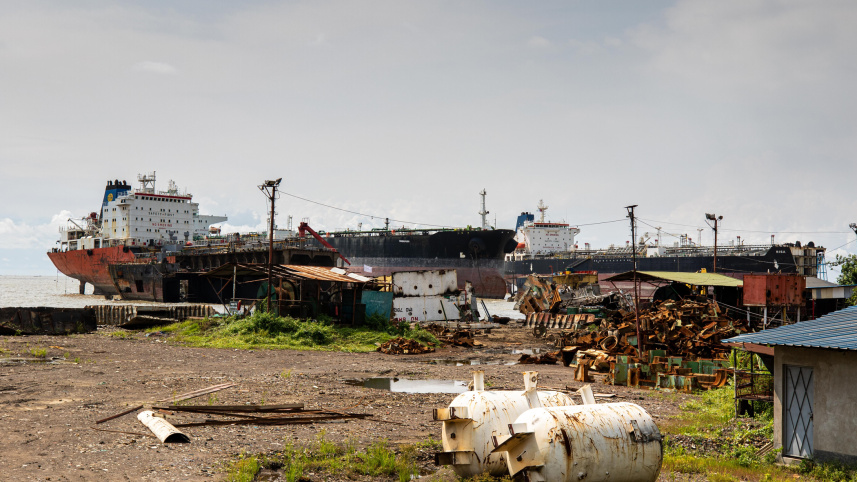
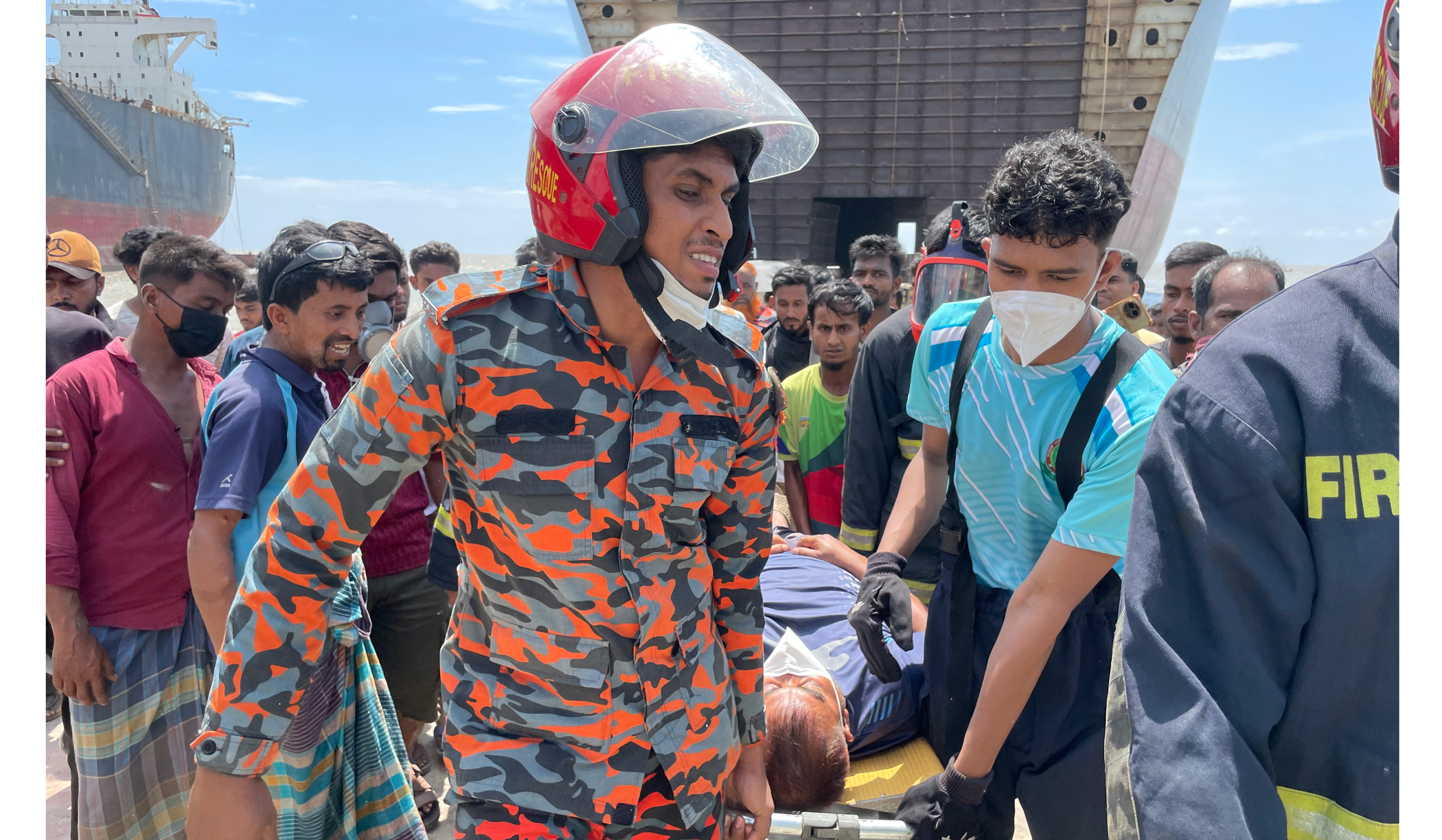
Nine workers died after suspected toxic gas exposure on August 14 while working inside LNG carrier MT Rasi at Ferdous Steel Ship Recycling Industries in Chattogram’s Sitakunda upazila. The tragedy came after Bangladesh spent years moving its shipbreaking industry towards “green” certification, and after the Hong Kong International Convention for the Safe and Environmentally Sound Recycling of Ships entered into force on June 26, 2025. Today, 23 of the country’s 31 functioning shipyards have gone fully green, while eight are under trial for the certification. However, the contradiction becomes difficult to ignore when the number of accidents in ship recycling yards is considered: at least 84 incidents took place between June 26, 2025 and August 14, 2026, killing 15 workers and injuring 81, per Bangladesh Institute of Labour Studies data. In other words, certification has progressed but the fatal risk has not disappeared.
But we should be careful about drawing the wrong conclusion. The answer to these accidents is neither to abandon ship recycling, nor simply to add another layer of regulation.

The existing laws already give regulators substantial preventive powers. The Labour Act, 2006 addresses imminent danger and dangerous fumes, while ship recycling rules allow unsafe cutting operations to be suspended. Ferdous Steel reportedly received repeated safety notices and faced a case at the labour court before the accident. The unfinished reform, therefore, is partly institutional. A serious safety finding by one regulator should have translated quickly into operational consequences across the regulatory system, but it did not.
Beyond that, there is one more fundamental question: after years of regulation and investment in green yards, should an open tidal beach remain the production platform for dismantling ocean-going ships?

The answer doesn’t lie in Bangladesh simply closing the industry. Ship recycling is inherently circular: end-of-life vessels supply steel to domestic industry, while machinery, generators, pumps, cables, furniture and reusable components feed secondary markets. Workers, transporters, traders and workshops around Sitakunda depend on this ecosystem. The International Maritime Organization (IMO) itself notes that properly managed ship recycling allows almost all materials and equipment from a vessel to be reused, while recycled steel requires only about one-third of the energy needed to manufacture steel from raw materials.
Hence, the challenge is not to eliminate ship recycling, but to redesign where and how its most hazardous operations take place.
Besides, the Hong Kong Convention should be Bangladesh’s regulatory floor, not its technological ceiling. Yard authorisation, recycling plans and hazardous-material controls are essential. But a certified yard does not mean that every tank, compartment or cutting operation in it would automatically be safe every day; certification is periodic but danger is continuous. Bangladesh should now examine a phased transition from primary dismantling on unengineered open beaches to purpose-built industrial recycling. That does not mean every vessel would need an expensive dry dock. Options include dedicated recycling berths or jetties, engineered landing systems, impermeable cutting areas, drainage, oily water treatment, and safe handling of hazardous waste.
Instead of requiring every yard to duplicate expensive facilities, the government could facilitate a national green ship recycling and circular maritime industrial zone. Shared infrastructure could include marine access, firefighting and emergency response, trauma and medical facilities, gas-testing laboratories, worker training, effluent treatment, and a common treatment, storage and disposal facility (TSDF) for hazardous waste. The IMO-supported SENSREC programme has already been working with Bangladesh on industry upgrading and hazardous waste infrastructure.
The wider Moheshkhali-Matarbari region can be examined as a candidate for establishing this zone. But it should not be declared as the only choice yet. The Moheshkhali-Matarbari development vision already identifies large-scale shipbuilding, ship recycling, and steel manufacturing as potential industries, alongside port, logistics, energy and other manufacturing operations. Matarbari’s prime commercial deep-sea port waterfront should not be sacrificed for ship recycling. Any recycling zone there should be physically separated from container and multipurpose terminal operations, with dedicated marine access. Matarbari should be compared with other coastal locations through a feasibility study covering navigation, environment, land, connectivity, waste management, and proximity to steel-consuming industries.
Moreover, relocation cannot be treated as another compliance order. Yard owners have already invested heavily in upgrading existing facilities; requiring another major investment could penalise those that responded first to the green transition agenda. Bangladesh, therefore, needs a time-bound green ship recycling transition scheme. Over perhaps 8-10 years, eligible recyclers moving to a designated zone could receive long-term industrial leases, reduced land rent during the initial years, concessional green finance, temporary duty and VAT relief on approved safety and environmental equipment, and carefully designed capital support. Government or a public-private partnership vehicle could finance expensive common marine, environmental and emergency infrastructure.
India offers a useful precedent, combining regulation with public investment in its Alang-Sosiya recycling ecosystem in Gujarat. In July 2026, the Indian government reported that 53.5 crore rupees in financial assistance had been released to ship recycling yards, while shared infrastructure includes hazardous waste treatment, hospitals, worker training, and emergency facilities. These measures led to 115 recycling plots achieving Hong Kong Convention compliance.
Bangladesh need not copy India’s model, but the principle deserves attention: when the state requires an industrial transformation that produces major public safety and environmental benefits, part of the transition burden can legitimately be shared. The incentives must have an expiry date. Once adequate purpose-built capacity becomes available, Bangladesh could announce a clear future date after which primary dismantling of ocean-going ships on unengineered open tidal beaches would no longer be permitted. A predictable sunset would allow recyclers, banks and investors to plan instead of facing an abrupt shutdown.
The Sitakunda ship recycling economy must also travel with the transition. Relocation should mean migration, not eviction. Recovered equipment traders, workshops and logistics providers should receive space and connectivity around the new cluster, while suitable activities can remain in Sitakunda. The objective is to formalise and modernise a circular maritime economy, not erase one that has evolved over decades.
The latest tragedy also shows why regulatory information must become operational. The Department of Inspection for Factories and Establishments, Department of Explosives, Department of Environment, and Bangladesh Ship Recycling Board cannot function as separate compliance islands. Serious safety findings should feed into a shared system capable of triggering immediate restrictions. Gas tests, enclosed space permits, hot-work authorisations, rescue readiness, and stop-work decisions should be vessel-specific, time-stamped, and auditable.
Bangladesh has already made the important transition from largely unregulated shipbreaking towards internationally recognised ship recycling. The nine deaths at Ferdous Steel show that the reform remains unfinished. The next transition should be more ambitious: from certification to continuous compliance, and from open beach dismantling to purpose-built industrial recycling. The country doesn’t have to choose between recycled steel and worker safety, or between an established industry and environmental protection. It should choose to keep the industry, modernise the ecosystem, and eventually take its most hazardous operations off the open beach.
Ahamedul Karim Chowdhury a maritime, logistics and supply chain policy analyst, is former head of ICD Kamalapur and Pangaon Inland Container Terminal.
Views expressed in this article are the author's own.
Follow The Daily Star Opinion on Facebook for the latest opinions, commentaries, and analyses by experts and professionals. To contribute your article or letter to The Daily Star Opinion, see our guidelines for submission.
 For all latest news, follow The Daily Star's Google News channel.
Comments