


The unfinished promise of decent work in Bangladesh

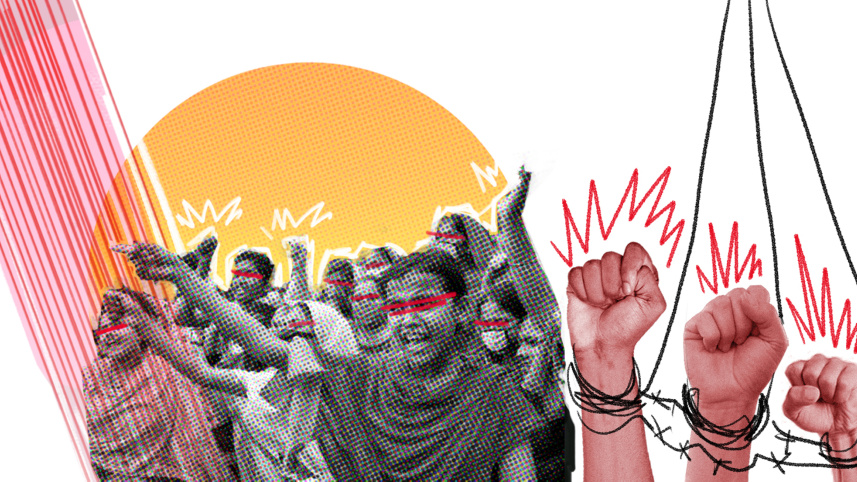
May Day today is not just a commemoration. It is a checkpoint. It forces us to ask whether the country’s economic growth has translated into dignity for the common people, whether labour laws have become lived realities, and whether workers—especially women—are any closer to justice. Bangladesh stands as one of the world’s largest garment exporters, powered by over four million workers, the majority of them women. However, behind this rosy picture lies a complex reality where progress is constrained by resistance to change as well as deep inequalities.
Over the past decade or so, Bangladesh has taken some important steps in labour governance. The legacy of the Rana Plaza collapse remains a defining moment, one that forced both national and global actors to confront the consequences of weak regulation. Since then, there have been notable improvements in factory inspections, building safety, and compliance frameworks, due in large part to private initiatives like the Accord that pushed for meaningful changes. More recently, Bangladesh under the interim government made a landmark move by ratifying three key International Labour Organization (ILO) conventions: Convention 155 on Occupational Safety and Health, Convention 187 on Promotional Framework for OSH, and Convention 190 on Violence and Harassment. These ratifications position the country as a regional leader in formal commitments to international labour standards.

At the national level, ongoing labour law reforms and the work of the interim-era Labour Reform Commission have added momentum to discussions around decent work. The commission emphasised strengthening labour inspection, expanding worker protections—including for domestic workers—and improving access to justice and social protection systems. These developments have created a framework for future progress, but frameworks alone do not change lives.
If there is one issue that has persistently defined the gap between our reality and expectations, it is wages. The current minimum wage for entry-level workers in the readymade garment (RMG) sector stands at Tk 12,500 per month. Set in 2023, this was an increase from the previous minimum of Tk 8,000, but it remains far below what workers need to sustain a basic standard of living. Trade unions and labour rights groups have repeatedly called for a minimum wage in the range of Tk 23,000 to 25,000, based on basic cost-of-living calculations. The gap between the current and expected figures reflects, among other things, the imbalance of power in the wage-setting processes.
Inflation further complicates this reality. In recent years, inflation in Bangladesh has hovered around 10-11 percent, eroding the real value of wages. Even with some recent easing in inflation as well as annual wage increments of around 9 percent, many workers find that their purchasing power has stagnated or declined. For many, survival still depends on overtime, debt, or cutting essential expenses. This raises a fundamental question: can an economy be considered successful if its workers remain trapped in a cycle of low wages?
Labour rights are not only about wages, however. They are also about voice. The labour law recognises the right to form trade unions, and recent reforms have attempted to ease some restrictions. However, in practice, challenges remain. Workers continue to report barriers to union registration, and cases of intimidation and retaliation are not uncommon. Without effective freedom of association, labour reforms risk becoming procedural rather than transformative.
Workers, therefore, must be able to negotiate collectively, raise grievances, and participate meaningfully in shaping their working conditions. The ILO has repeatedly emphasised the importance of social dialogue in wage-setting and labour governance practices. Without this, policies risk being disconnected from reality. There is no effective substitute for genuine social dialogue and collective bargaining through trade unions.
We should also talk about workplace safety, which has improved since Rana Plaza, but risks persist. Reports indicate that hundreds of workers still lose their lives each year due to workplace accidents across various sectors. This highlights that compliance systems exist but enforcement remains inconsistent. Against this backdrop, ratifying all 11 ILO fundamental instruments as the first Asian country to do so is an important step, but as labour advocates often remind us, ratification does not automatically lead to protection. Implementation—through sustained inspections, accountability, and worker participation—is what ultimately matters.
Beyond the RMG and other industrial sectors, the majority of Bangladesh’s workforce operates in the informal economy. Domestic workers, construction labourers, transport workers, and agricultural workers often lack written contracts, social protection, and access to legal remedies. The Labour Reform Commission acknowledged the need to extend protections to these workers, but translating this into an enforceable policy remains a major challenge. A labour system that protects only the formal sector, leaving millions behind, is not inclusive, and we must strive to change this reality.
Another emerging reality is the intersection of labour and climate. Bangladesh is one of the most climate-vulnerable countries in the world. Heatwaves, floods, and other extreme weather events are already affecting people’s productivity, health, and livelihoods. Workers in factories and informal sectors are increasingly exposed to dangerous conditions. Despite that, climate resilience has not been fully integrated into labour policies. Basic protections such as rest breaks, access to water, and safe working conditions during extreme heat are not consistently enforced. The future of work in Bangladesh will be shaped by how well our policymakers respond to the challenges of climate change, automation, and economic transitions.
Let’s get back to women workers, who remain at the centre of Bangladesh’s economic success but continue to face structural inequalities. The ratification of ILO Convention 190 is a significant milestone in addressing workplace violence and harassment, but implementation, again, has been a key challenge. Gender-based discrimination, unequal pay, and limited leadership opportunities persist. Ensuring gender justice requires more than legal provisions; it requires institutional commitment, workplace accountability, and cultural change.
So, what is the way forward for us? Bangladesh does not need to start from scratch. The foundations—laws, institutions, and international commitments—are already in place. What is needed is delivery.
First, the wage-setting exercise must accommodate a living wage framework that reflects real costs of living. This will require not only national policy changes but also responsible purchasing practices from global brands. Second, freedom of association must be ensured on the ground; simplifying union registration and protecting worker leaders are critical steps. Third, labour protections must extend to all informal workers, supported by social protection systems and legal recognition.

Fourth, climate resilience must be integrated into labour policies, ensuring that workers are protected from emerging risks. Fifth, creating safe and women-friendly workplaces must be a priority. Women workers must be able to work free from harassment, discrimination, and insecurity. This requires effective implementation of protections against violence and harassment, equal pay, access to functional grievance mechanisms, and real opportunities for leadership and advancement. Finally, proper enforcement of all policies and conventions must be a top priority. Without implementation, even the strongest laws remain symbolic.
Over the years, Bangladesh’s workers have built industries, sustained families, and contributed to global supply chains. Their role in the country’s economic success is undeniable. The question is whether that success will translate into lasting gains. May Day reminds us that labour rights cannot be static; they must be continuously fought for, negotiated, and realised over time.
Kalpona Akter is executive director at Bangladesh Center for Workers Solidarity (BCWS).
Views expressed in this article are the author's own.
Follow The Daily Star Opinion on Facebook for the latest opinions, commentaries, and analyses by experts and professionals. To contribute your article or letter to The Daily Star Opinion, see our guidelines for submission.
 For all latest news, follow The Daily Star's Google News channel.
Comments