


A welcome pivot to logistics reform in the budget, but time for a commission

The proposed national budget for FY2026-27 deserves recognition for placing logistics and trade facilitation closer to the centre of Bangladesh’s economic transformation agenda. Over the past decade, policymakers, businesses, development partners, and industry practitioners have repeatedly highlighted a simple reality: Bangladesh cannot achieve its export ambitions, attract large-scale foreign investment, or successfully navigate the post-LDC transition period without significantly reducing logistics costs and improving supply chain efficiency. This year’s budget suggests that the government is listening.
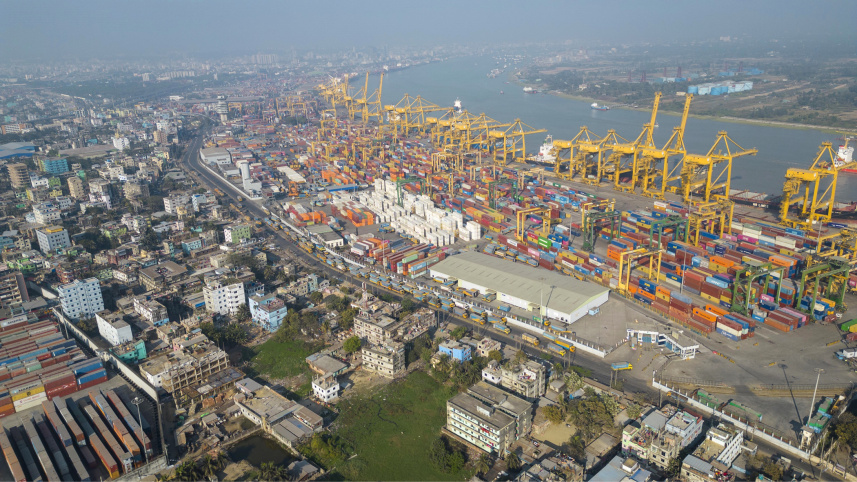
Several initiatives outlined by the finance minister signal reforms long advocated by the private sector and logistics stakeholders. The emphasis on developing Chattogram as a regional trade and logistics hub, expanding rail-based freight transportation, modernising ports, promoting inland container depots (ICDs), liberalising off-dock investments, and simplifying customs procedures are all welcome steps in the right direction.

Particularly encouraging is the proposal to allow greater private and foreign participation in logistics infrastructure and cargo handling operations. The decision to facilitate investment in air cargo stations and logistics facilities beyond traditional airport boundaries has the potential to transform our export competitiveness, especially for high-value, time-sensitive sectors such as pharmaceuticals, electronics, fresh produce, and garments.
The budget also places considerable emphasis on customs modernisation, digital services, and trade facilitation. Continued expansion of the National Single Window system, automation of customs processes, and simplification of regulatory procedures should help reduce transaction costs and improve predictability for businesses. Likewise, investments in freight rail connectivity between ports and inland logistics facilities can help address one of Bangladesh’s most persistent bottlenecks: excessive dependence on road transportation.
These initiatives deserve appreciation because they can move the country closer to having a modern logistics ecosystem capable of supporting sustained economic growth. But while the budget addresses many operational challenges, it leaves unresolved a more fundamental issue: governance.
Indeed, Bangladesh does not suffer from a shortage of infrastructure projects; it suffers from fragmentation.
The country’s logistics ecosystem involves multiple ministries, departments, regulators, and public agencies. Ports fall under one authority, railways under another, customs under a third, civil aviation under a fourth, inland waterways under a fifth, and road transport under yet another. Investors, exporters, importers, freight forwarders, shipping lines, and transport operators all must often navigate overlapping jurisdictions, inconsistent regulations, and disconnected decision-making processes. As a result, projects that appear sound in isolation frequently fail to deliver their full benefits because coordination mechanisms among authorities remain weak.
The budget proposes investments in ports, railways, customs, digitalisation, and connectivity. However, it does not include a proposal to establish a single institution responsible for ensuring that these initiatives work together as part of a coherent national logistics strategy. This is why the government should consider creating a national logistics commission.
Such a commission would not replace existing ministries or agencies. Rather, it would serve as the central coordinating body responsible for logistics policy, performance monitoring, regulatory harmonisation, and implementation oversight. It could bring together representatives from the government, private sector, and development partners under a single framework with clearly defined objectives and accountability mechanisms.
Countries that have successfully transformed their logistics sectors rarely achieved success through infrastructure investment alone. Singapore, the UAE, and, increasingly, India have demonstrated the importance of integrated logistics governance. Efficient logistics systems are not merely collections of roads, ports, and warehouses; they are coordinated networks managed through unified policies and shared performance targets.
Another area requiring urgent attention is the development of a national port community system. While the budget promotes digitalisation across several government services, logistics information remains scattered across multiple platforms and organisations. A port community system would connect shipping lines, port authorities, customs, freight forwarders, terminal operators, transport providers, and regulatory agencies through a single digital platform. Such systems have become the standard for leading trading nations as they reduce paperwork, improve cargo visibility, minimise delays, and enhance transparency. For exporters and importers, the difference can be measured not in hours but in days.
The trucking sector also remains largely absent from the current reform agenda. Despite carrying the overwhelming majority of domestic freight, road freight transport continues to operate without a comprehensive modern regulatory framework. Issues relating to vehicle standards, driver certification, cargo tracking, axle-load compliance, digital freight matching, and operational efficiency deserve greater policy attention.
Similarly, inland waterway logistics remain underutilised despite Bangladesh possessing one of the world’s largest river networks. Better integration of barge operations, inland terminals, and multimodal transport planning could significantly reduce logistics costs while easing pressure on roads and ports.
Finally, rail freight reform should move beyond infrastructure development alone. Investments in rail connectivity are essential, but long-term efficiency gains may also require greater private-sector participation in freight operations, transparent access arrangements, and performance-based service models.
The encouraging aspect of this year’s budget is that the government appears to recognise logistics as a strategic economic sector rather than merely a transport issue. This shift in thinking is important and deserves acknowledgement. However, infrastructure investments, while necessary, are only part of the solution. Without institutional coordination, integrated digital systems, and modern logistics governance, many of the benefits of these investments may remain unrealised.
Bangladesh’s ambition to become a regional manufacturing, trading, and logistics hub is achievable. The foundations are being laid through projects such as Matarbari Deep Sea Port, Bay Terminal, expanded rail networks, and customs modernisation initiatives. The next phase must focus on governance.
As the parliament deliberates on the proposed budget, policymakers have an opportunity to complement these important investments with reforms that strengthen coordination, accountability, and efficiency across the entire logistics ecosystem. The budget has opened the door—a national logistics commission would help ensure that Bangladesh walks through it.
Ahamedul Karim Chowdhury is adjunct faculty member at Bangladesh Maritime University.
Views expressed in this article are the author's own.
Follow The Daily Star Opinion on Facebook for the latest opinions, commentaries, and analyses by experts and professionals. To contribute your article or letter to The Daily Star Opinion, see our guidelines for submission.
 For all latest news, follow The Daily Star's Google News channel.
Comments