


West Bengal’s right-wing turn cannot be blamed on Bangladesh

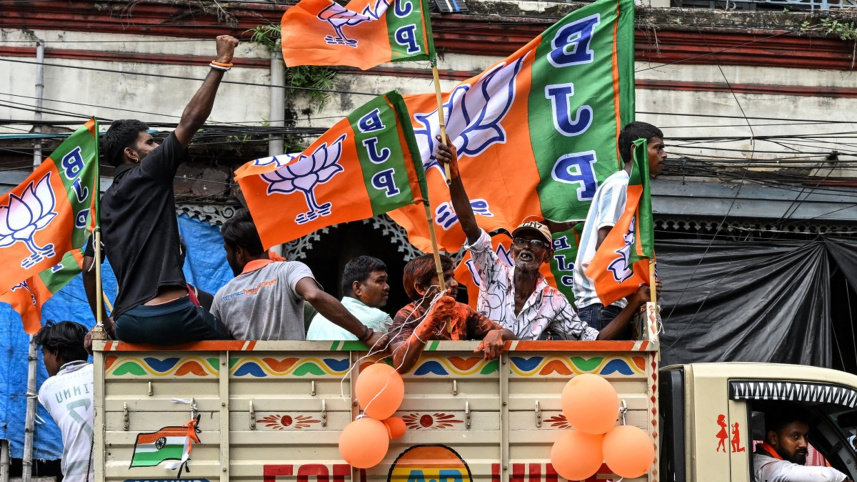
In the aftermath of the 2026 West Bengal election, a familiar pattern has re-emerged across sections of Indian media and so-called secular civil society: the attempt to explain BJP’s sweeping success through the “Bangladesh factor.” According to this narrative, political developments in Bangladesh—the post-uprising instability, the interim administration under Professor Yunus, and violence against minorities—allegedly triggered a Hindu consolidation in West Bengal and accelerated the rise of Hindutva politics.
This argument is not only intellectually weak; it is a fallacy of political morality and justice. It shifts responsibility away from the deep structural transformation of Indian politics over the past decade and reduces a complex electoral reality to a simplistic cross-border possibility. More troubling is the fact that a section of Bangladeshi media and intelligentsia is reproducing this narrative uncritically, as though Bangladesh itself is somehow responsible for the right-wing turn in parts of India.

The first problem with this argument is its selective use of truth. Since the 2024 political upheaval in Bangladesh, large sections of Indian television and digital propaganda networks have amplified misleading and at times outright false narratives about “systematic” anti-Hindu violence in Bangladesh. There were, undeniably, incidents of violence and intimidation during the transition period, and those incidents deserve condemnation. But what was often missing from mainstream Indian coverage is the equally important reality that thousands of ordinary Bangladeshis—students, Muslim community leaders, neighbourhood volunteers, and civil society groups—mobilised to protect temples, Hindu localities, and minority institutions. That reality complicates the communal script. Therefore, it is ignored.
The second flaw in the “Bangladesh factor” theory is historical amnesia. BJP did not suddenly emerge as a dominant political force because of recent developments in Bangladesh. The party has ruled India for over a decade and has systematically expanded its influence across the country, regardless of political conditions in Dhaka. During this period, especially when Bangladesh was governed by a largely secular but overtly pro-India administration, BJP still consolidated power and expanded influence in states such as Assam and Tripura. If a friendly and strategically aligned Bangladesh could not prevent the rise of Hindutva politics there, how can Bangladesh’s recent internal crisis be an explanation for West Bengal’s electoral outcome?
The answer is obvious: it cannot. The attempt to externalise the causes of Hindutva’s growth obscures the internal transformation of Indian political culture. Over the last decade or so, India has witnessed the normalisation of majoritarian rhetoric, lynching, bulldozer politics, hate speech, hyper-nationalist media ecosystems, and the systematic shrinking of oppositional space. Central investigative agencies have repeatedly been accused of being weaponised against opposition parties. Social media disinformation campaigns have become central to electoral mobilisation. Political dissent is increasingly portrayed as anti-national, while even moderate secular positions are caricatured as “appeasement.”
Within this atmosphere, even inclusive constitutional politics is now attacked. The Congress party and other secular formations are routinely labelled a “new Muslim League” merely for advocating minority rights and equal citizenship (although, to be frank, they have at times themselves compromised on secular principles). This reveals the depth of ideological polarisation within India itself, a reality that cannot be explained away by recent events in Bangladesh.
Equally important is the glaring contradiction that advocates of the “Bangladesh factor” refuse to confront. If the rise of Islamist rhetoric and the visibility of Jamaat-e-Islami in Bangladesh were truly decisive in shaping regional political psychology, then Bangladesh’s own February 2026 election should have produced a dramatically different outcome. Instead, despite online mobilisation and heightened visibility of Islamist groups, the overwhelming majority of voters supported BNP—a centrist, nationalist, and comparatively moderate political force. The society, in other words, did not move towards theocratic politics despite intense speculation and fearmongering.
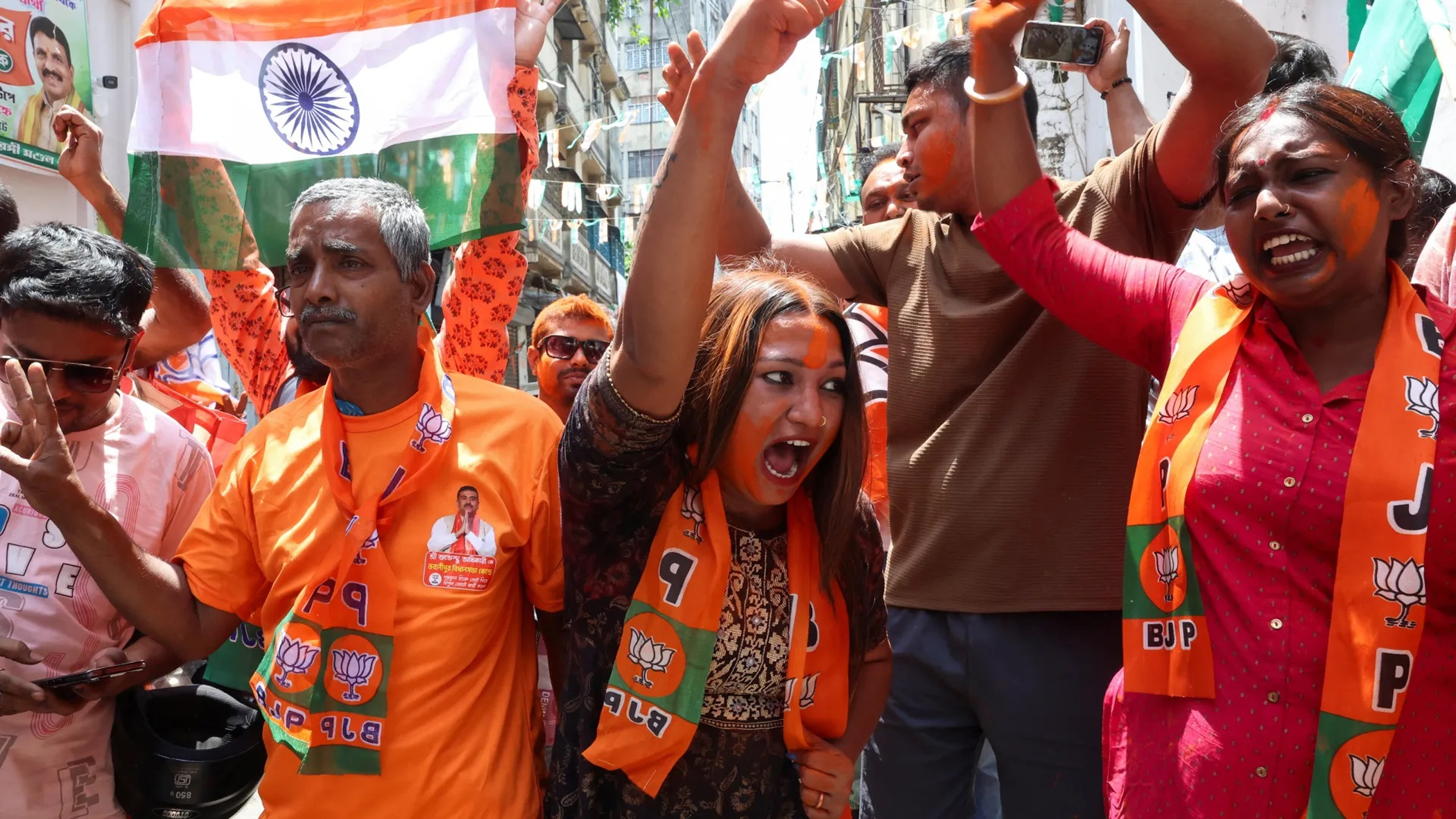
Yet Indian commentary continues to portray Bangladesh as the source of communal radicalisation while refusing to examine the radicalisation within India itself.
This is why the current narrative is so dangerous. It transforms Bangladesh into a convenient moral alibi. Rather than confronting the entrenched structures of hate politics, communal polarisation, media sensationalism, and democratic erosion within India, responsibility is projected outwards.
Against this backdrop, it is disappointing that a section of Bangladeshi media and intelligentsia are also echoing these framings almost verbatim. Instead of critically interrogating Indian media narratives—many of which have long been complicit in legitimising exclusionary nationalism and anti-minority hysteria—they are internalising the accusation and engaging in collective self-blame.
Bangladesh certainly has its own democratic crises and a history of political violence and minority rights issues, and no serious observer can deny that. But acknowledging those realities does not require accepting a deeply flawed narrative that treats it as a catalyst for the rise of Hindutva in India.
The electoral transformation of West Bengal must be understood within the context of India’s own political evolution: the consolidation of majoritarian nationalism, the collapse of oppositional cohesion, the extraordinary power of propaganda machinery, and the long-term ideological project of the Hindu right.
Blaming Bangladesh may be politically useful. But it is analytically dishonest, and dangerously evasive.
Dr Anas Ansar is assistant professor of Department of Political Science and Sociology and member of the Centre for Peace Studies at North South University.
Views expressed in this article are the author's own.
Follow The Daily Star Opinion on Facebook for the latest opinions, commentaries, and analyses by experts and professionals. To contribute your article or letter to The Daily Star Opinion, see our guidelines for submission.
 For all latest news, follow The Daily Star's Google News channel.
Comments