


Political shift in West Bengal and its regional ripples

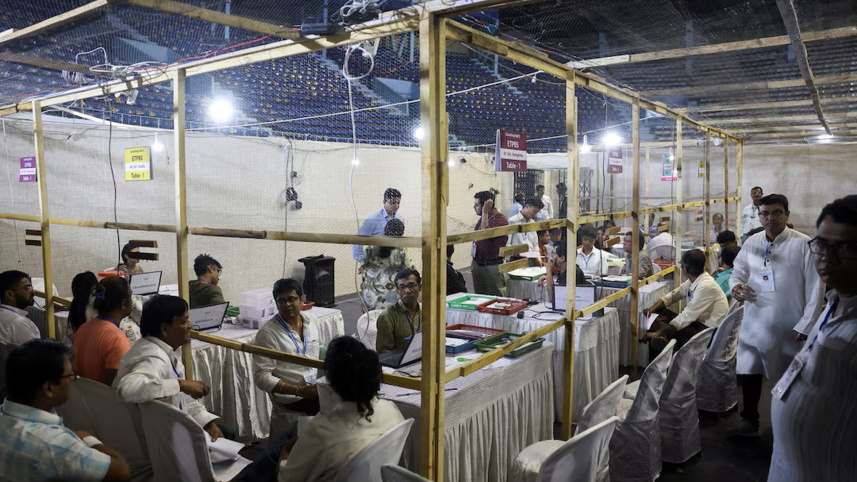
BJP’s victory in the West Bengal assembly elections has been widely described as a tectonic shift—only the second change in power in the state in the last 50 years. Both transitions are significant: the first ended 34 years of rule by the socialist Left Front, while the second has now replaced the centrist Trinamool Congress (TMC) with the right-wing BJP, a party rooted in Hindutva politics.
Although broadly secular forces governed West Bengal after India’s independence, the state was also home to the early seeds of Hindutva-based politics. BJP’s ideological forebear, Shyama Prasad Mukherjee, who was associated with the Hindu Mahasabha and Jana Sangh, hailed from West Bengal. It is, therefore, unsurprising that BJP’s state leadership marked its victory by paying homage to him, underscoring the symbolic significance of this political shift.

According to data from the Election Commission of India, the BJP secured 45.84 percent of the vote, improving upon its roughly 40 percent share in the previous three elections, while the TMC’s vote share declined to 40.80 percent. Muslims constitute about 27 percent of the state’s population, and nearly one-third of constituencies have substantial Muslim electorates. In 2021, the TMC won 84 out of 88 Muslim-majority seats, reflecting strong consolidation behind Mamata Banerjee. While early indications suggest that the TMC retained considerable Muslim support in this election, minor inroads by smaller Islamic groups were noted in some areas.
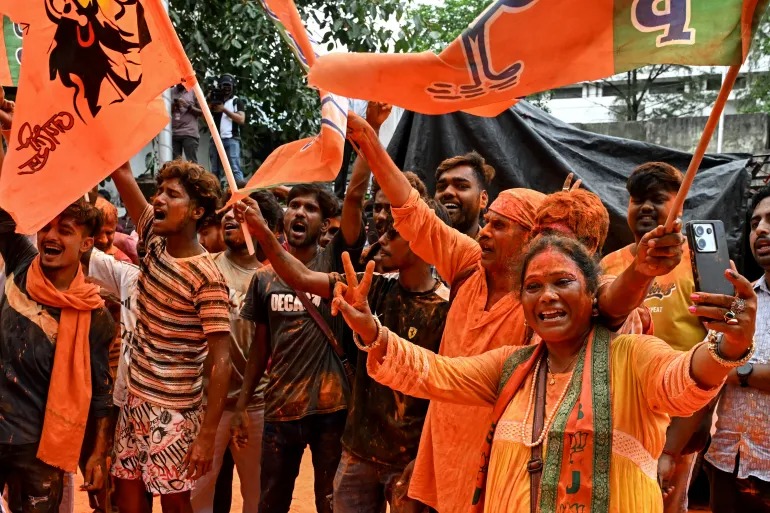
The BJP, meanwhile, appears to have offset this through broader Hindu consolidation, aided by its electoral strategy. A high voter turnout—reported to be more than 92 percent—further reflected the intensity of the contest. Ironically, Mamata Banerjee herself had earlier facilitated the BJP’s entry into the state’s political landscape through an alliance during the Atal Bihari Vajpayee era, a partnership that has now come full circle.
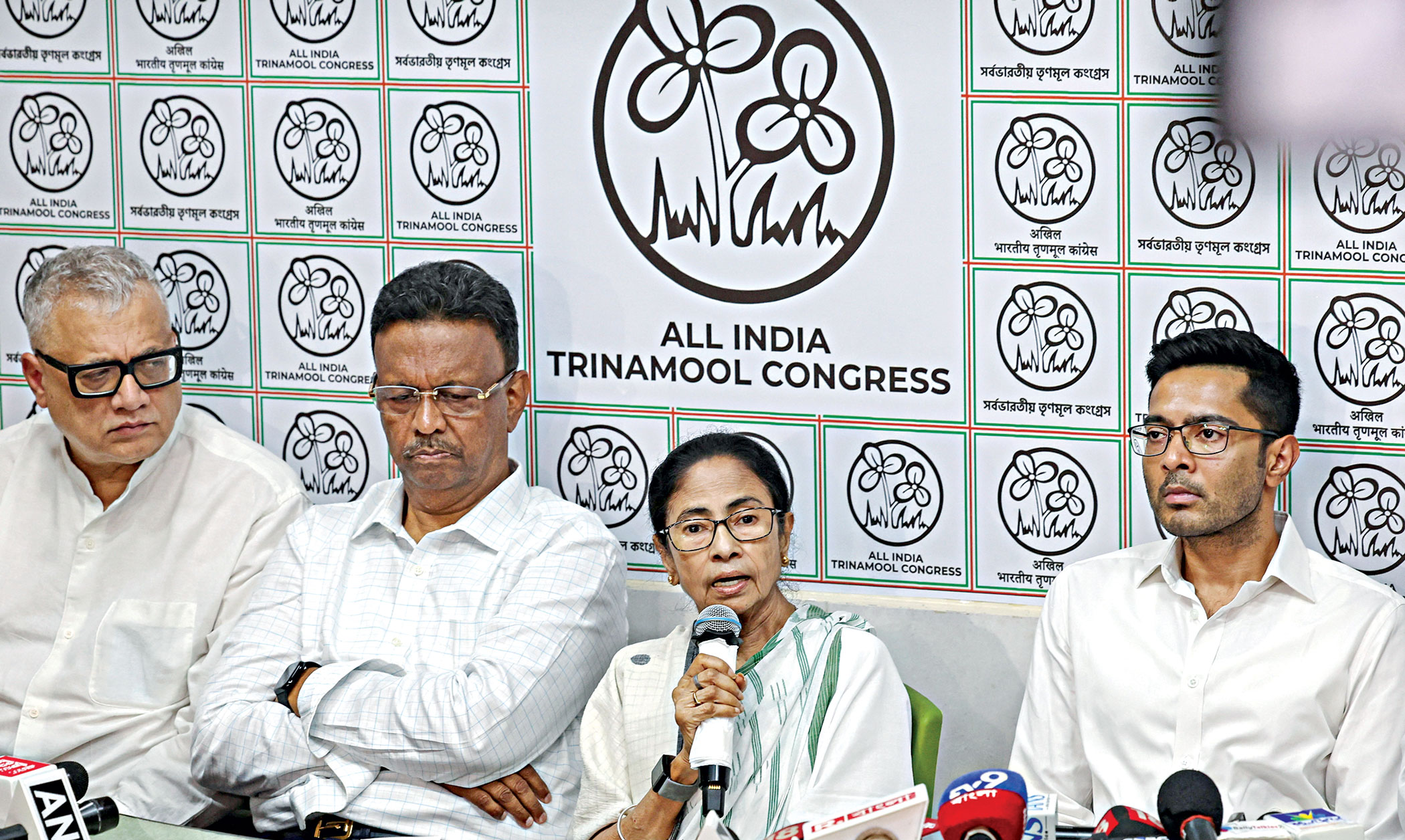
The deletion of around 2.7 million voters under the controversial Special Intensive Revision (SIR) of electoral rolls added another layer of complexity. While its precise impact on the outcome remains debated, preliminary analyses suggest that in at least 49 constituencies, including Banerjee’s own, the margin of defeat was smaller than the number of removed voters. Nonetheless, incumbency fatigue, allegations of corruption, and concerns over law and order, particularly involving alleged party-linked elements, contributed to public discontent. BJP’s promise to expand social protection programmes with a larger financial outlay also resonated with sections of the electorate. Above all, the party’s rhetoric of change appears to have found a receptive audience.
Critics argue that the SIR disproportionately affected poorer and minority voters, especially Muslims and migrant communities in border districts. Yet, the scale of BJP’s rise cannot be attributed to this factor alone. For many observers, it represents the delayed political consolidation of a legacy long associated with Shyama Prasad Mukherjee. Notably, his opposition to Article 370 and subsequent death in detention in 1953 in Jammu and Kashmir has acquired renewed political symbolism, especially after the provision’s abrogation in 2019.
Celebrating the victory, India’s Prime Minister Narendra Modi emphasised that it was “a time for change, not revenge.” His campaign centred on transformation, though a dominant theme was the issue of so-called “infiltration,” portrayed as a root cause of problems such as unemployment, crime, cross-border smuggling, and security threats. These concerns were frequently linked to migration across the eastern border with Bangladesh. BJP has pledged to curb such “infiltration” and expel those it identifies as “illegal migrants.” One of the key policies of the BJP government on this issue is to grant citizenship to those who belong to all other faiths except Islam, and Bangla-speaking Muslims are the most vulnerable to possible deportation, as there have been several reports of such deportation of Indian nationals to Bangladesh in recent times.
The controversial SIR that dropped 2.7 million people from the voter rolls means they are now feared to lose citizenship and face risks of being deported. A logical question arises: to where will they be sent? Given the recent admission by BJP’s Himanta Biswa Sarma, chief minister of Assam, another northeastern state in India, that he pushes Bangla-speaking Muslims into Bangladesh under the nighttime darkness, there is every reason to fear a repetition of similar tactics by another state run by his party. If any such coordinated operation is mounted from three surrounding BJP-run states (the third being Tripura), then Bangladesh will face a serious humanitarian crisis.
Sarma’s statement last month warranted the summoning of the acting high commissioner of India at the foreign ministry in Dhaka to express its displeasure and concerns. It was the first occasion of an unpleasant diplomatic development since a newly elected BNP government led by Prime Minister Tarique Rahman took office. Delhi, it may be recalled, welcomed his election, expressing hopes of a reset in strained relations. Dhaka-Delhi bilateral relations dipped to a low level following the ouster of Sheikh Hasina as the interim government led by Prof Muhammad Yunus sought her repatriation, and reciprocal visa bans adversely impacted trade, road, and rail transportation as well as jointly undertaken projects.
For decades, Kolkata has been portrayed as a centre of intellectual and cultural progressivism in the subcontinent. BJP’s sweeping victory challenges that perception, suggesting a shift in the state’s political and cultural identity. Mamata Banerjee’s efforts to promote a distinct Bangalee identity—symbolised by slogans like “Joy Bangla”—appear, in this context, to have produced unintended consequences.
Dhaka has largely refrained from publicly commenting on the rise of religion-based politics in India, even as Indian discourse often frames Islamist politics in Bangladesh as a security concern. However, the growing prominence of religious polarisation in the region risks fuelling reciprocal dynamics across borders. With unresolved bilateral issues, including water sharing, border management, and trade imbalances, such developments could complicate efforts to maintain regional stability. The hope remains that political leadership on both sides will act with restraint and foresight to preserve harmony in the region.
Kamal Ahmed is consulting editor at The Daily Star. He led the Media Reform Commission under the interim government. His X handle is @ahmedka1.
Views expressed in this article are the author's own.
Follow The Daily Star Opinion on Facebook for the latest opinions, commentaries, and analyses by experts and professionals. To contribute your article or letter to The Daily Star Opinion, see our guidelines for submission.
 For all latest news, follow The Daily Star's Google News channel.
Comments