BIG-B and Bangladesh's road to Southeast Asia

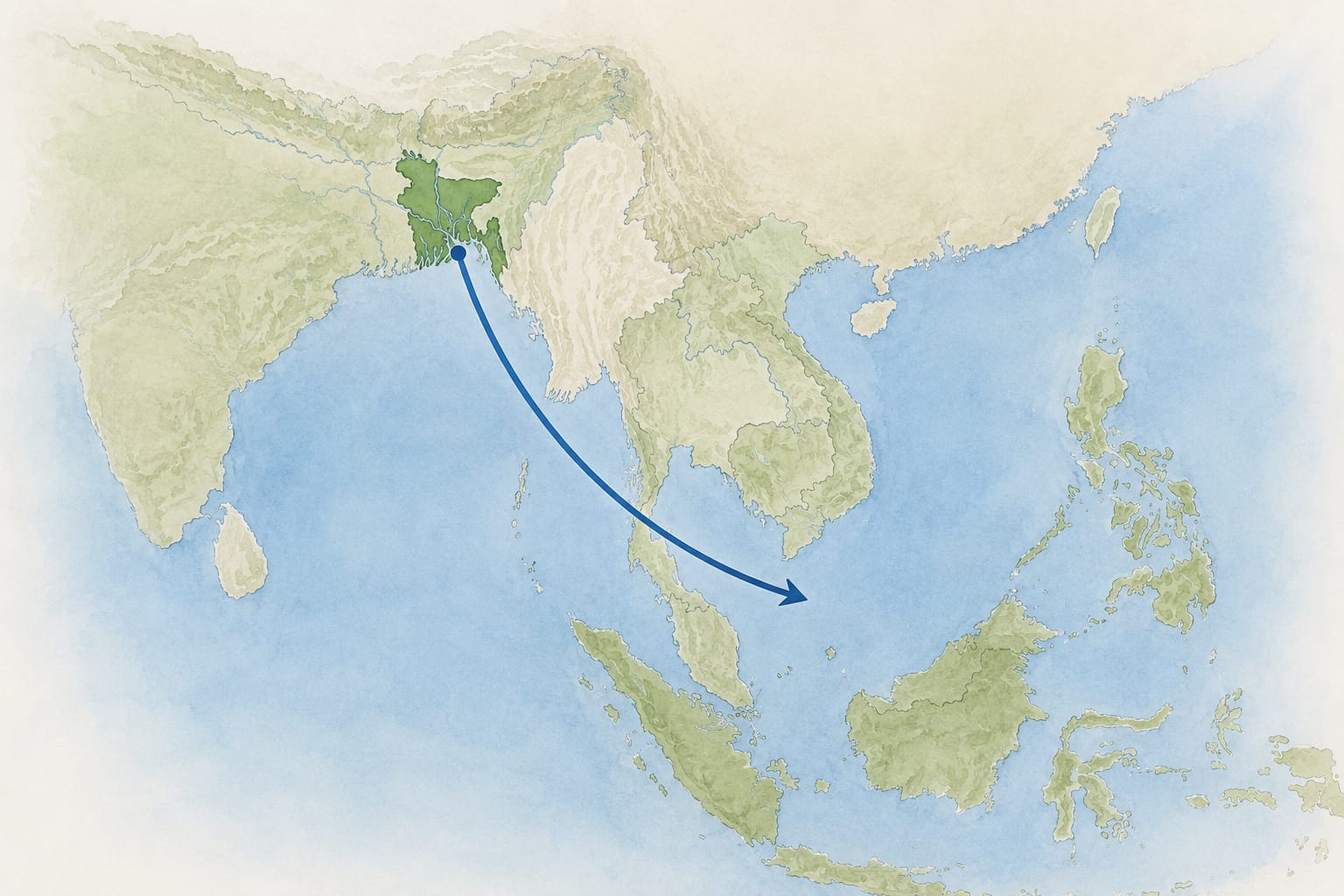
Bangladesh exported $48 billion worth of goods in the just-concluded 2025–26 fiscal year, which is slightly down from the year before and far short of the $55 billion target. Less than two percent of those exports went to Southeast Asia, a region of roughly 680 million people with a combined economy of more than $4 trillion, sitting right next door. Bangladesh sells more goods to some small European countries thousands of miles away than to huge markets just across the Bay of Bengal. This shows that something is seriously wrong with our economic map. It also explains why an initiative introduced more than a decade ago deserves renewed attention.
That initiative is the Bay of Bengal Industrial Growth Belt, better known as BIG-B. BIG-B was announced in September 2014 during Japanese Prime Minister Shinzo Abe's visit to Dhaka. It is a plan led by Japan's development agency (JICA) to create an industrial corridor from Dhaka through Chattogram to Cox's Bazar. The plan rests on three main pillars: industry and trade, energy, and connectivity.
Its most important project was the Matarbari deep-sea port, the first such port in Bangladesh. The project entered a major construction stage in April 2025, when the Chittagong Port Authority signed a contract worth about $500 million with the Japanese companies Penta-Ocean and TOA to build a 760-metre terminal.
Dredging began in May 2026. The first phase is expected to start operating by 2029. With a harbour 16 metres deep, Matarbari will be able to receive mother vessels carrying more than 8,000 containers. Such large ships cannot enter the shallow Chattogram port. However, BIG-B is not simply a collection of construction projects. It is based on a larger philosophy, and that philosophy may be its greatest value.
Japan did not invent BIG-B out of thin air. It drew on its own history. In the 1960s and 1970s, Japan built an industrial belt from Tokyo through Osaka to Fukuoka along its Pacific coast. Ports, power plants, highways and factories were placed along one corridor, feeding each other. That belt became the backbone of Japan's economic miracle. Japanese officials have said openly that they hope Bangladesh will learn from that experience and build its own growth backbone between Dhaka, Chattogram and Cox's Bazar.
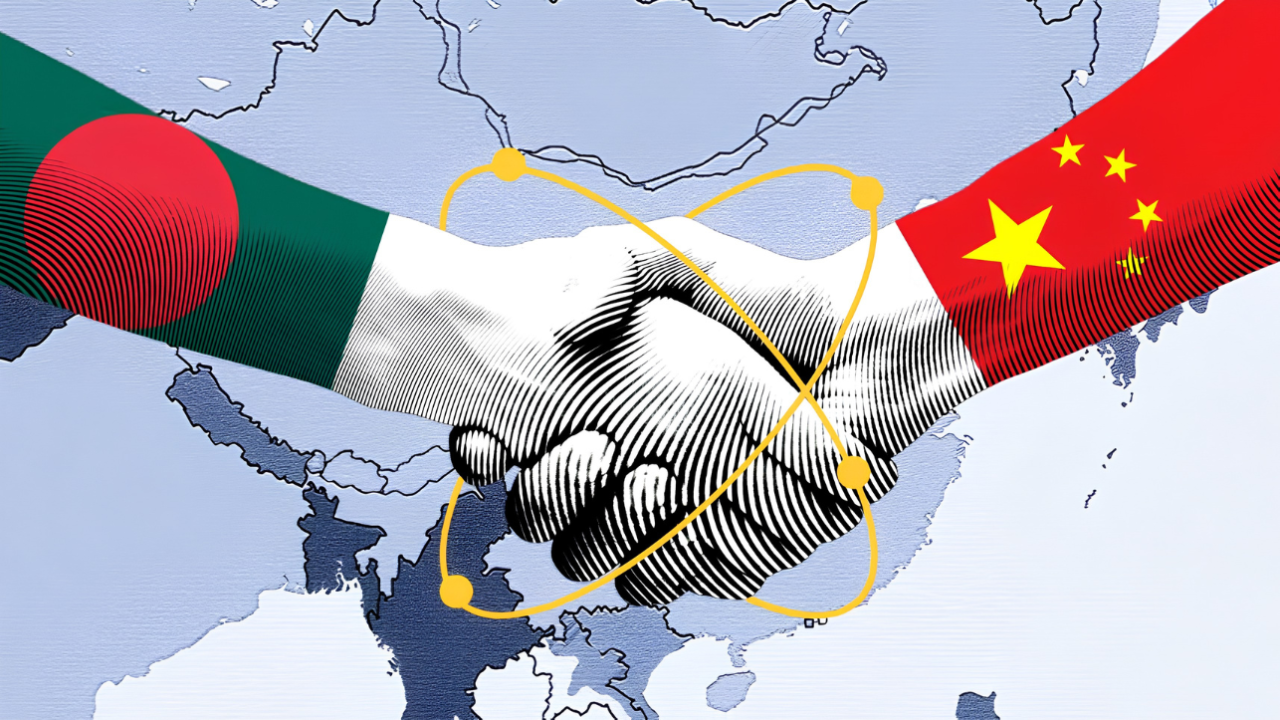
The main philosophical goal is that geography is not fate; it is capital. BIG-B is a natural partner to Bangladesh's own 'Look East' policy. Bangladesh fronts the Bay of Bengal and sits at the crossroads of South Asia and Southeast Asia. As economic power shifts towards the Indo-Pacific, this location gives Bangladesh a unique opportunity to play the role of a regional and inter-regional node and hub, serving as a meeting point for trade. In Japan's grand vision, BIG-B is part of joining two oceans, the Pacific and the Indian, into one economic space. Bangladesh can become the link between them. In other words, BIG-B treats Bangladesh not as the end of the road in South Asia, but as the beginning of the road to Southeast Asia.
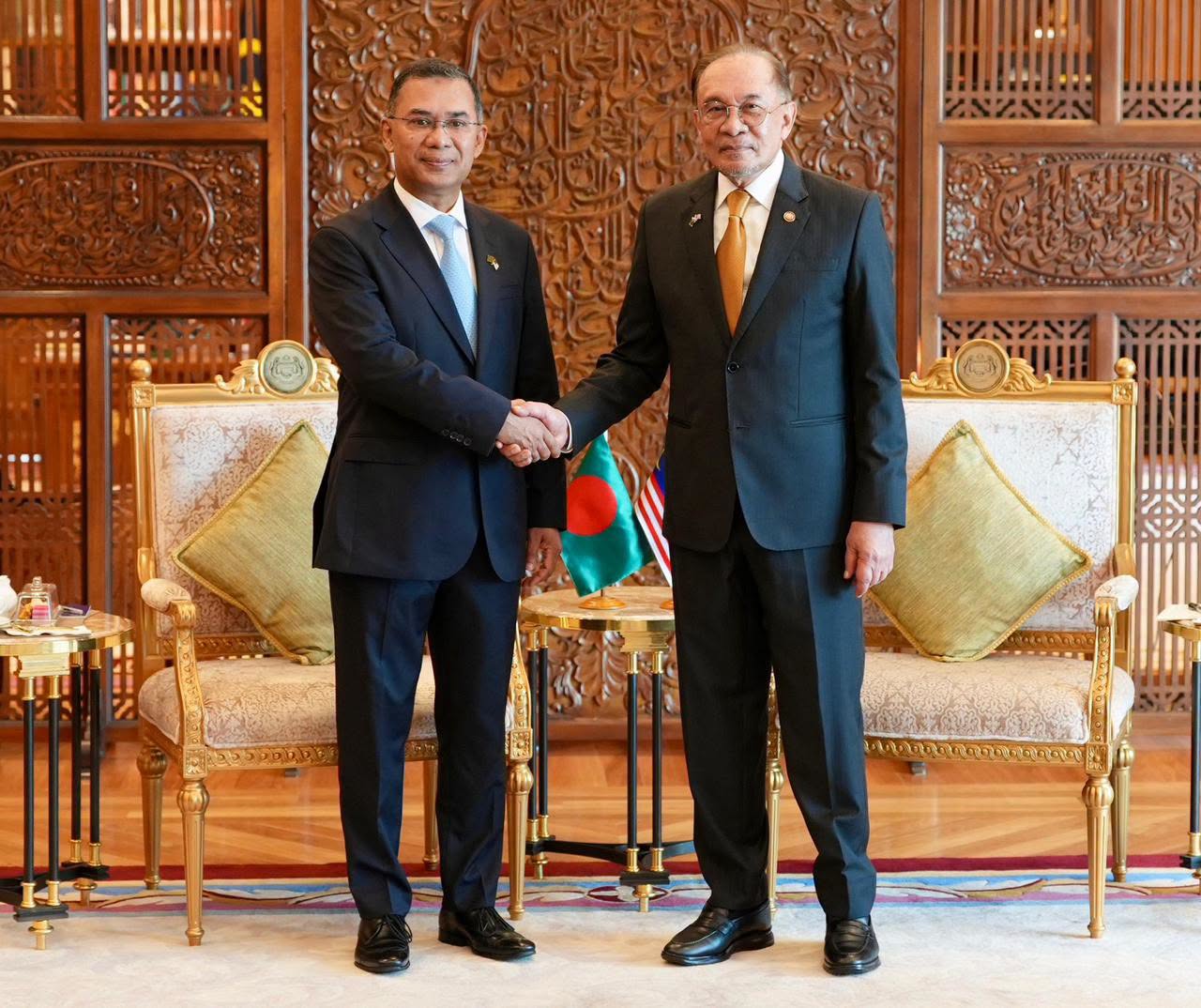
Dhaka has finally begun to act on this philosophy. There are positive signs. In June 2026, during Prime Minister Tarique Rahman's visit to Malaysia, Bangladesh formally sought ASEAN Sectoral Dialogue Partner status and expressed its desire to join RCEP, the world's largest free trade bloc. Malaysia has promised its support. Talks on a Bangladesh–Malaysia free trade agreement are also moving forward. Thailand has shown interest in a similar agreement. These closer ties with Southeast Asia could bring several major benefits.
First, Bangladesh would gain access to new markets. The country's export sector is too dependent on a small number of products. Ready-made garments alone earned more than $35 billion last year, with most of those products sold in Western markets. Southeast Asia has a growing middle class that buys many products Bangladesh can supply, including medicines, ceramics, leather goods, processed food and IT services. This is especially important because Bangladesh will graduate from the Least Developed Country (LDC) status very soon. After graduation, it will lose much of the duty-free access it currently enjoys in Western markets. Partnerships with ASEAN and membership of RCEP could provide an important safety net.
Second, stronger eastern ties could bring more investment. Vietnam, Thailand and Indonesia have mastered attracting factories and companies moving out of China. Bangladesh, with lower wages and a huge young workforce, should catch the same wave. BIG-B has already helped provide some of the infrastructure investors need. This includes the 1,200-megawatt Matarbari power plant, which has been operating since 2023, the Japanese economic zone at Araihazar, the Dhaka Metro and the new airport terminal. More than 300 Japanese companies now operate in Bangladesh, which is three times the number a decade ago. When Japanese companies invest in a country, other East Asian investors often follow.
Third, cooperation with Southeast Asia could improve energy security. Recent global crises have shown the risks of depending on a single country for fuel. Bangladesh and Malaysia have recently agreed to increase cooperation on LNG supplies. Indonesia is also exploring partnerships with Bangladesh in solar energy. For Bangladesh, energy diversification is not a luxury. It is necessary for national security and economic stability, which has become even clearer since the 2026 fuel crisis.
Fourth, Bangladesh could become a major regional transit hub. Once Matarbari opens, the cost of shipping a container to Europe is expected to fall from around $3,000 to under $1,300, while delivery time is expected to be reduced from more than 40 days to about 17, because Bangladesh's cargo will no longer detour through Colombo or Singapore. Nepal, Bhutan and India's landlocked northeast need this sea gateway.
Japan sees it too. Japan's new Prime Minister, Sanae Takaichi, was recently scheduled to fly directly to Guwahati with executives from 50 major Japanese companies to promote the corridor linking Northeast India to the Bay of Bengal through Bangladesh. Officials estimate that the port alone could add 2 to 3 percent to Bangladesh's GDP. This is the BIG-B logic coming alive: build the belt at home, and the region routes its trade through you.
There are three steps Bangladesh should take now. First, turn political announcements into real agreements. Bangladesh's application for ASEAN Sectoral Dialogue Partner status and its interest in joining RCEP must be supported by a permanent, full-time negotiating team. The government should quickly complete the free trade agreement with Malaysia and begin talks with Thailand, Vietnam and Indonesia.
Second, complete Matarbari on time and manage it properly. The government must keep to the 2029 deadline, complete the 27-kilometre road and railway links, and give the new Moheshkhali Integrated Development Authority (MIDA) enough authority to carry out its 30-year master plan.
Besides, Bangladesh should also bring in experienced international port operators. A deep-sea port that remains unused will become an expensive monument. A well-run and busy port can become an engine of national growth.
Third, present Bangladesh as a bridge, not a buffer. The government should create a special 'Look East' unit, bringing together the foreign, commerce and shipping ministries. Bangladesh should open trade offices in every ASEAN capital and invite Southeast Asian companies to invest in the economic zones along the BIG-B corridor.
In conclusion, BIG-B is more than a collection of infrastructure projects. It offers a different way of thinking about Bangladesh's economic geography. Rather than viewing its location as a constraint, the initiative treats it as a strategic asset. Bangladesh stands where South Asia meets Southeast Asia. The challenge now is to translate that geography into economic opportunity.
Md Mazhar Uddin Bhuiyan is a Felix Scholar at the University of Oxford. He can be reached at: mazhar.bhuiyan@bsg.ox.ac.uk
Send your articles for Slow Reads to slowreads@thedailystar.net. Check out our submission guidelines for details.
The politics of fear: From Gaza's paper kites to ‘unsafe’ on campuses
Shared rivers, shared responsibilities: The case for water treaties

Shanghai Cooperation Organisation at 25: Can China, India and Russia really speak with one voice?
Bihar wants Delhi to not renew Ganges treaty. What does it mean for Dhaka?
Bangladesh and the United States: Beyond the tariff bargain
From the Carter Doctrine to the Mecca Pact: A changing Gulf security order
More capability, less autonomy? Bangladesh’s emerging security dilemma
An anti-West network is emerging: How should Bangladesh respond?
The Mecca Pact: Deterrence, Israel, and the new Gulf security equation