


A World Cup of symbols, stories, and transitions

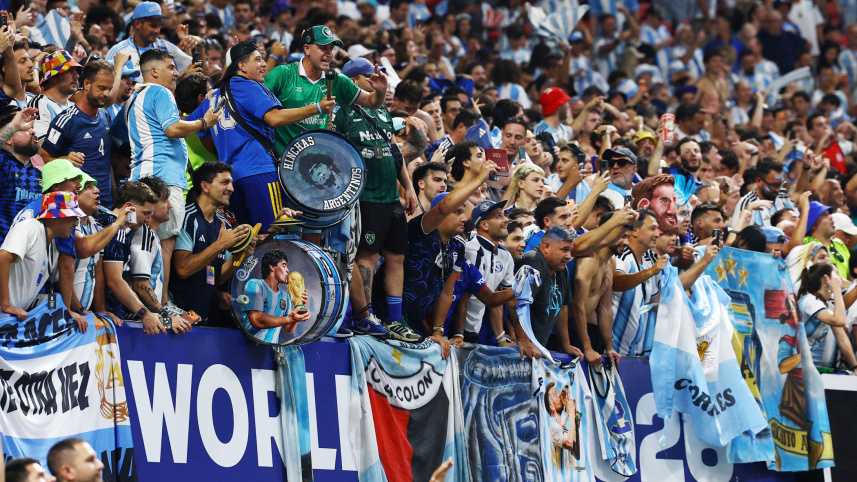
When Lionel Messi walks onto the pitch in New Jersey in the early hours of Monday (Bangladesh time) to face Spain’s teenage sensation Lamine Yamal, the FIFA World Cup 2026 will reach its final act. Argentina will be chasing back-to-back World Cup titles, while Spain will seek to reclaim football’s biggest prize after a 16-year wait. Regardless of who lifts the trophy, this tournament has already achieved something even greater than producing a worthy champion.
Whether the expanded 48-team tournament deserves to rank among the greatest World Cup editions remains a matter subject to opinion. Such judgements are invariably shaped by generations. Those who grew up watching Pele speak of Mexico 1970. Others remain loyal to Diego Maradona’s brilliance in 1986, while many regard Qatar 2022 as the finest World Cup of the modern era because of its unforgettable final and Messi’s crowning moment.

The final verdict on the 2026 edition’s place in history will likely take years to form. But one thing is already clear: few World Cups have been as rich in symbolism. This has been a tournament where almost every major storyline has carried a deeper meaning. It has, for instance, offered the closing chapter of the Ronaldo-Messi era, revisited the passing of the torch from Messi to Kylian Mbappe, and now presents the ultimate meeting between Messi and Yamal—football’s present and future.
Beyond the pitch, political controversies, debates over identity, race, nationalism, and the rise of emerging football nations have shaped the narrative. Rarely has a World Cup reflected so many of the world’s conversations through football. More than a month-long sporting spectacle, it has become a mirror of our times.
Football, in fact, has always been more than 90 minutes between two teams. It has long reflected society, where questions of identity, politics, migration, history, and generational change unfold alongside the action on the pitch. This edition has illustrated that truth more vividly than most.
The most compelling narrative, unsurprisingly, revolves around Messi. At 39, few expected the Argentine captain to lead his country to another World Cup final. Four years after finally lifting the trophy in Qatar, he has continued to defy both age and expectations. The long-running GOAT (Greatest of All Time) debate between the fans of Messi and Ronaldo has perhaps finally run its course. Statistics alone never settled the argument, but another World Cup triumph at this stage of Messi’s career would elevate his legacy beyond comparison.
But as one era nears its conclusion, another is beginning.
Standing opposite Messi will be Yamal, the 19-year-old widely regarded as the game’s next global superstar, wearing the same No. 19 jersey that Messi wore during the early years of his career, adding another layer of symbolism to their meeting. Over 18 years before either could have imagined this moment, Messi appeared in a Unicef charity photograph bathing baby Yamal. Resurfacing in recent years, the image has become an unlikely metaphor for football’s changing generations. It is difficult to think of another World Cup final in which the past and future of the sport have been so perfectly embodied in two individuals.
Yamal’s journey throughout this tournament has only strengthened that symbolism. Spain’s young winger has already overcome Ronaldo’s Portugal and Mbappe’s France. Should Spain prevail in the final, he will have defeated the defining figures of three footballing generations in a single World Cup.
The tournament has also demonstrated how every national team carries aspirations that extend well beyond football. Cape Verde’s remarkable campaign resonated with many around the world. Their success symbolised the growing competitiveness of African football and challenged long-held assumptions about the continent’s place in the global game. By contrast, the early exits and underwhelming performances of several Asian teams served as a reminder that the continent still struggles to consistently translate domestic investment into success on football’s biggest stage. Every World Cup becomes, in part, a referendum on regional progress. For a region that has invested heavily in football infrastructure and development, this tournament offered more questions than answers.
Politics, too, remained an unavoidable subplot. Following its semi-final clash with England, Argentina’s display of a banner supporting its claim over the Falkland Islands reignited a decades-old sovereignty dispute, drawing criticism and prompting calls for FIFA to investigate. Spain, meanwhile, found itself confronting debates over race and national identity after controversial remarks questioning the “Frenchness” of France’s multicultural squad. Or think of Iran, whose World Cup campaign was overshadowed by unprecedented travel restrictions amid the US-Iran war, with members of its delegation denied entry and the team forced to leave US soil after every match. These incidents once again exposed the uneasy influence of politics over football.
FIFA has long maintained that football should remain politically neutral. Reality suggests otherwise, however. The World Cup inevitably becomes a stage where national histories, unresolved conflicts, and questions of identity find expression. Football does not create these debates; it merely amplifies them before a global audience. Every World Cup leaves behind moments that transcend the scoreline, reminding us that football cannot be completely separated from the realities of the societies in which it exists.
Perhaps that is precisely why football continues to command unmatched emotional power. It mirrors life itself—through its uncertainty, injustice, triumphs, and disappointments. A single goal can transform despair into joy within seconds. Underdogs upset giants, as they did in this World Cup, too. A mistake turns heroes into villains. As the medieval philosopher and theologian St Thomas Aquinas described miracles as events beyond the ordinary order of nature, football often produces moments that feel similarly miraculous, where the improbable can suddenly become reality.
Few sporting events thus capture the unpredictability or emotional intensity of the human experience as completely as the World Cup. The fascination it attracts also lies in its universality. It unites strangers in celebration, leaves millions heartbroken together, and sparks conversations that touch on much more than tactics and scorelines. Supporting a team naturally encourages debate, persuasion, and disagreement—activities that, at their best, strengthen public discourse rather than diminish it.
Football offers a safe arena for competition and conflict, allowing people to experience triumph, disappointment, and hope without the consequences of real-life conflict. That emotional investment is precisely what makes the game so enduring. That is why the 2026 World Cup will be remembered not merely for its goals or trophies, but for the stories it told.
Whatever the result in the final, the winners will bring to a close a tournament whose greatest achievement was reminding us that football’s appeal has never rested solely on the outcome of matches. It lies in the stories, the symbolism, and the shared human experience that make it a spectacle unlike any other.
Bishwajit Roy is sports editor at The Daily Star
Views expressed in this article are the author's own.
Follow The Daily Star Opinion on Facebook for the latest opinions, commentaries, and analyses by experts and professionals. To contribute your article or letter to The Daily Star Opinion, see our guidelines for submission.
 For all latest news, follow The Daily Star's Google News channel.
Comments