


Bangladesh must bring AI to the factory floor

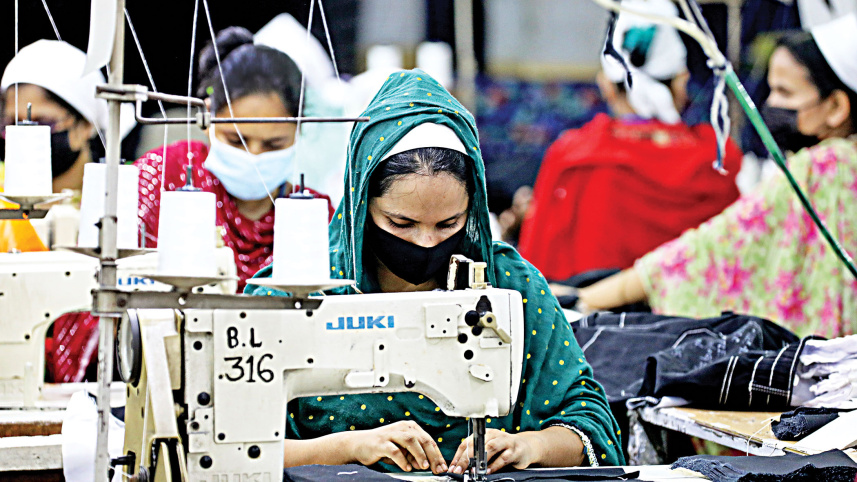
Bangladesh built its garment industry on scale, competitive labour costs, and the ability to supply large volumes of basic apparel. But this model is now under serious pressure. Wages, energy prices, and financing costs have risen; buyers expect shorter lead times and smaller orders; and the country’s planned graduation from Least Developed Country (LDC) status will gradually reduce many trade advantages.
The next competitive edge for Bangladesh is unlikely to come from being cheaper alone. It should rather stem from becoming faster, more accurate, more flexible, and more innovative. Artificial intelligence (AI) could help deliver such a shift. In an industry where sewing remains difficult to fully automate, the biggest near-term gains may come from using AI to improve the thousands of decisions surrounding production.

One of the most immediate applications could be production planning. Many of our factories still rely heavily on spreadsheets and experience to allocate orders, balance sewing lines, and estimate completion dates. An AI-based system could analyse order specifications, standard minute values, worker skills, machine availability, and previous production data to recommend the most efficient line plan. It could recalculate schedules when fabric arrives late, a machine breaks down, or a buyer changes an order.
This would give factories a more accurate picture of capacity and reduce the risk of accepting orders they cannot deliver profitably. Faster planning could also help suppliers compete for shorter-run and higher-value business, rather than depending on large, predictable orders. Quality control is another high-value opportunity. Cameras placed above fabric inspection machines, cutting tables, or sewing lines could be trained to identify holes, stains, shade variation, skipped stitches, print misalignment, and incorrect seams. The aim would not be to remove human inspectors, but to alert them earlier and direct their attention to potential problems. A defect detected at the end of production may affect thousands of garments. However, the same defect identified early could be confined to a few pieces. Better in-line detection could reduce rework, shipment rejection, and costly airfreight while strengthening buyer confidence.
AI could also support predictive maintenance. Sensors fitted to knitting, dyeing, cutting, sewing, and finishing equipment can be used to monitor vibration, temperature, pressure, and electricity use. Machine-learning systems, meanwhile, can identify abnormal patterns and warn engineers before a failure stops production. Preventing even a few hours of downtime can protect margins and shipment dates.
Energy and resource efficiency offer a related advantage. AI can compare production schedules with real-time electricity, gas, steam, and water use, highlighting machines or processes which are consuming more than expected. In dyeing and finishing, algorithms could optimise recipes and process settings, reducing repeated batches, chemical use, and water consumption.
A further opportunity is in design and product development. Generative AI and 3D tools can turn a buyer brief into initial concepts, prints, virtual samples and draft technical specifications. When used by designers and merchandisers, these tools can shorten development cycles and reduce physical sampling. China is already showing what can look like in practice. For instance, down-apparel group Bosideng has worked with Zhejiang University to create an AI model for design and product development. The company says it has cut prototype development time from 100 days to 27 and reduced sample costs by more than 60 percent. At its smart factory, an AI “brain” reportedly connects nearly 2,000 devices, while a jacket can move from raw fabric to finished product in three to four minutes. China is also deploying AI beyond design. In Hai’an, Jiangsu province, AI visual-inspection systems have entered trials at nine textile companies.
Chinese company DataBeyond has meanwhile developed an AI-enabled textile-sorting machine capable of processing around two tonnes of used clothing per hour. Its operator says the technology reduced the proportion of material classed as unrecyclable from 50 to 30 percent. These examples illustrate how China is combining AI with machinery, industrial data, research institutions and government policy.
Changshu, an apparel cluster containing more than 5,000 textile businesses, has even issued a white paper promoting AI-led upgrading, while China’s wider “AI Plus” initiative aims to embed the technology across traditional industries. National and local governments are also supporting robotics through funds, subsidies, public procurement, and shared data facilities.
Bangladesh does not need to copy China’s capital-intensive model wholesale. Our advantage could lie in deploying practical, lower-cost AI around existing workers and machinery. Encouragingly, there are signs that this transition has begun. The BGMEA says larger Bangladeshi suppliers are investing in advanced machinery, enterprise resource planning systems and AI tools for production planning and quality control. Some factories are using AI to optimise fabric cutting to improve forecasting. Industry leaders have nevertheless warned that adoption must accelerate if Bangladesh is to preserve its competitiveness after LDC graduation.
Government support is essential, particularly for smaller manufacturers unable to afford large technology teams or risky pilot projects. A dedicated RMG AI programme could offer matching grants for factory trials, concessional finance for sensors and inspection equipment, and accelerated depreciation or tax credits for qualifying investments. Bangladesh’s draft National AI Policy already proposes tax incentives and accelerated depreciation for eligible private AI investment.
The government could also establish shared “AI factory labs” with business organisations, universities and technology providers. Factories could test quality-control cameras, planning software and energy-management systems before committing substantial capital. Data is hugely important for our sector. An industry data trust could allow anonymised information on defects, machine failures, energy consumption, and production bottlenecks to be pooled securely. This would help developers train systems around the realities of Bangladesh’s garment production rather than relying solely on overseas datasets.
The government could further support deployment by bringing brands into the process. Buyers who demand shorter lead times, better traceability, and increasingly detailed environmental data could be encouraged to co-finance technology pilots with suppliers. This would prevent the full cost of digital upgrading being pushed onto factories already operating on thin margins.
Finally, implementation includes workers. Operators, inspectors, engineers and production managers need training to understand AI outputs, identify errors and improve the systems. Government-funded programmes should prioritise women, who account for a substantial part of the RMG workforce but may be excluded from advanced technical training. AI will not remove Bangladesh’s structural challenges. But used intelligently, it could help factories quote faster, plan more accurately, waste less, improve quality, and offer buyers greater visibility.
Mostafiz Uddin is managing director of Denim Expert Limited. He is also the founder and CEO of Bangladesh Denim Expo and Bangladesh Apparel Exchange (BAE).
Views expressed in this article are the author's own.
Follow The Daily Star Opinion on Facebook for the latest opinions, commentaries, and analyses by experts and professionals. To contribute your article or letter to The Daily Star Opinion, see our guidelines for submission.
 For all latest news, follow The Daily Star's Google News channel.
Comments